Expense report processing from receipt to reimbursement
By Dynamite Docs. Published . Updated .
Stop typing invoices into spreadsheets.
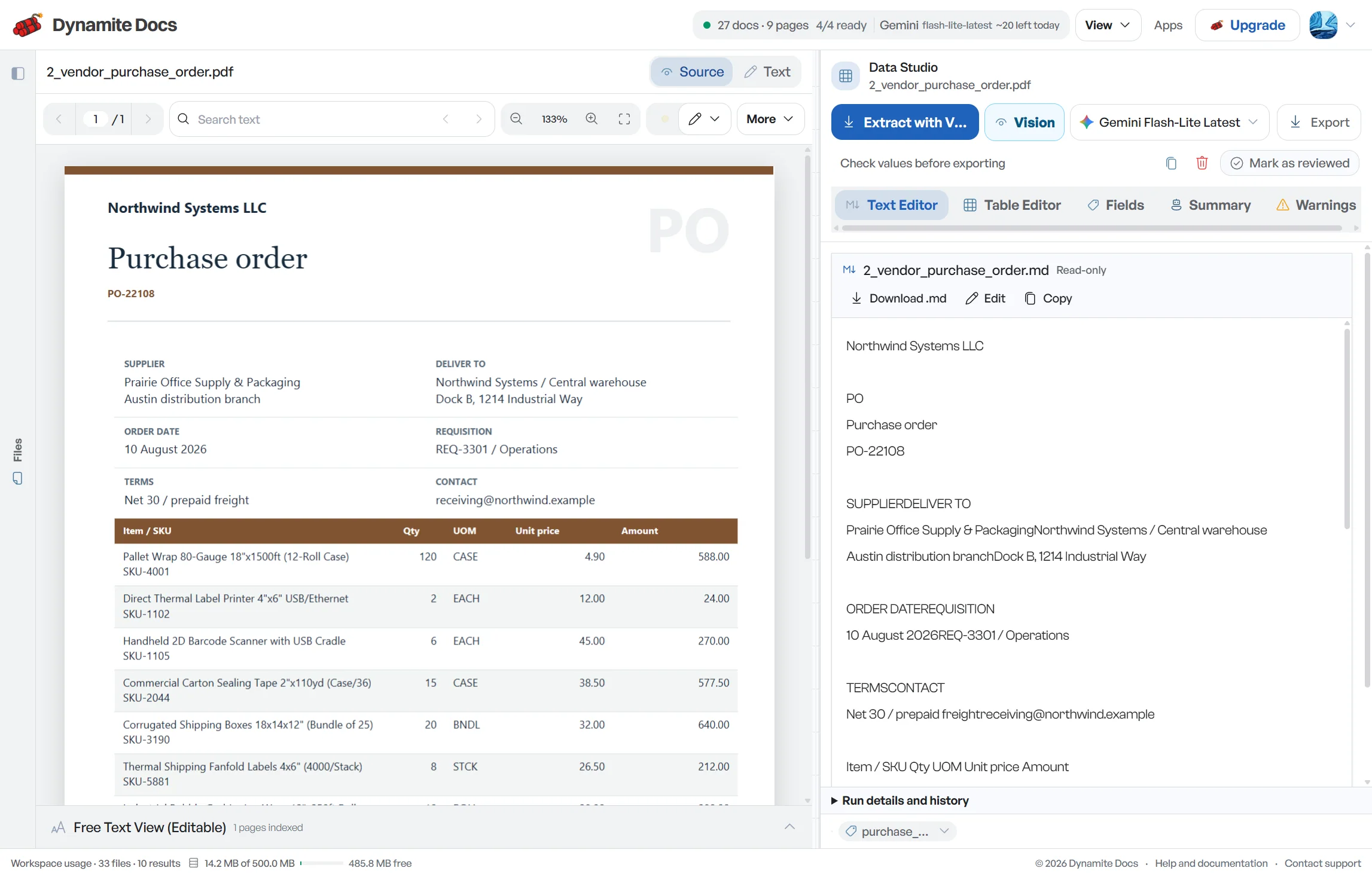
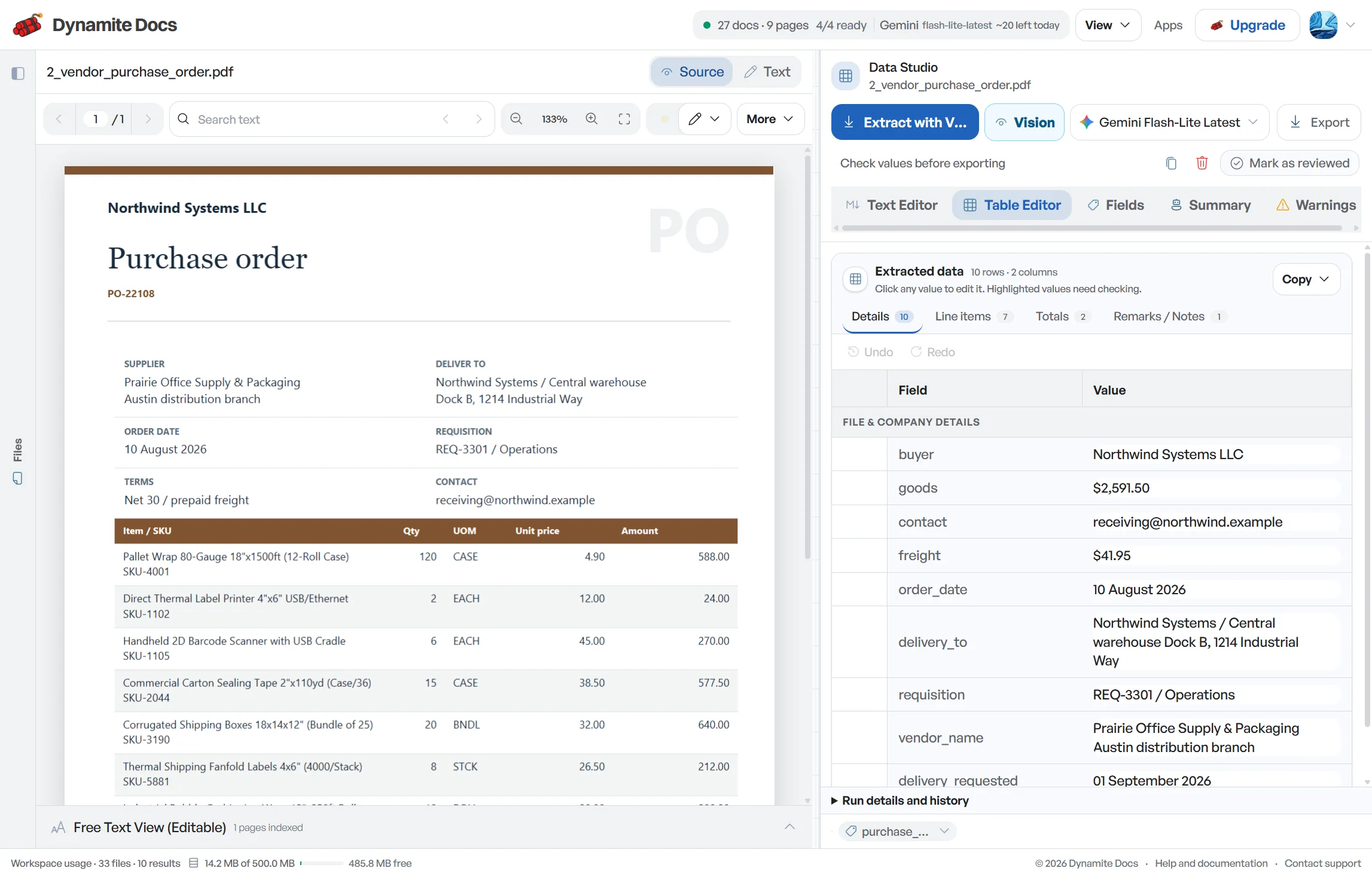
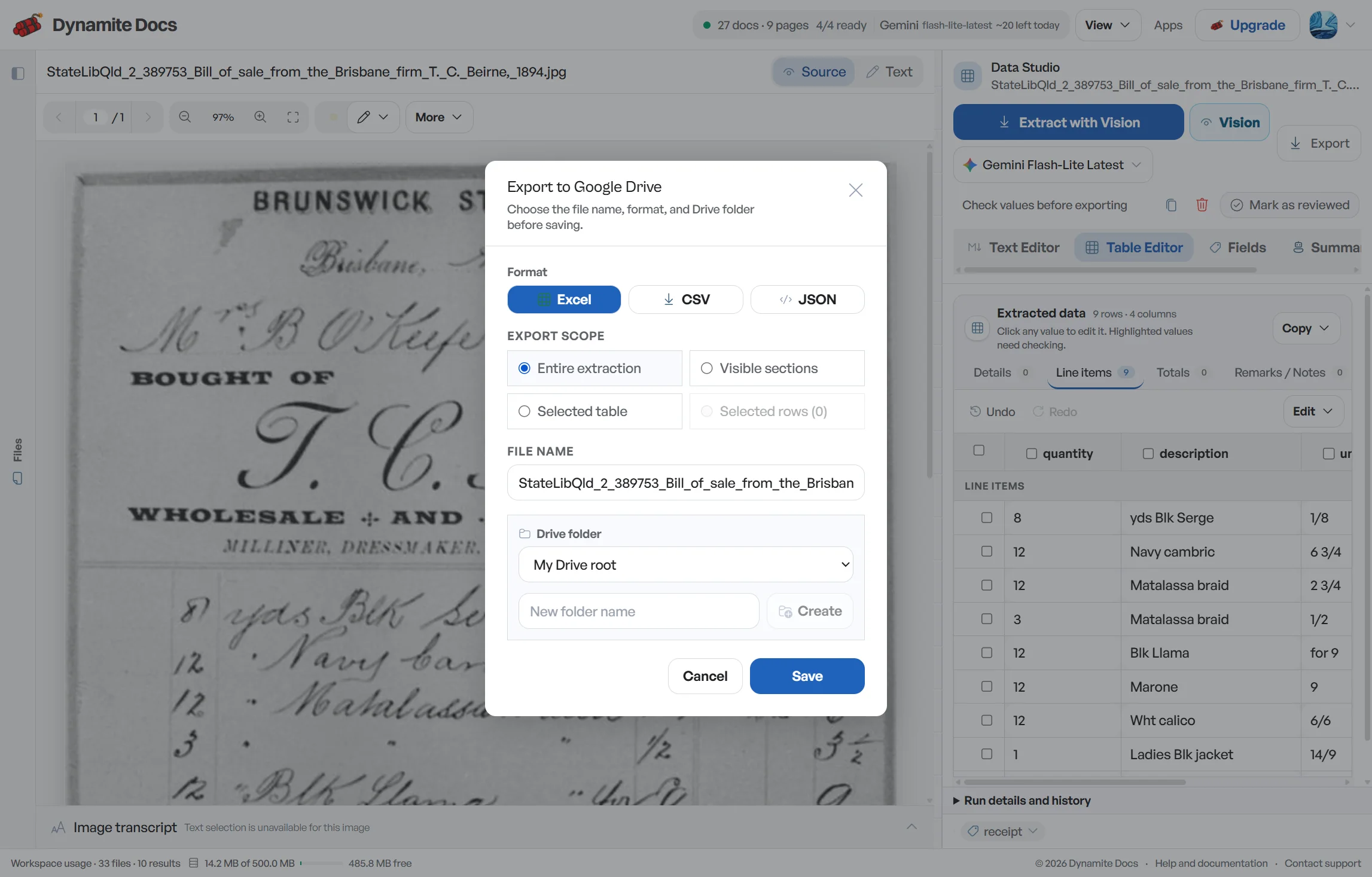
Expense report processing has two separate jobs: capture what the employee submitted, then decide what the company will reimburse. Dynamite Docs proposes claim lines, merchants, dates, currencies, amounts and receipt references from reports and supporting files. Review those values beside the source, add the business purpose and policy status, and keep rejected or disputed lines visible instead of quietly dropping them. The approved result can move to Excel, CSV, JSON or Google Sheets for the payroll or accounting process that authorizes reimbursement.
Try a receipt or compare its storage, processing, and export limits.
Manual expense report processing slows down reimbursements
- Employees submit expense summaries in different formats, often with mismatched receipt attachments.
- Manual data entry delays reimbursement cycles, creating frustration for travelling team members.
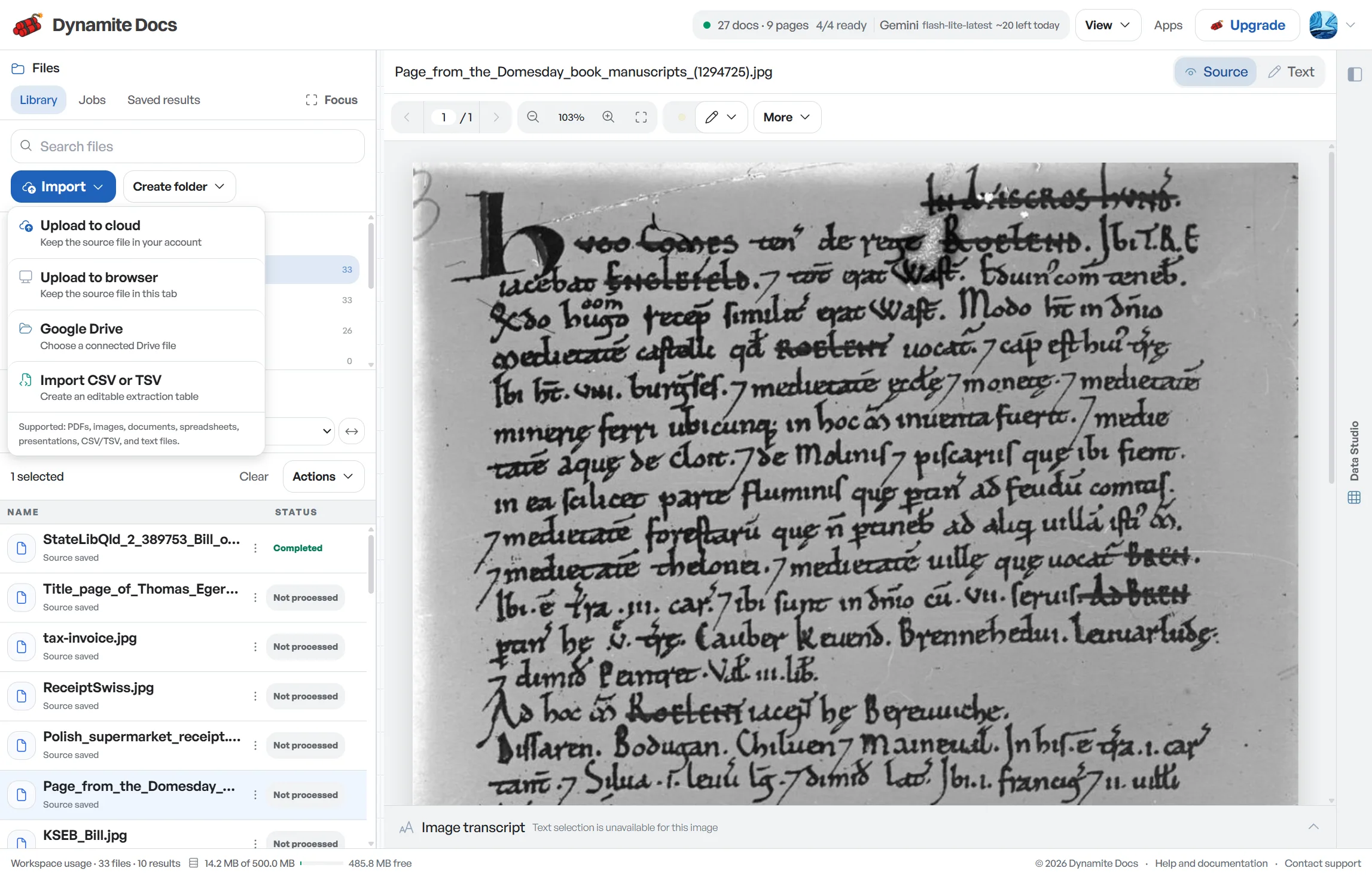
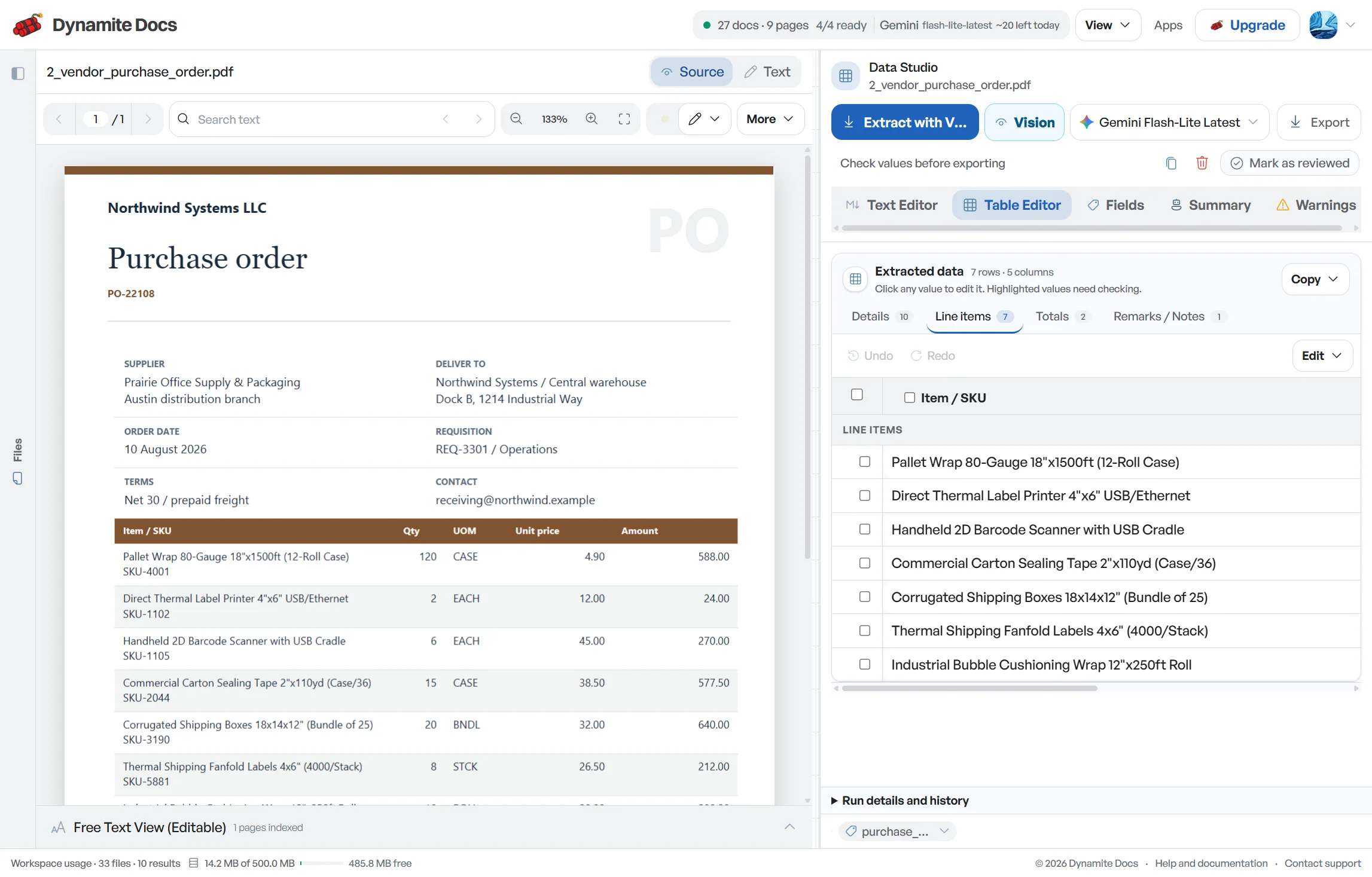
- Audits require clear links between expense line items and their original [receipt](/ocr/receipt) images.
- Foreign travel expenses and mixed payment methods require careful arithmetic that takes extra time when done by hand.
Document types this workflow handles
- Employee expense report PDFs: standard company expense submission sheets
- Itemized travel summaries: hotel, flight, meal, and ground transport logs
- Reports with attached receipts: multi-page submissions with receipts included
- Scanned paper expense forms: paper forms digitized with optical character recognition
What gets extracted from an expense report
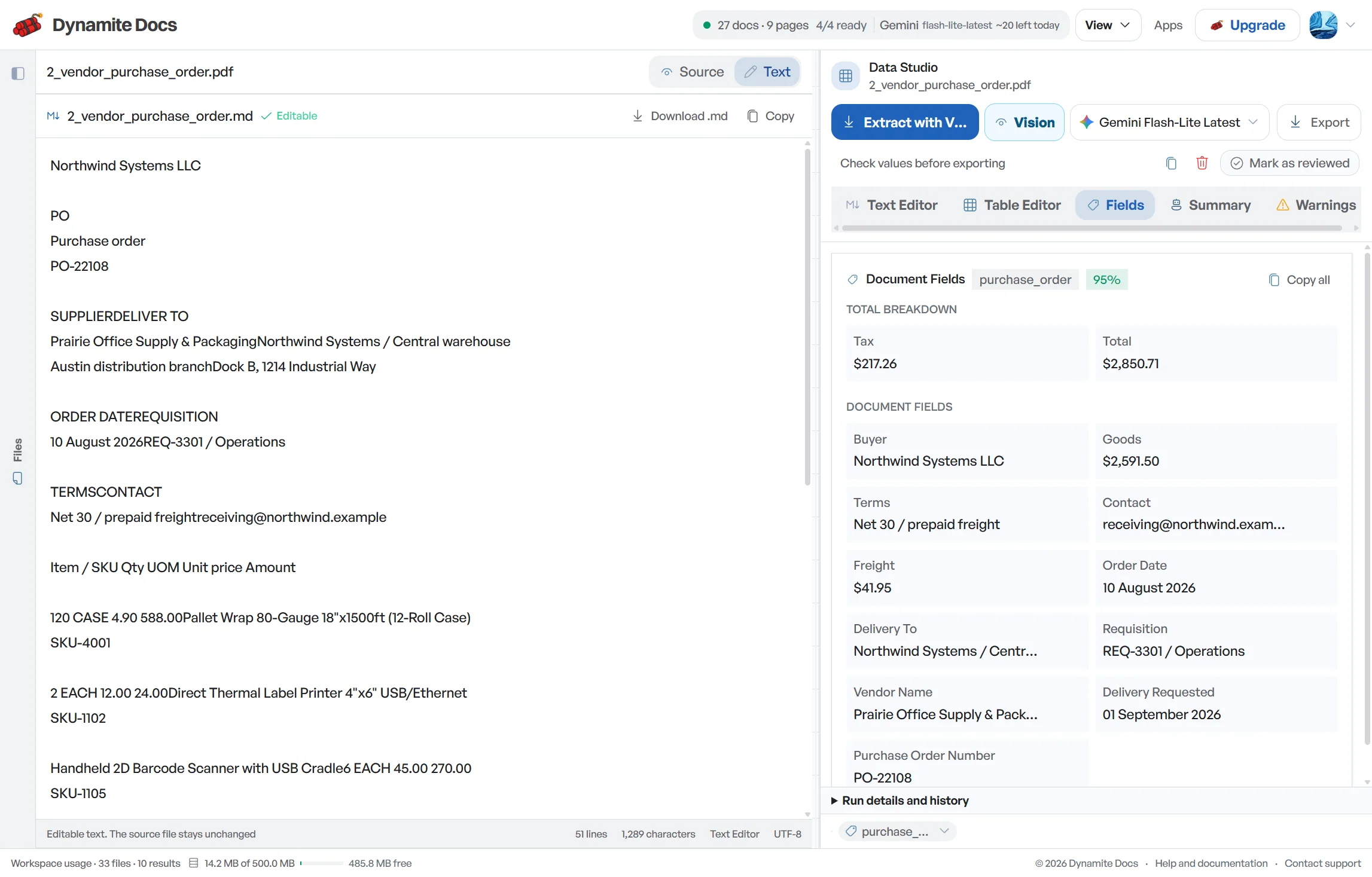
Fields are identified from each report layout. A typical extraction provides:
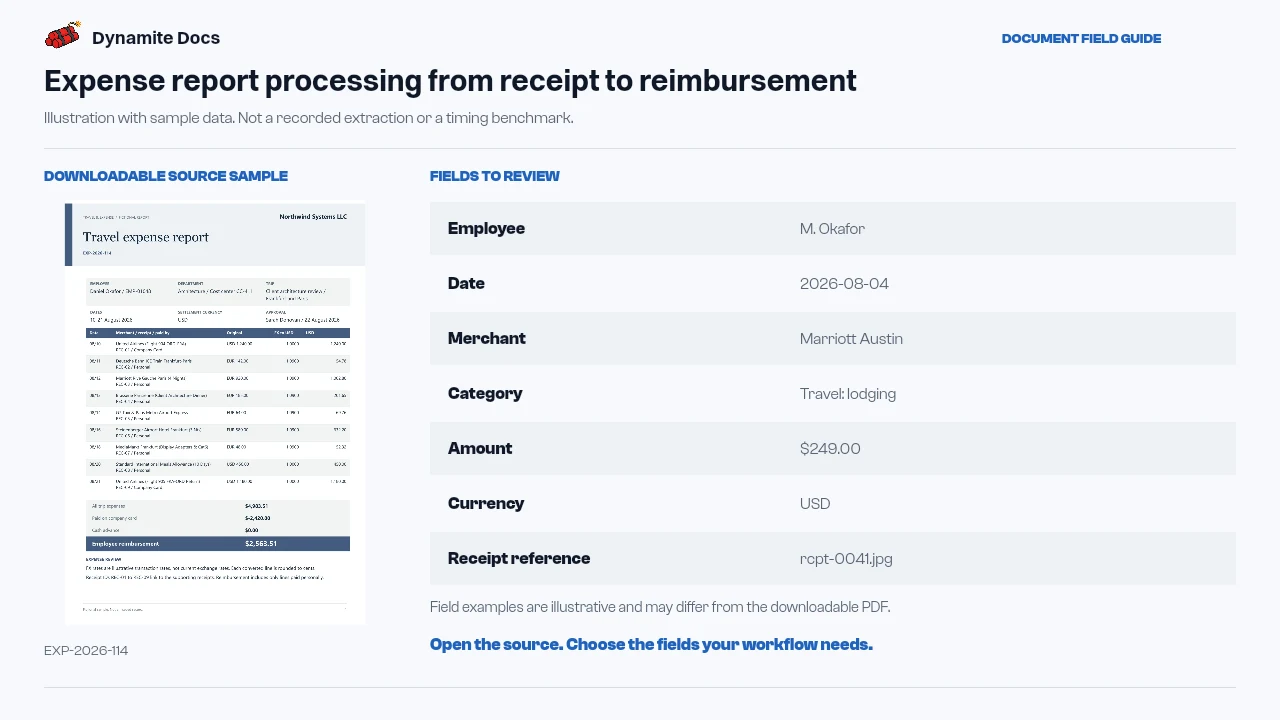
- Employee: M. Okafor
- Date: 2026-08-04
- Merchant: Marriott Austin
- Category: Travel: lodging
- Amount: $249.00
- Currency: USD
- Receipt reference: rcpt-0041.jpg
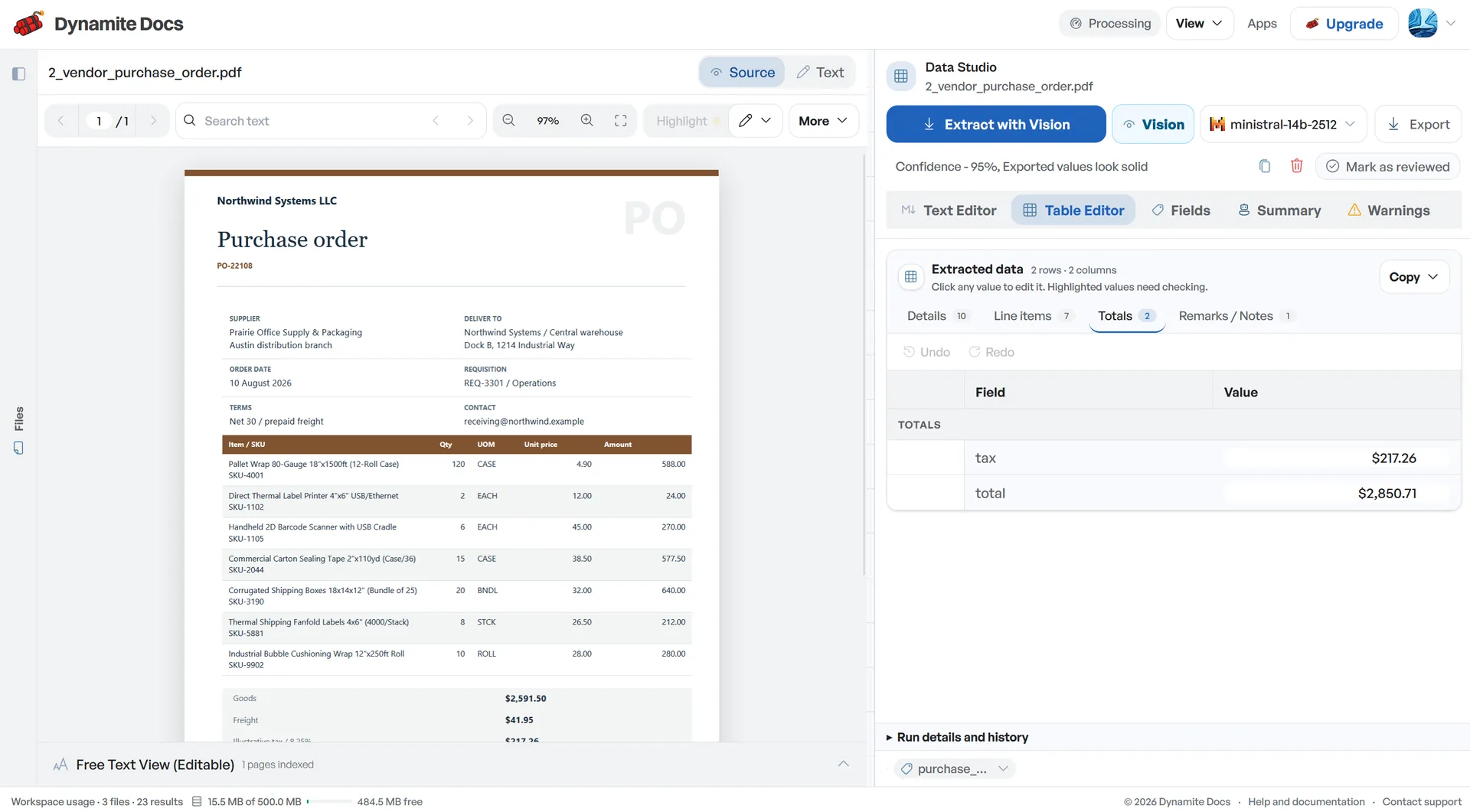
- Reimbursement total: $412.19
A realistic example
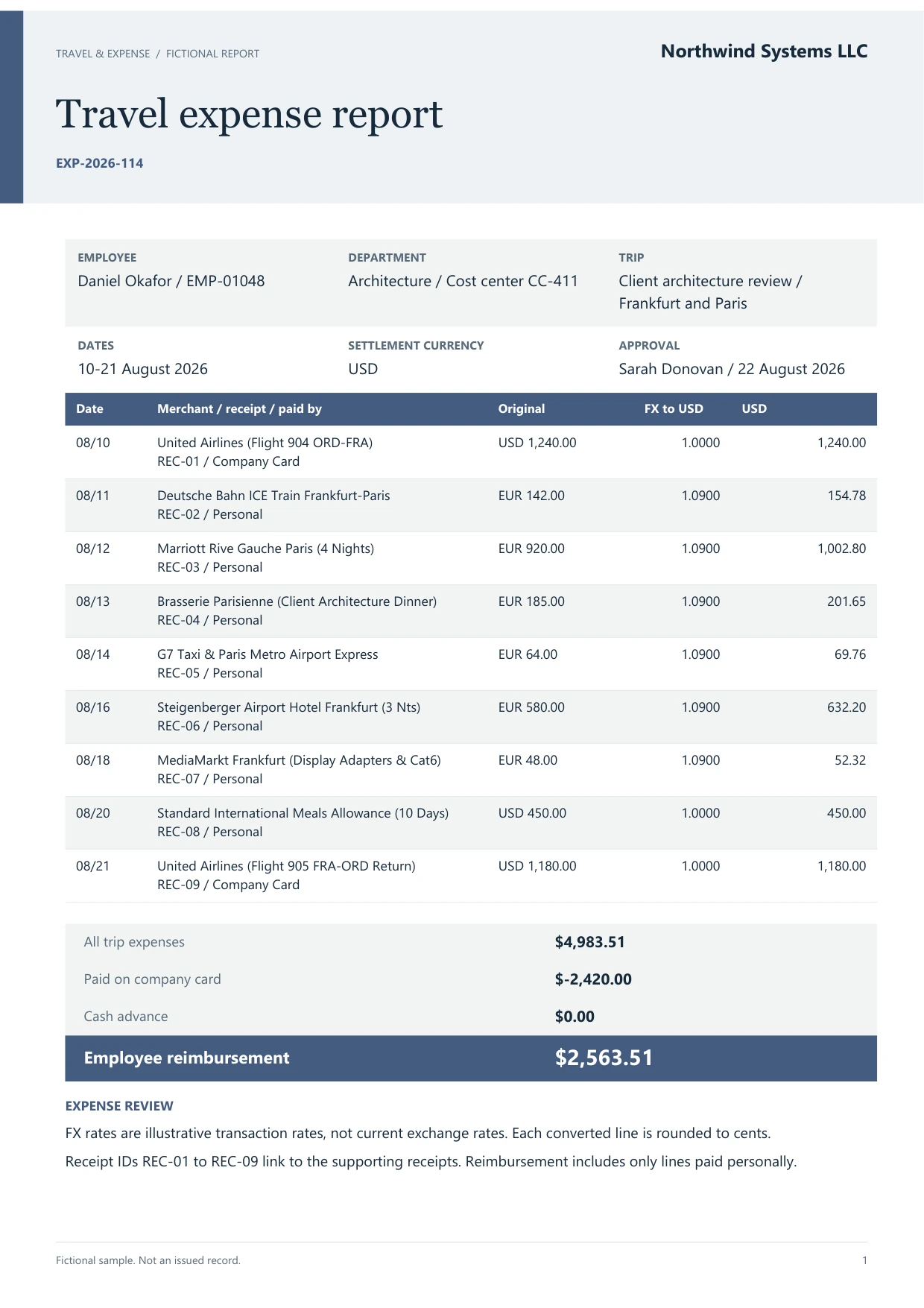
Sample data. Not a real invoice or filing record.
An expense report extracts into organized line items like these, linked to receipt files:
| Employee | Date | Merchant | Category | Amount | Currency |
|---|---|---|---|---|---|
| M. Okafor | 2026-08-04 | Marriott Austin | Travel: lodging | $249.00 | USD |
| M. Okafor | 2026-08-04 | Uber BV | Travel: ground | $18.20 | EUR |
| M. Okafor | 2026-08-05 | STAPLES | Office supplies | $63.97 | USD |
What to validate before export
Validation issue
Verify receipt coverage, currencies, and claimed totals before reimbursement.
Limitation
The extractor does not enforce an employer expense policy.
Reviewed by Dynamite Docs content team. Last verified 2026-09-11.
Faster employee reimbursements with clear audit records
An expense report joins a claim form, one or more receipts, a card record and the employer’s policy. Those documents may disagree. A receipt can show a total that differs from the amount claimed, while a card statement may add a foreign transaction fee later. Capture each source value separately before deciding which amount belongs in reimbursement.
Create one stable row per claimed expense. Useful columns include claimant, transaction date, merchant, source amount, source currency, claimed amount, payment method, business purpose, project or cost centre, receipt reference, policy status, approver and reimbursement status. Keep the submitted description even when a reviewer adds a cleaner accounting label.
Missing evidence should remain an explicit exception. A blank receipt reference, unreadable total or non-itemized card slip is different from a rejected expense. Recording that difference lets the employee supply more information without forcing finance to rebuild the row. The same approach works for duplicates: flag the possible match and resolve it before approval.
Foreign currency needs two layers of data. Preserve the merchant amount and currency from the receipt. Store the reimbursable or card-settlement amount separately, along with any exchange-rate date or fee supplied by the company’s process. OCR can read printed amounts, but it cannot choose the employer’s conversion policy.
Split personal or non-reimbursable portions instead of changing the source total. A hotel folio may contain room charges, taxes, meals and a personal item. The reviewed data should explain the allowed amount and the excluded amount while retaining the document total for comparison.
Review the claim total after the rows are settled. Sum the approved amounts and compare them with the report’s reimbursement request. Keep rejected, pending and approved lines in distinct states so the final handoff is traceable. This is more useful than a clean spreadsheet that no longer explains why its total differs from the employee’s form.
Start with a complete report that includes mixed receipts, one policy exception and a foreign-currency line. If the output can represent those cases without manual side notes, it is ready for a larger batch. Saved corrections may help recurring forms, but policy decisions and approval authority stay with the employer.
Private and flexible expense processing
Expense reports contain personal employee spending details. Check the selected provider and policy settings before processing them. Hobby, Pro and Ultra can also run model inference on the user’s computer through the signed Ollama companion.
Saved corrections can help recurring forms follow the same extraction shape. They do not turn a prior category or approval into a policy decision for a new claim.
Any signed-in plan can connect a supported provider key. Pro and Ultra BYOK runs do not spend Dynamite Docs PE, though provider, file-size and workflow limits still apply.
Questions, answered
Does it link individual receipts to their corresponding report lines?
It can extract visible receipt references and keep source files with the workspace. Review the proposed relationship between a report line and its receipt, especially when filenames or printed references are missing.
Can it read smartphone photos of receipts?
Yes. Mobile photos of paper receipts and printed summaries are read with visual character recognition alongside digital PDF files.
How does it handle multiple currencies on a business trip?
Request the source amount and currency for each line. Keep the converted or reimbursable amount in a separate column. Your company’s policy or card record should supply the applicable exchange rate and treatment of fees.
How is this different from single receipt processing?
Receipt processing is designed for individual store slips. Expense report processing handles full multi-line submissions, employee names, and combined reimbursement totals.
Related document workflows
Related extraction articles
Open the document extraction workspace, no credit card required.