GST invoice rows for accounting export mapping
By Dynamite Docs. Published . Updated .
Turn GST invoices into clean, reviewed data for Excel and Tally.
Extracting invoice text is only the first step. The reviewed data still has to match the columns, identifiers and voucher rules used by your accounting setup. Dynamite Docs turns GST invoices into consistent CSV, JSON or Excel rows that you can map into a Tally import utility or another accounting system. It does not create or post Tally vouchers. Your team remains responsible for ledger selection, voucher configuration, tax treatment and the final import. The practical goal is a cleaner handoff: source fields are visible, corrections are captured before export, and the same column structure can be reused across a batch.
Try a GST invoice or compare its storage, processing, and export limits.
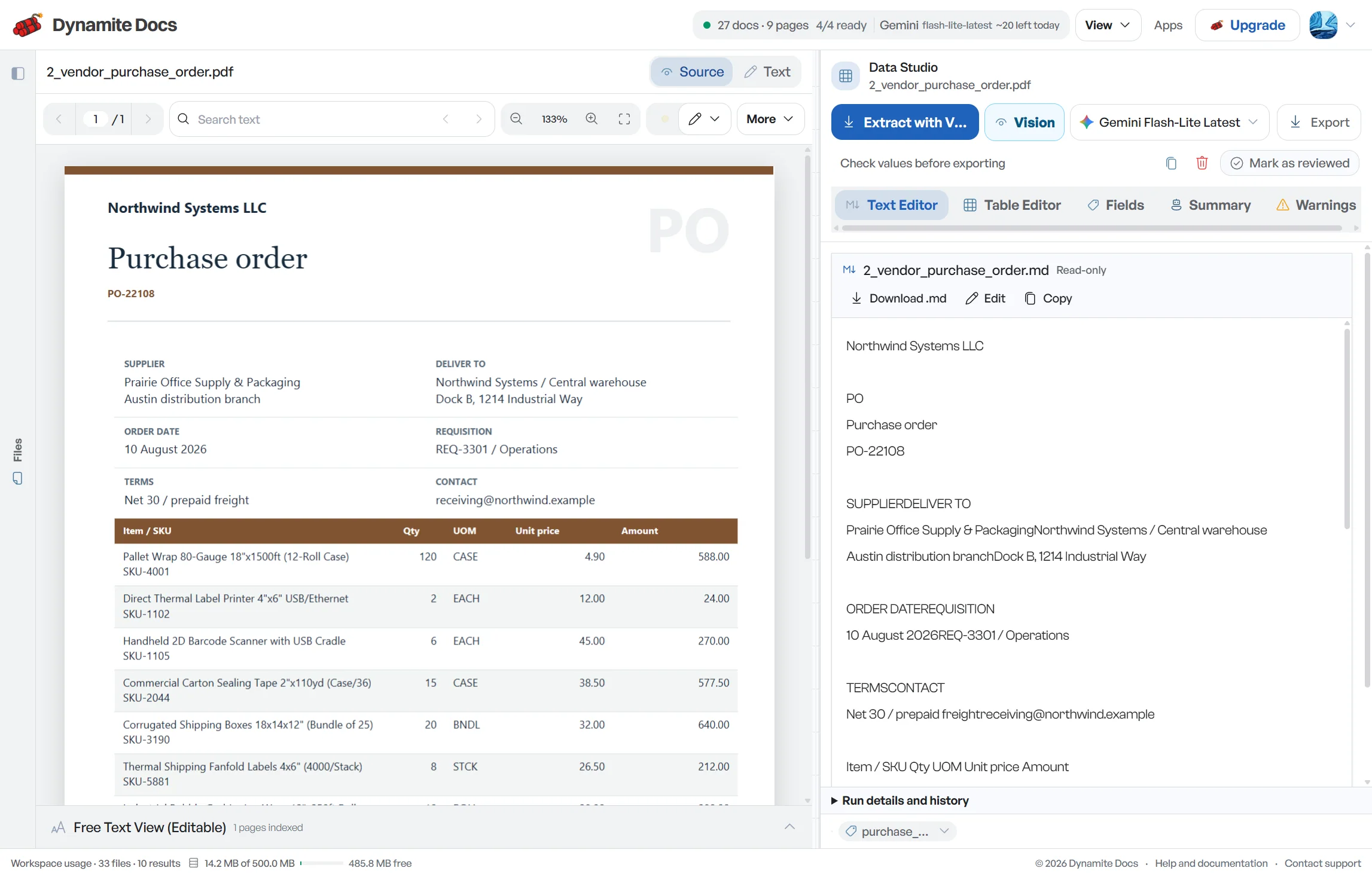
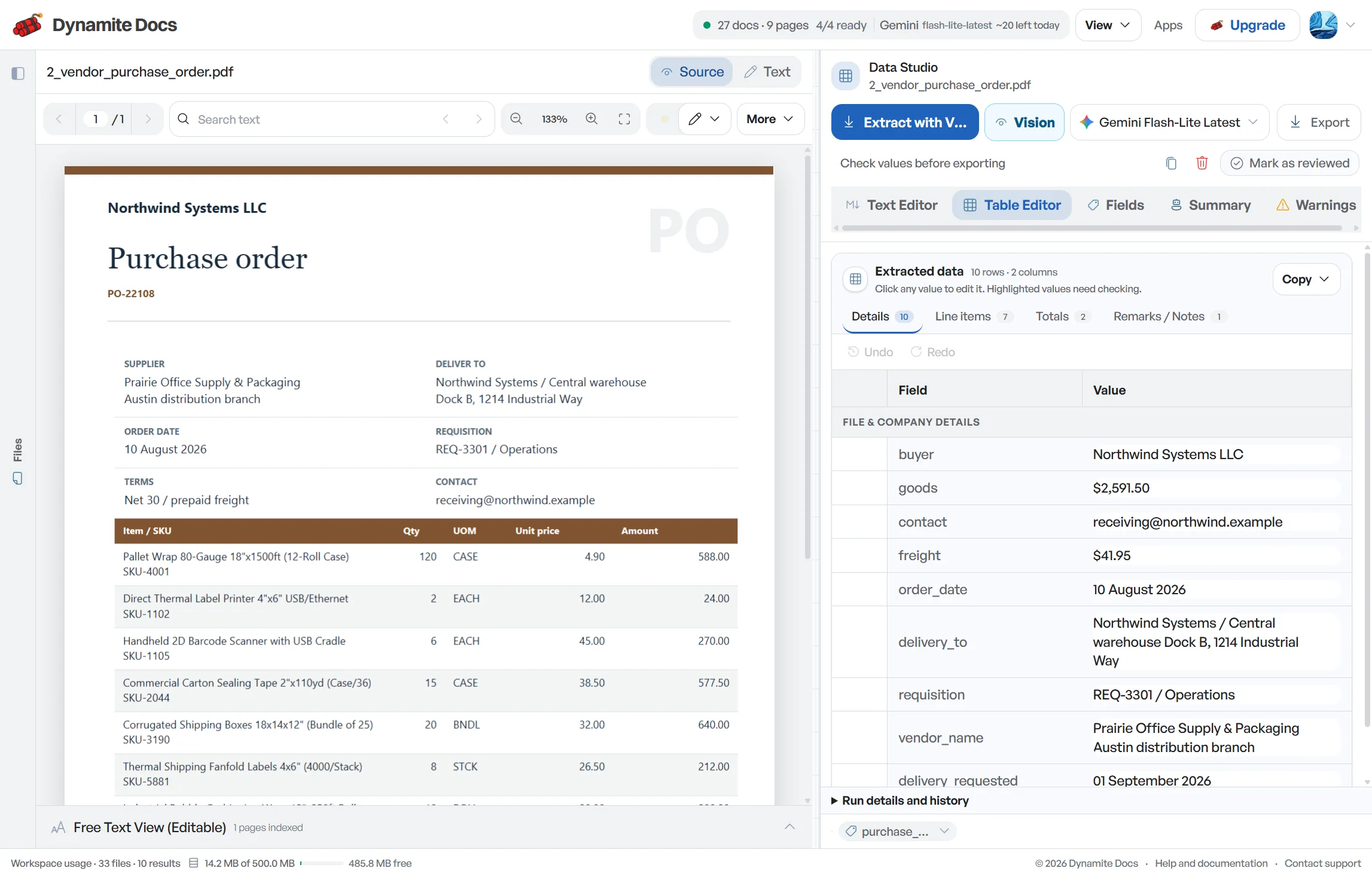
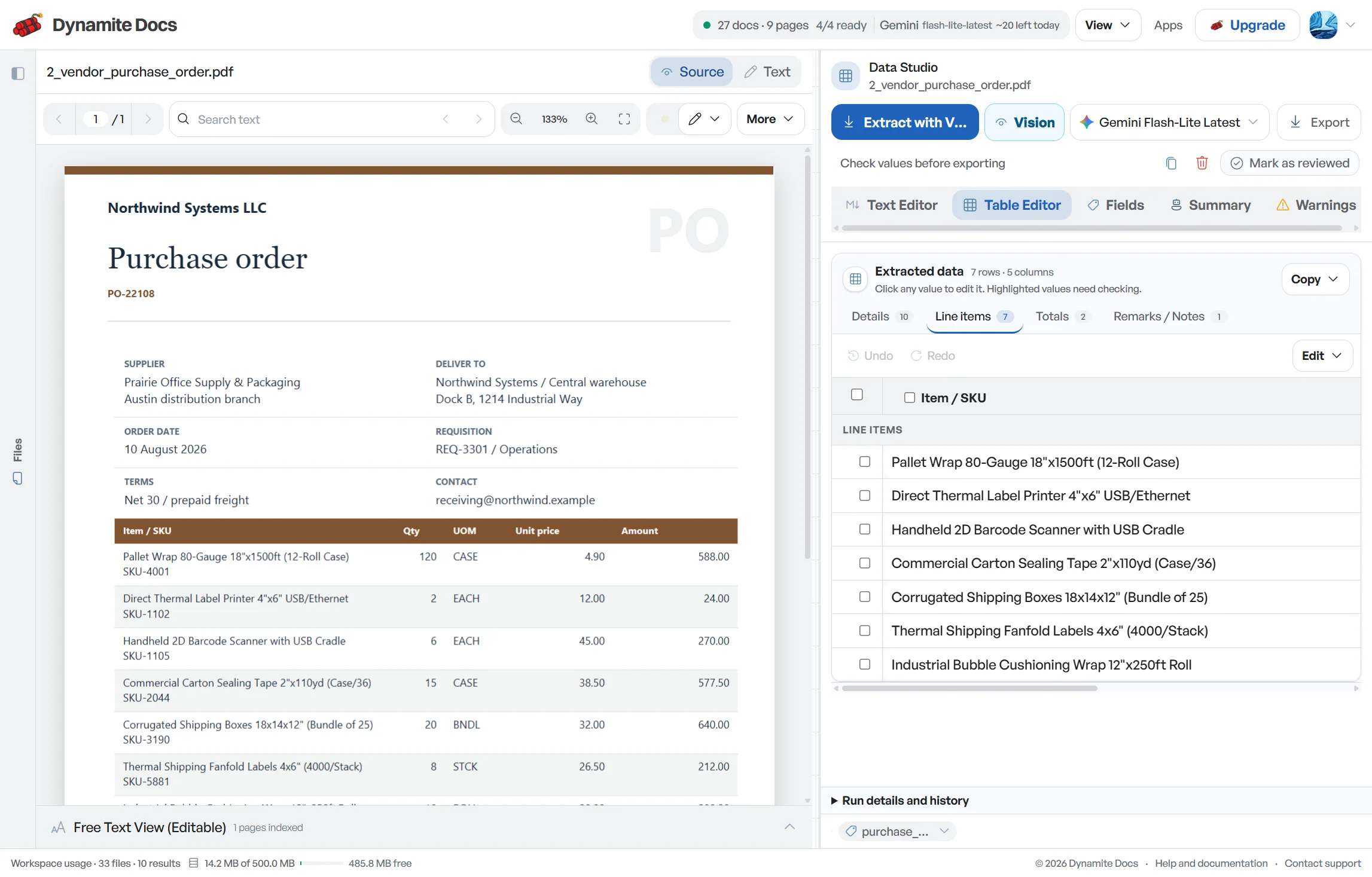
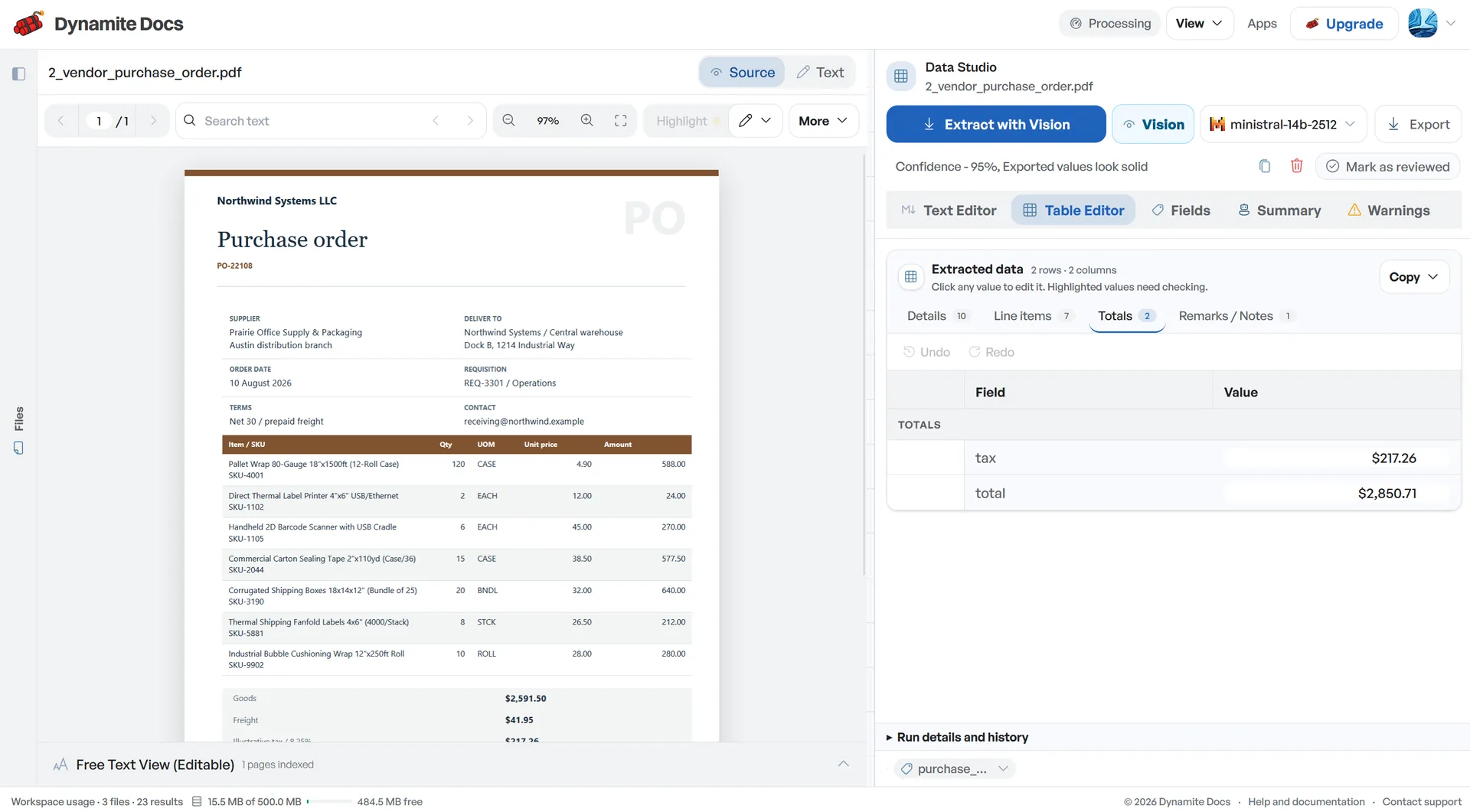
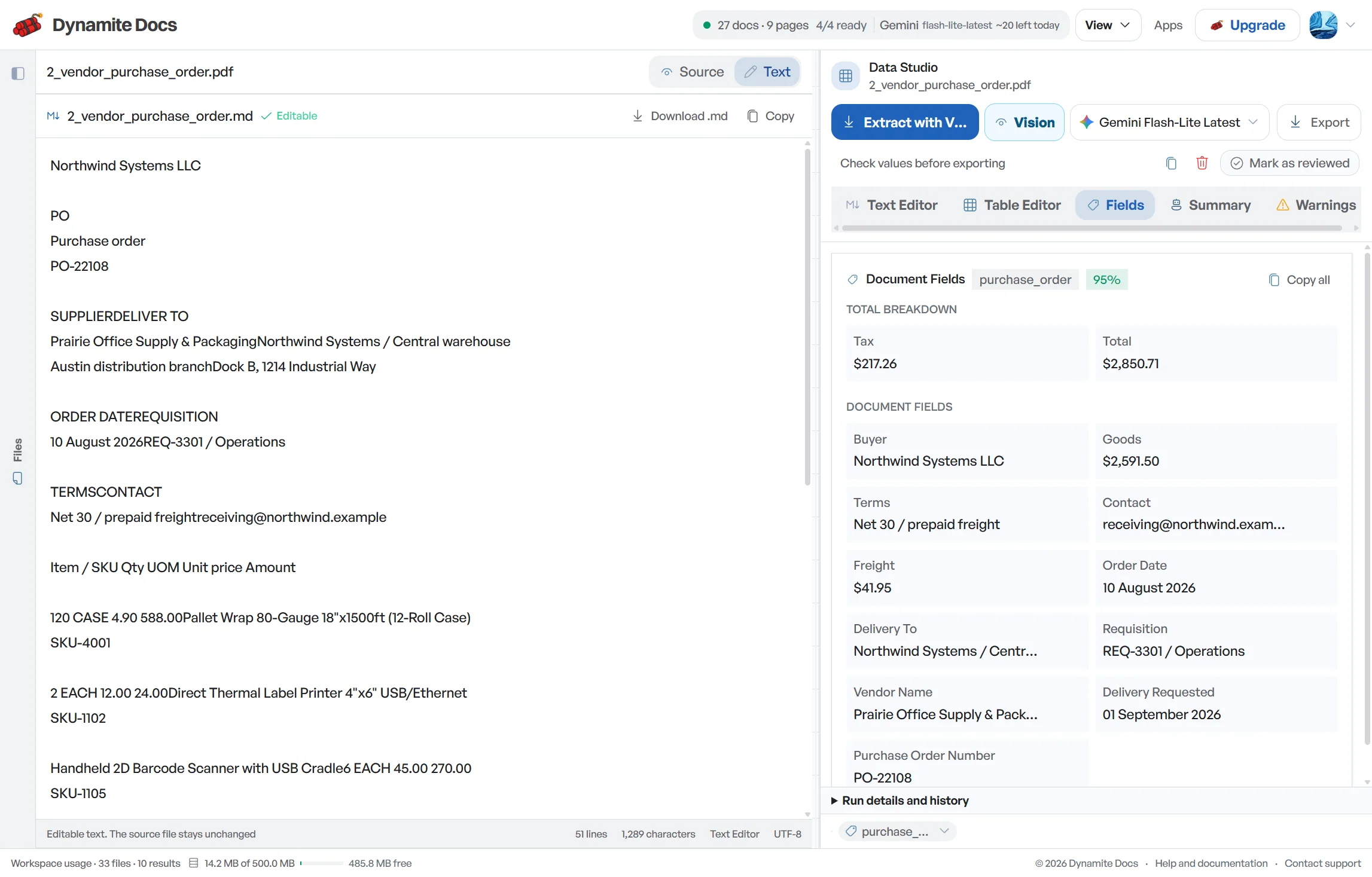
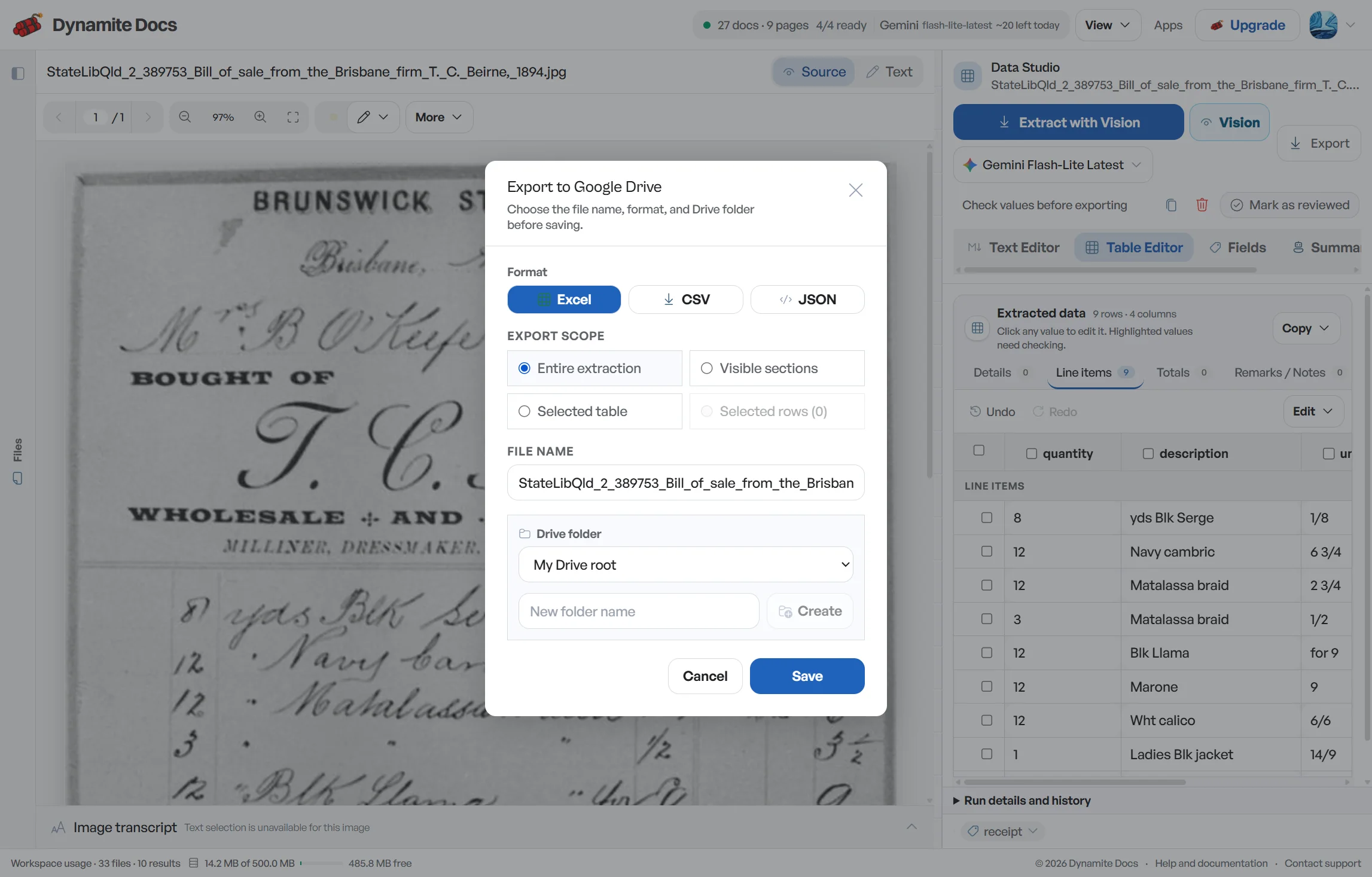
Clean spreadsheet columns make accounting import simple
- Extracted data is most useful when column names and values are organized consistently across all vendors.
- GST invoices include extensive detail, such as party GSTINs, HSN/SAC codes, taxable amounts, and tax splits, that must be arranged neatly.
- Copying and pasting data between unorganized spreadsheets often introduces formatting errors.
- Reviewing data before export helps you compare numbers with the source bills before entering your books.
Document types this workflow handles
- GST tax invoices: sales and purchase invoices with tax splits
- Credit & debit notes: adjustments exported with distinct document types
- Purchase bills: vendor bills for goods and services
- Sales bills: outward customer invoices
What appears in the exported rows
Exports include reviewed invoice fields as clean, standardized columns. A typical extraction provides:
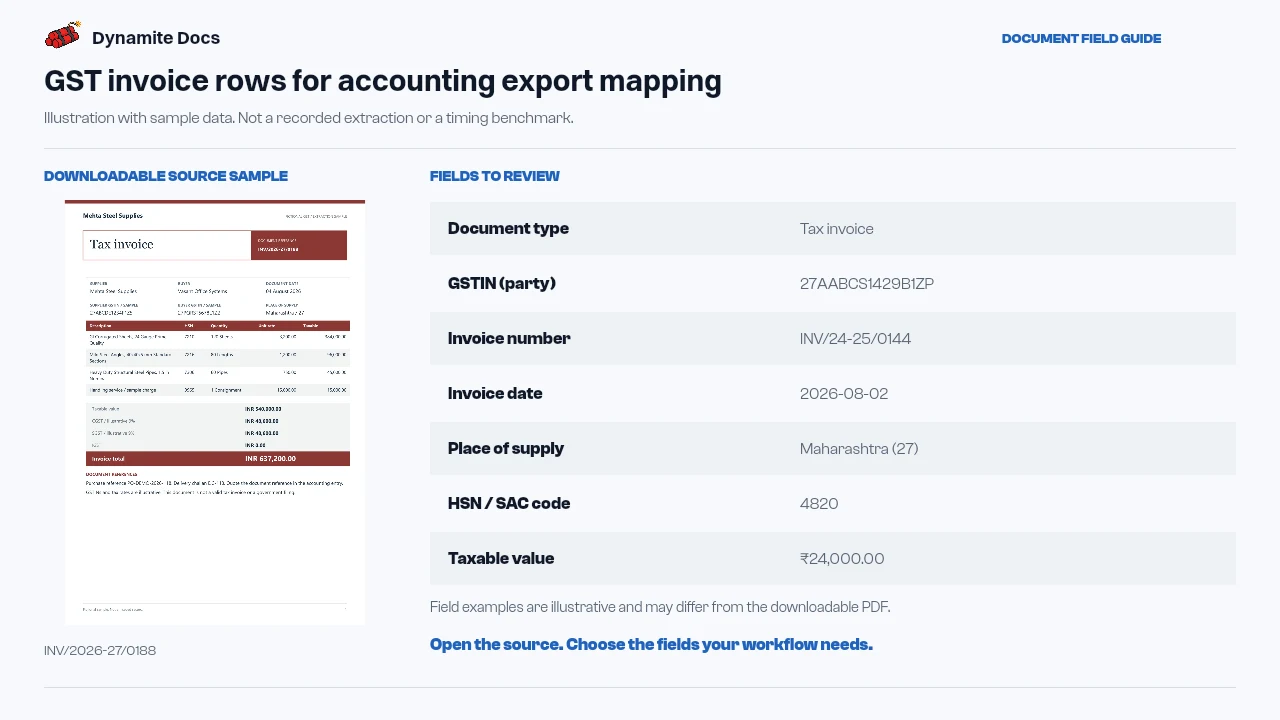
- Document type: Tax invoice
- GSTIN (party): 27AABCS1429B1ZP
- Invoice number: INV/24-25/0144
- Invoice date: 2026-08-02
- Place of supply: Maharashtra (27)
- HSN / SAC code: 4820
- Taxable value: ₹24,000.00
- CGST amount: ₹2,160.00
- SGST / IGST amount: ₹2,160.00 / ₹33,480.00
- Invoice total (incl. tax): ₹28,320.00
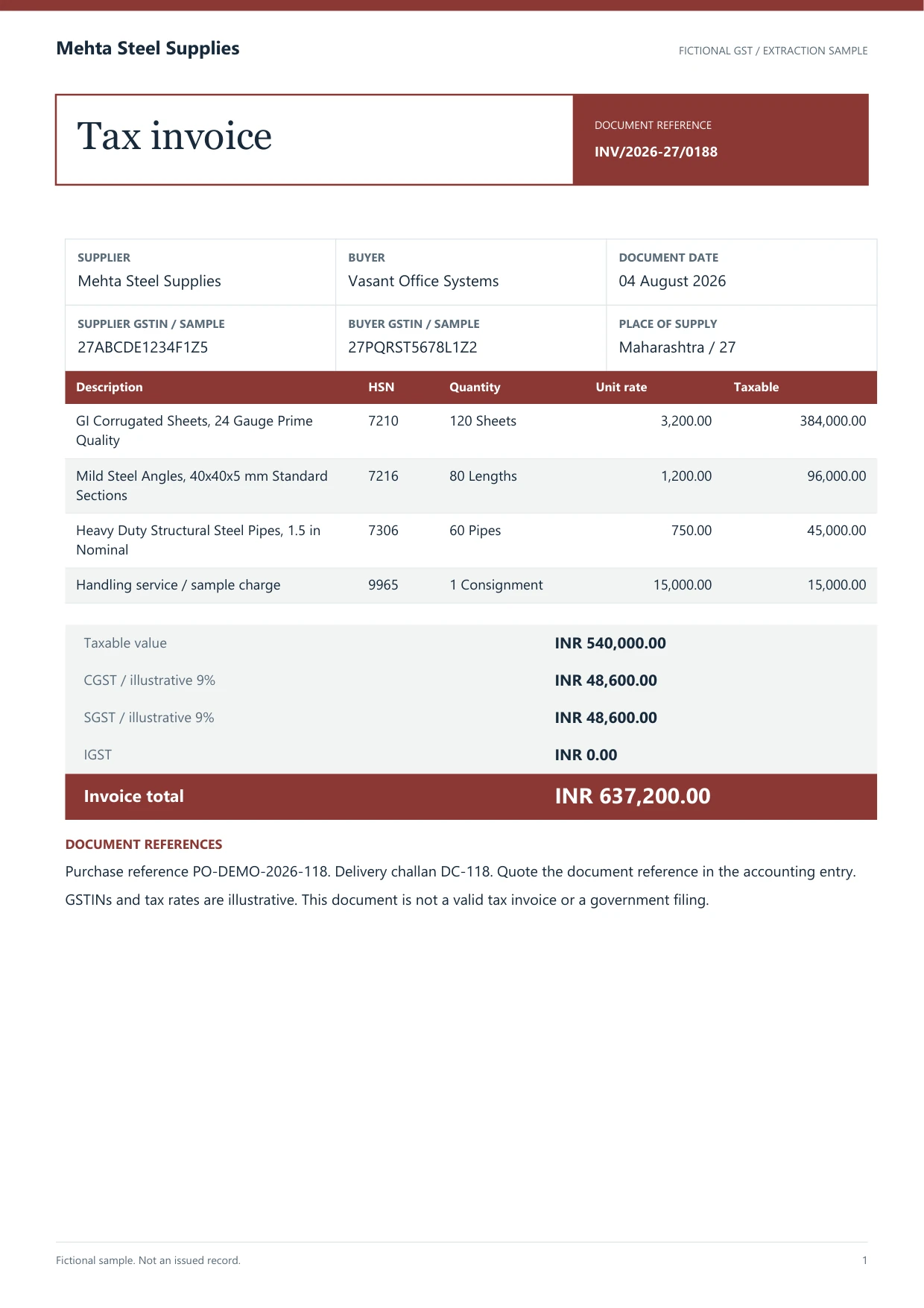
A realistic example
Sample data. Not a real invoice or filing record.
A reviewed batch exports into organized rows like these, one row per document, ready for your accounting workflow:
| Doc type | Invoice # | Date | Party GSTIN | HSN/SAC | Taxable value | CGST | SGST | IGST | Total |
|---|---|---|---|---|---|---|---|---|---|
| Tax invoice | INV/24-25/0144 | 2026-08-02 | 27AABCS1429B1ZP | 4820 | ₹24,000 | ₹2,160 | ₹2,160 | Not applicable | ₹28,320 |
| Tax invoice | INV/24-25/0145 | 2026-08-03 | 33AABCC3456C1ZD | 8467 | ₹1,86,000 | Not applicable | Not applicable | ₹33,480 | ₹2,19,480 |
| Credit note | CN/24-25/0031 | 2026-08-06 | 27AABCS1429B1ZP | 4820 | ₹4,000 | ₹360 | ₹360 | Not applicable | ₹4,720 |
What to validate before export
Validation issue
Confirm column mapping, ledger names, dates, and debit-credit treatment.
Limitation
The export is not a native Tally import file and is not posted automatically.
Reviewed by Dynamite Docs content team. Last verified 2026-09-11.
Standardized columns for a controlled accounting import
A stable export schema separates document capture from accounting configuration. The extracted invoice number, date, GSTIN, HSN or SAC, taxable value and tax amounts stay in predictable columns even when supplier layouts change. Your mapping layer can then translate those source columns into the ledger names, voucher types, stock items, units, cost centres and tax ledgers used by one Tally company. Keeping that translation outside the extraction step makes exceptions easier to see and mapping changes easier to audit.
Treat the export as a staging file, not as a posting-ready truth source. Review low-confidence fields against the invoice, confirm that line totals reconcile to the taxable value, and check that the tax components add up to the document total. Look for duplicate invoice references within the same supplier and financial period. If a source uses an unfamiliar item description or party spelling, resolve it to an approved master value in a separate mapping column rather than overwriting the captured source text.
Before a large import, use a small pilot containing a normal invoice, an interstate transaction, an adjustment document and at least one multi-line bill. Import it into a test company or controlled workflow, inspect the resulting vouchers, then lock the accepted header order and mapping version. Record who reviewed the source rows and who approved the import. This simple checkpoint makes rework much easier to trace than editing vouchers after a full batch has been posted.
Excel and CSV exports also work as review schedules. You can filter by supplier, GSTIN, document type or exception status; compare the batch total with the invoice register; and retain the reviewed sheet with the accounting period. JSON is useful when an internal script or integration needs explicit field names and predictable value types. Whichever format you choose, preserve the original documents and the reviewed export together so a later query can be traced back to its source.
Reliable data exports with complete user control
Consistent headers reduce repeated cleanup, but they do not decide which ledger, voucher type or tax treatment is correct for your company. That judgment stays with the reviewer and the accounting system mapping.
Digital PDFs may contain usable embedded text, while scans and photos require visual extraction. Both can contain ambiguous values, broken tables or missing labels, so both should pass through the same review controls.
Reviewed rows can be exported to Excel, CSV or JSON, or pushed to Google Sheets when that connection is enabled. Every signed-in tier can connect a provider key. Free and Hobby own-key runs use their monthly PE allowance; Pro and Ultra own-key runs do not consume PE.
Questions, answered
What export formats are supported?
You can export reviewed data to Excel XLSX, CSV or JSON. You can also push a table to Google Sheets after connecting the integration.
Can I import the exported CSV directly into my accounting software?
The export provides standardized source columns such as GSTIN, invoice number, date, taxable value and tax splits. You still need to map them into the exact template, masters and voucher rules used by your accounting setup. Run a small test import before processing a full period.
Are credit notes and debit notes included in the export?
Yes. Adjustments are labeled with their respective document types so invoices and notes can be identified clearly within the same spreadsheet.
Do manual corrections carry over into the export?
Yes. Any corrections made during the review step are saved and reflected in your final exported file.
Related document workflows
Related extraction articles
Open the document extraction workspace, no credit card required.