GST invoice OCR for scanned papers and mobile photos
By Dynamite Docs. Published . Updated .
Turn GST invoices into clean, reviewed data for Excel and Tally.
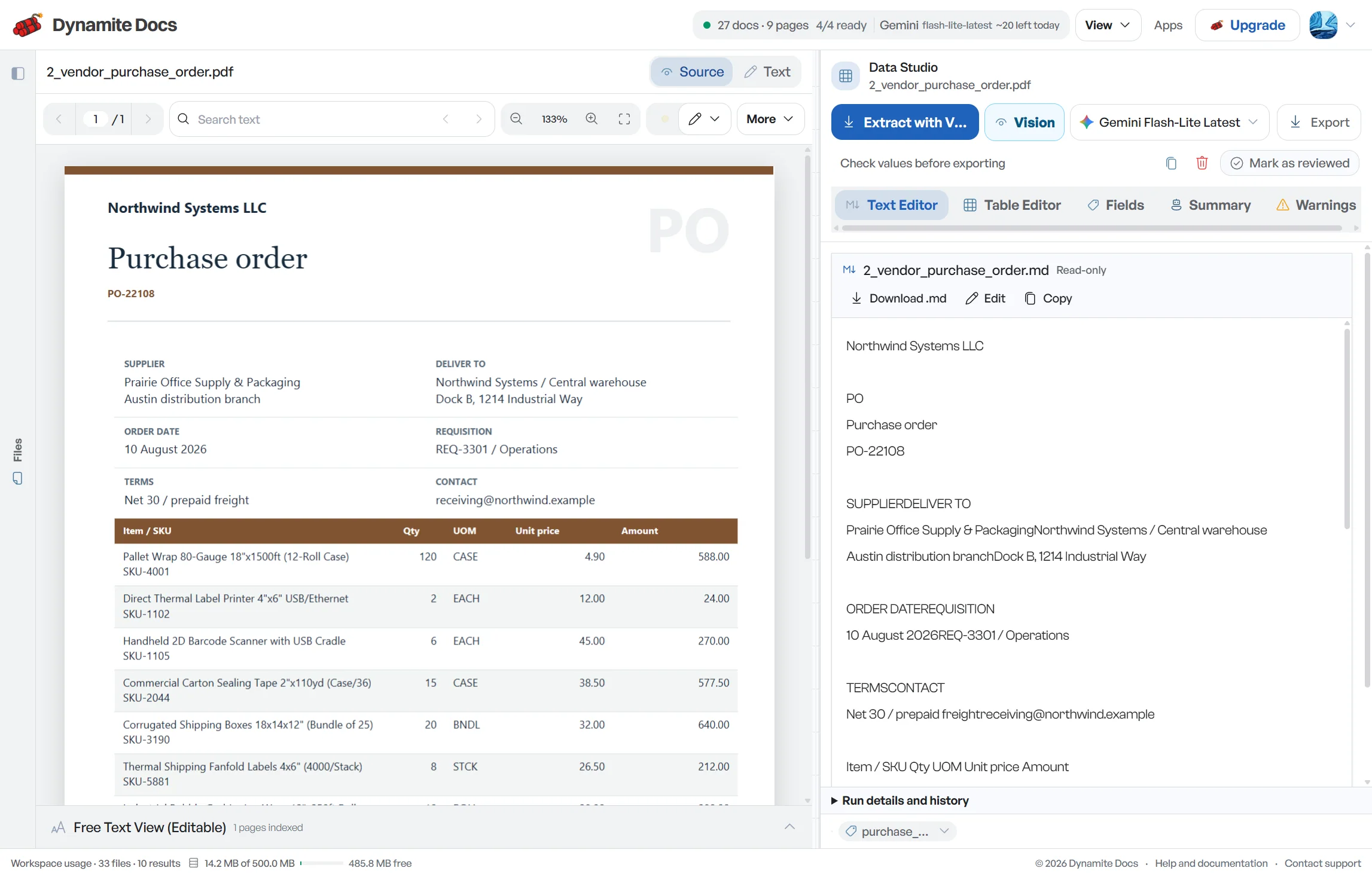
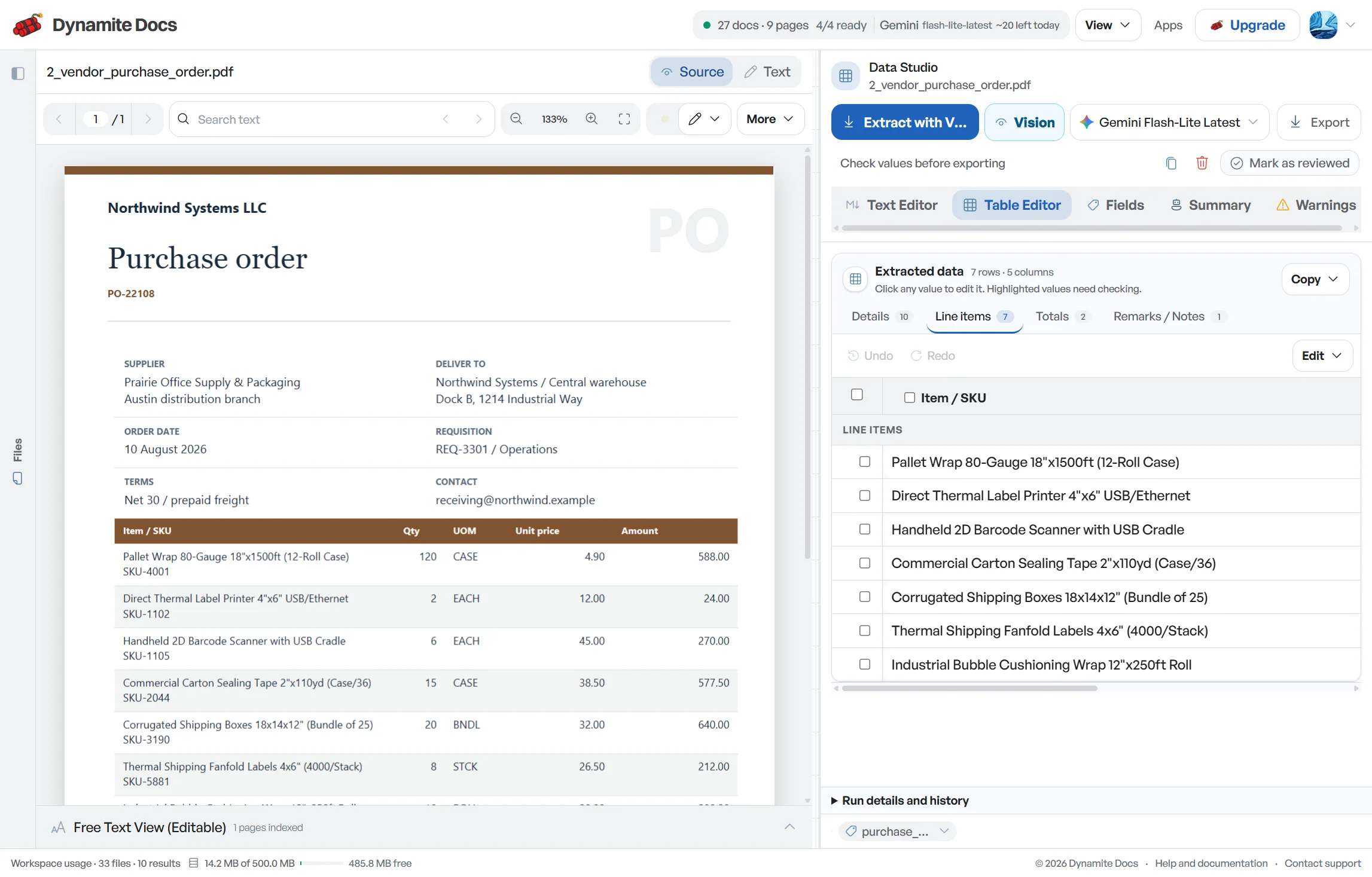
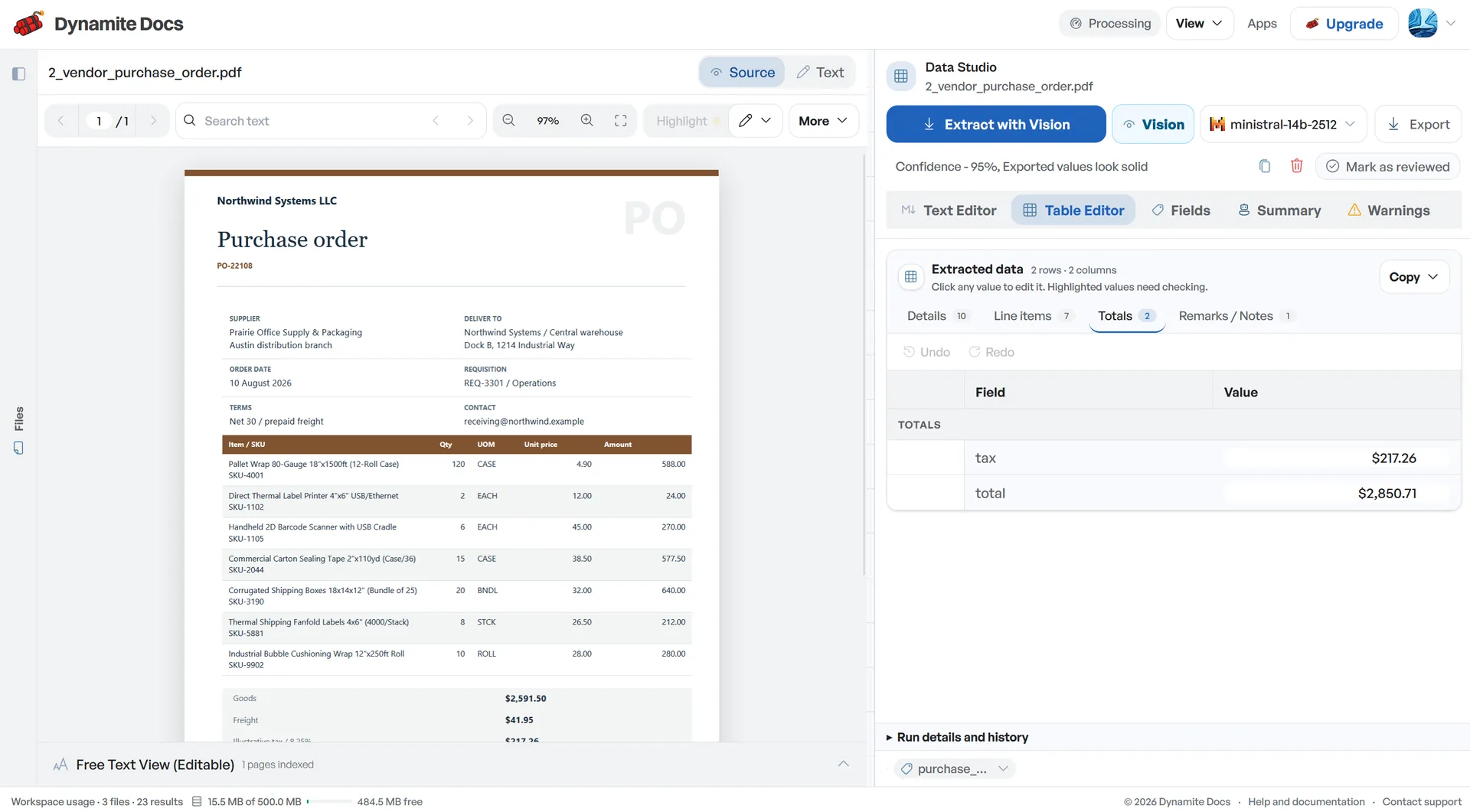
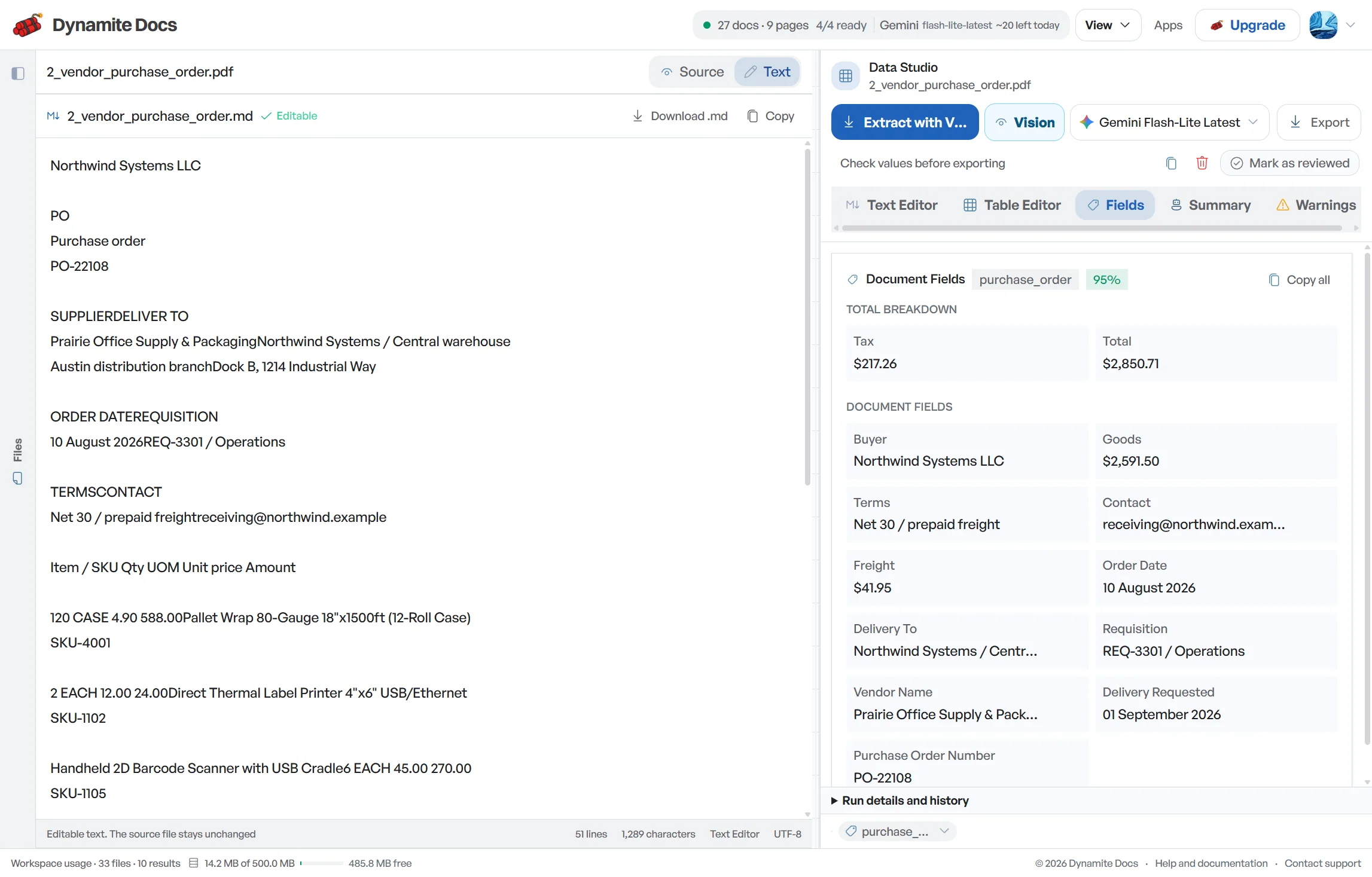
GST invoice OCR is for files that have pixels but no reliable text layer: paper scans, photocopies and mobile photos. Dynamite Docs uses a vision-capable model to propose the printed GSTIN, [invoice](/accounting/india/tally-invoice-extraction) identity, HSN or SAC, line items, taxable value and tax components as structured fields. The source image stays available during review so a person can inspect faint digits, cropped edges and shifted table rows. Export only after the GSTIN roles, arithmetic and tax split agree with the visible invoice.
Try a GST invoice or compare its storage, processing, and export limits.
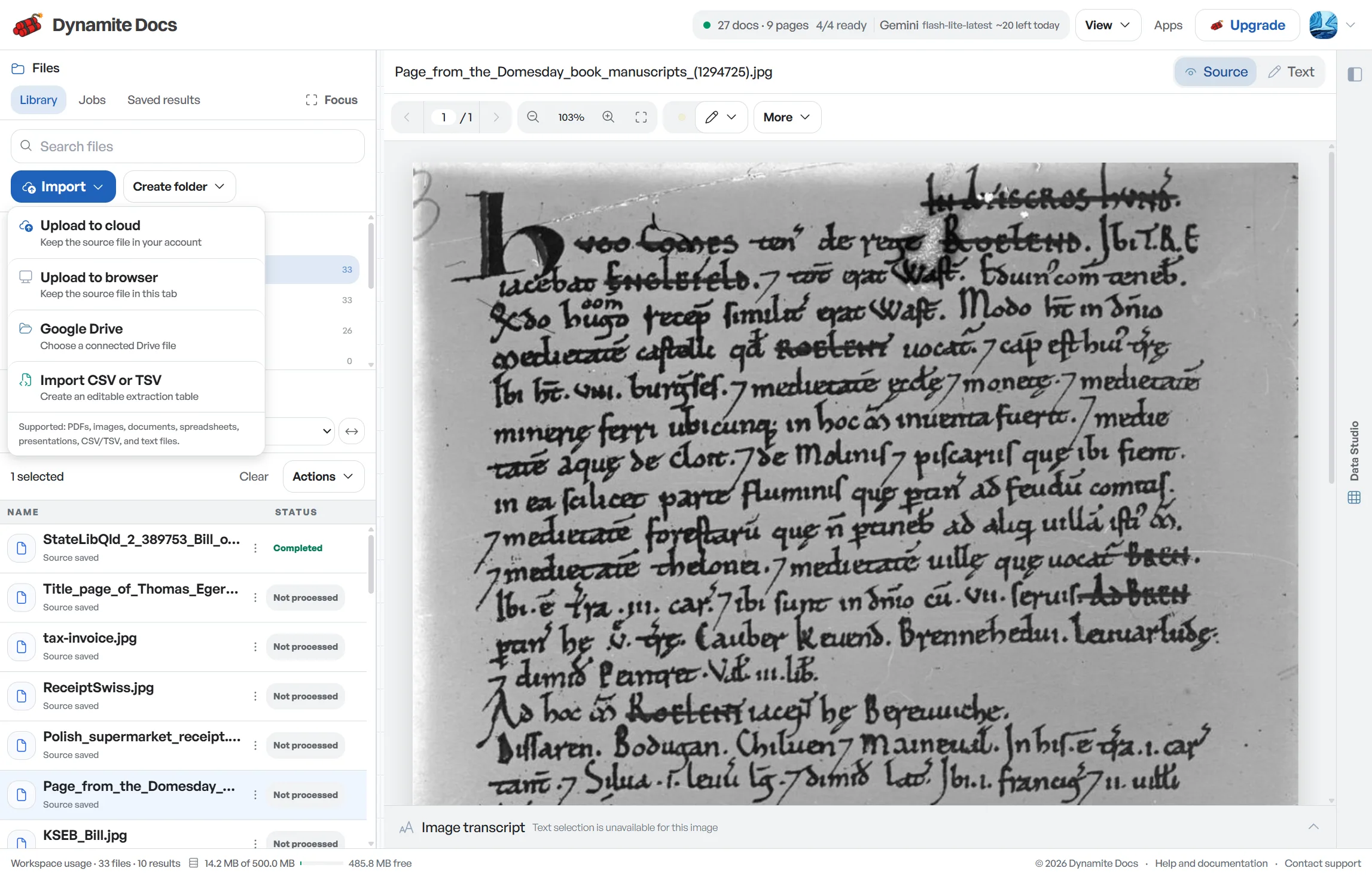
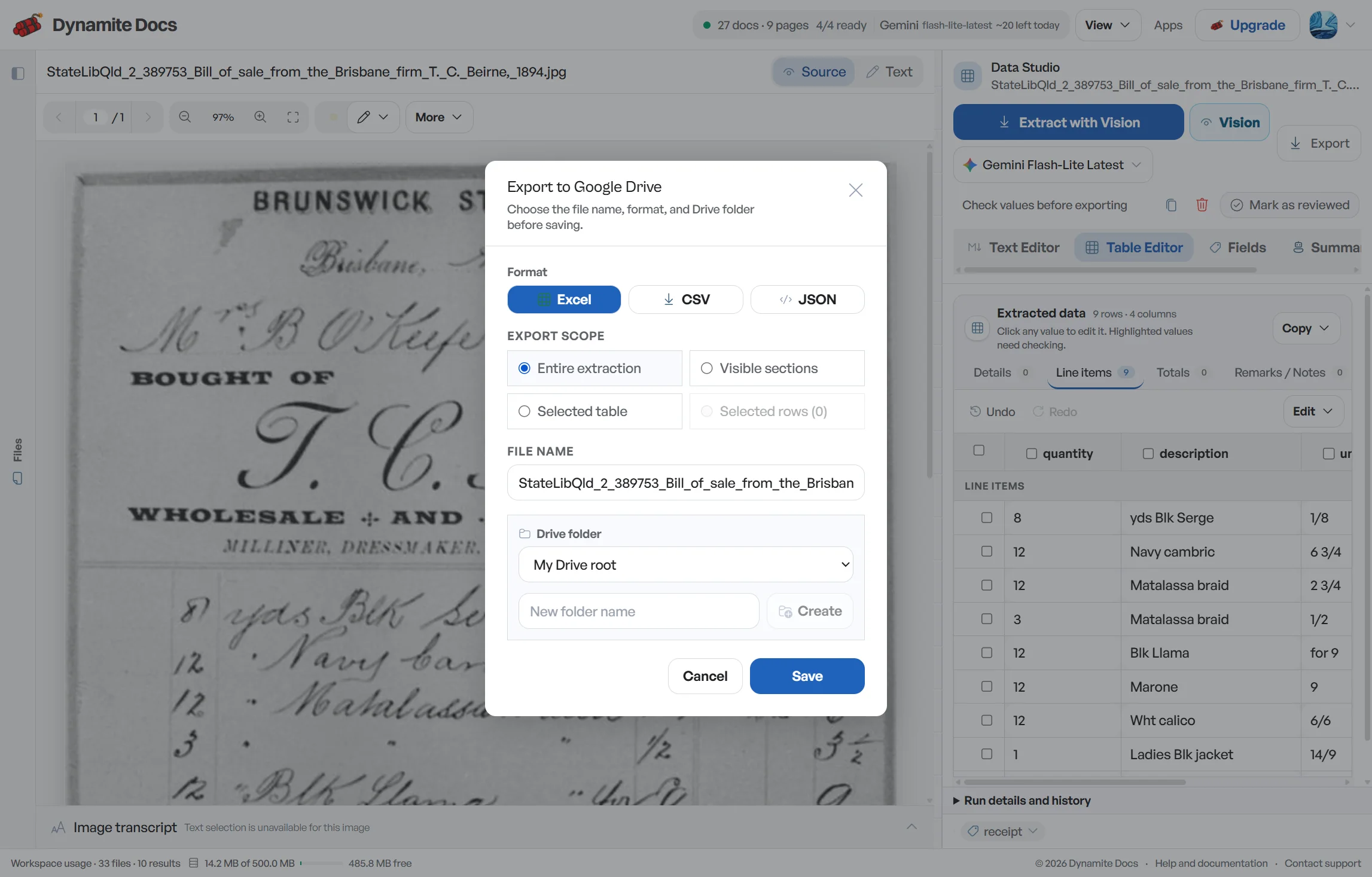
Paper bills and photo captures slow down bookkeeping
- Scanned papers and photos contain image pixels rather than selectable text, requiring someone to read and retype every single number.
- Photos sent over messaging apps often have glare, shadows, angled perspectives, or creased paper.
- Important fields like the 15-character GSTIN, HSN/SAC code, and tax amounts are often printed in small fonts or faint thermal ink.
- Basic OCR software produces unorganized text blocks rather than the clean spreadsheet table your accounting workflow requires.
Document types this workflow handles
- Scanned GST invoice PDFs: paper invoices scanned to PDF without selectable text
- Photocopies & faxes: faded and low-contrast paper documents
- WhatsApp & mobile photos: photos taken on phones with varying angles and lighting
- Thermal paper purchase slips: fuel, retail, and local supplier receipts
What gets extracted from a scanned GST invoice
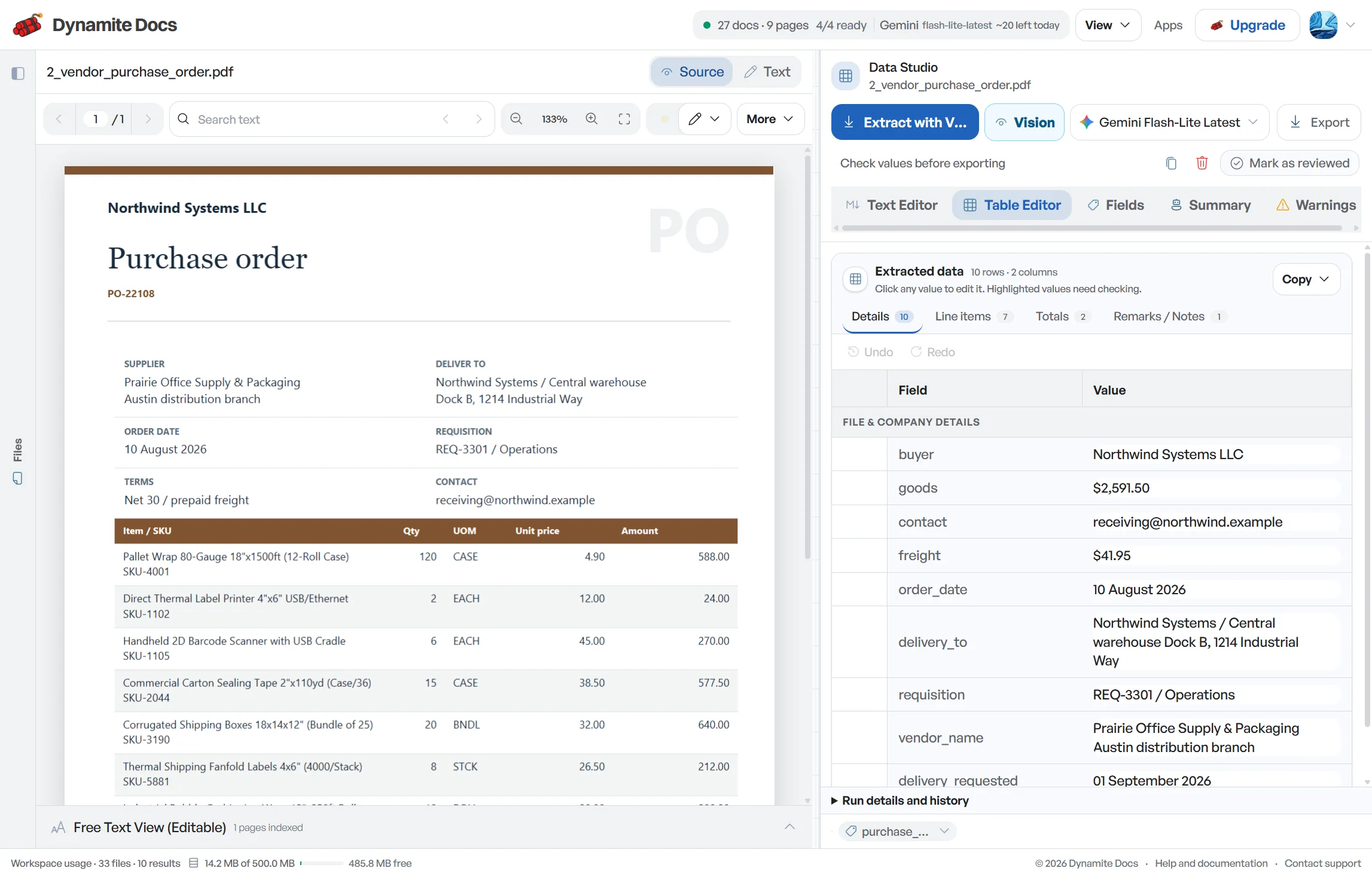
The same comprehensive field set as a digital PDF, with confidence scores highlighting any unclear reads:
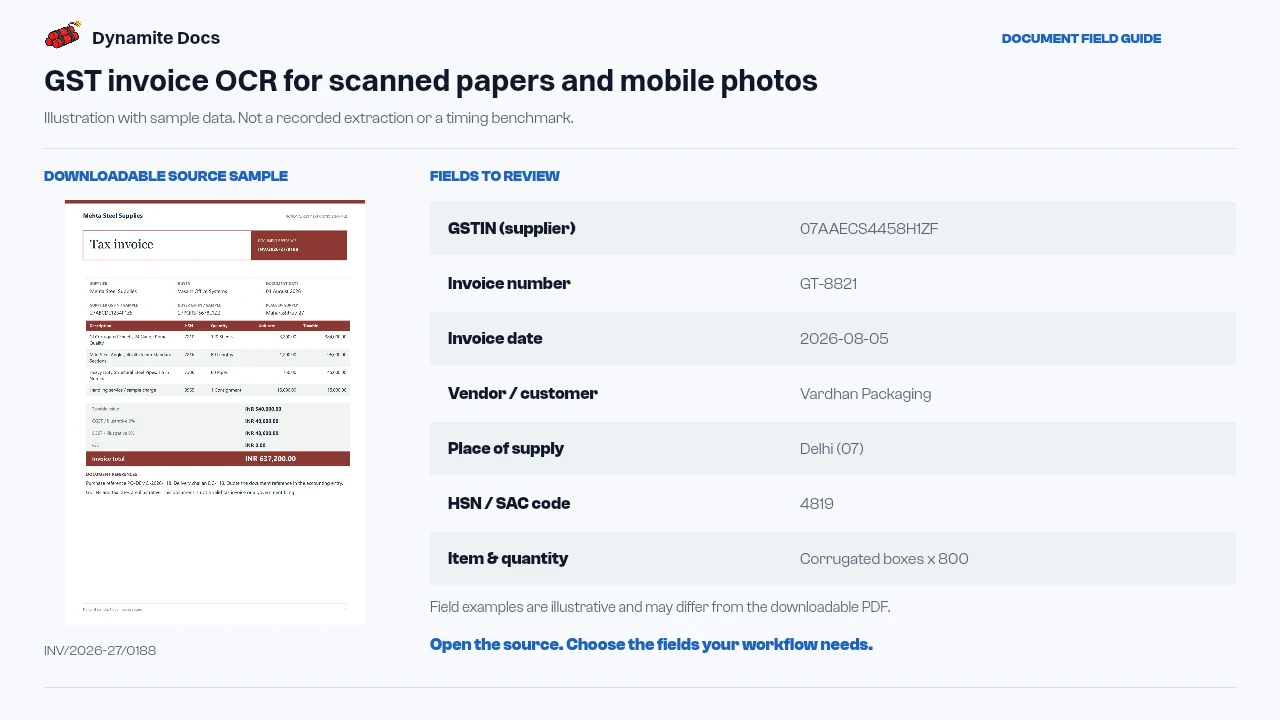
- GSTIN (supplier): 07AAECS4458H1ZF
- Invoice number: GT-8821
- Invoice date: 2026-08-05
- Vendor / customer: Vardhan Packaging
- Place of supply: Delhi (07)
- HSN / SAC code: 4819
- Item & quantity: Corrugated boxes x 800
- Taxable value: ₹36,000.00
- CGST (rate · amount): 9% · ₹3,240.00
- Invoice total (incl. tax): ₹42,480.00
A realistic example
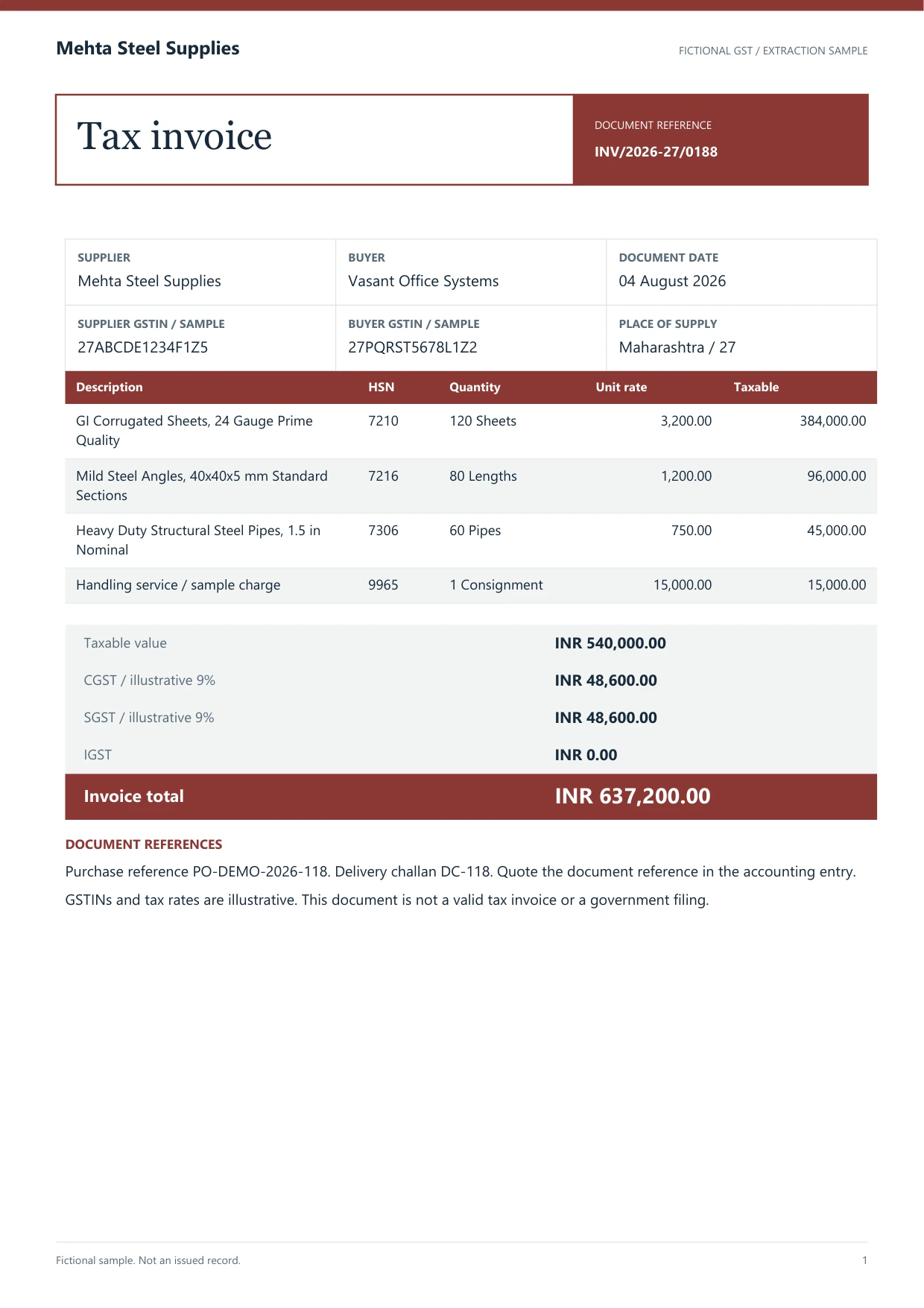
Sample data. Not a real invoice or filing record.
A batch of photographed and scanned invoices extracts into clean rows like these, with confidence flags on unclear numbers:
| Invoice # | Date | Vendor | GSTIN | HSN/SAC | Item | Taxable value | CGST | SGST | IGST | Total |
|---|---|---|---|---|---|---|---|---|---|---|
| GT-8821 | 2026-08-05 | Vardhan Packaging | 07AAECS4458H1ZF | 4819 | Corrugated boxes | ₹36,000 | ₹3,240 | ₹3,240 | Not applicable | ₹42,480 |
| KT-5512 | 2026-08-07 | Ganesh Industries | 29AABCC3456C1ZD | 8467 | Rotary hammer | ₹1,86,000 | Not applicable | Not applicable | ₹33,480 | ₹2,19,480 |
| TH-0916 | 2026-08-08 | Prabhat Hardware | 27AAEHP5621L1ZV | 7323 | Steel pipes | ₹28,000 | ₹2,520 | ₹2,520 | Not applicable | ₹33,040 |
What to validate before export
Validation issue
Low-quality scans need character-level review of GSTINs, dates, and amounts.
Limitation
OCR output is not a compliance validation of the invoice.
Reviewed by Dynamite Docs content team. Last verified 2026-09-11.
Optical character recognition designed for Indian invoices
OCR quality depends on what the image actually contains. Glare can erase a decimal point. Compression can turn one character into another, while a page photographed at an angle can pull an amount into the next column. A high-confidence read is useful, but it is not evidence that the tax value is correct. Check identifiers and money against the image.
Start with document identity. Confirm supplier and recipient GSTINs, invoice number, date and document type. A GSTIN format check can catch the wrong length or character pattern, but it cannot prove that the number belongs to the party shown. Keep the role label and source available to the reviewer.
Move to line items only after the header is settled. Check HSN or SAC, description, quantity, unit, rate, discount, taxable value and tax rate. Long descriptions may wrap under the next line, and faint grid lines may cause column shifts. Compare the extracted line count with the invoice before trusting the total.
Recalculate the summary using the printed rows where possible. Freight, insurance, rounding, discounts and cess may sit outside the main item table. Record those components rather than changing a line to force the arithmetic to agree. The reviewer should also confirm whether the document shows CGST with SGST or UTGST, or IGST.
For a better source image, photograph the whole page on a flat surface, keep the camera parallel to the paper and avoid shadows across the totals. Do not crop out the invoice heading, GSTIN labels or final amount. If a scan is unreadable to a person at normal zoom, treat OCR as a draft and ask for a clearer copy.
Test several difficult documents before setting up a batch: a faded printout, a multi-page invoice and a mobile photo. Agree on which confidence levels trigger extra review, but never skip GSTIN, tax and total checks solely because a field scored highly. Dynamite Docs prepares visible data; your finance or tax professional remains responsible for compliance and filing.
Flexible vision models with transparent pricing
Document quality varies between clean digital files and faded paper scans. Use a hosted model or connect a supported provider key. Pro and Ultra BYOK runs do not spend Dynamite Docs PE, though provider and file-size limits still apply.
A digital PDF may provide machine-readable text. Scans and photos need a vision-capable model, but both formats need structured review for line boundaries, GSTIN roles and tax values.
All extracted data and confirmed supplier corrections stay in your private workspace, ready to export whenever you need.
Questions, answered
Can it read faded thermal receipts or crumpled bills?
Yes. Optical character recognition reads low-contrast printouts, faded thermal slips, and paper copies. Any unclear digits are flagged with a low confidence score so you can verify them.
How are clean digital PDFs handled?
A digital PDF can supply machine-readable text, which avoids image OCR. The document still goes through structured extraction and review, subject to the selected processing option and plan limits.
Which vision AI providers can I use?
You can use our built-in models or connect your own API keys from Gemini, Mistral, OpenAI, Anthropic, Groq, Cloudflare, or OpenRouter. On Hobby, Pro, and Ultra plans, you can also run model inference locally using Ollama.
Can it handle photos taken at an angle with mobile phones?
You can submit a mobile photo, but angle, shadows, glare and cropping affect the result. Retake poor images when possible and compare every highlighted identifier and amount with the source.
Related document workflows
Related extraction articles
Open the document extraction workspace, no credit card required.