Purchase invoice extraction for Indian buyers
By Dynamite Docs. Published . Updated .
Turn GST invoices into clean, reviewed data for Excel and Tally.
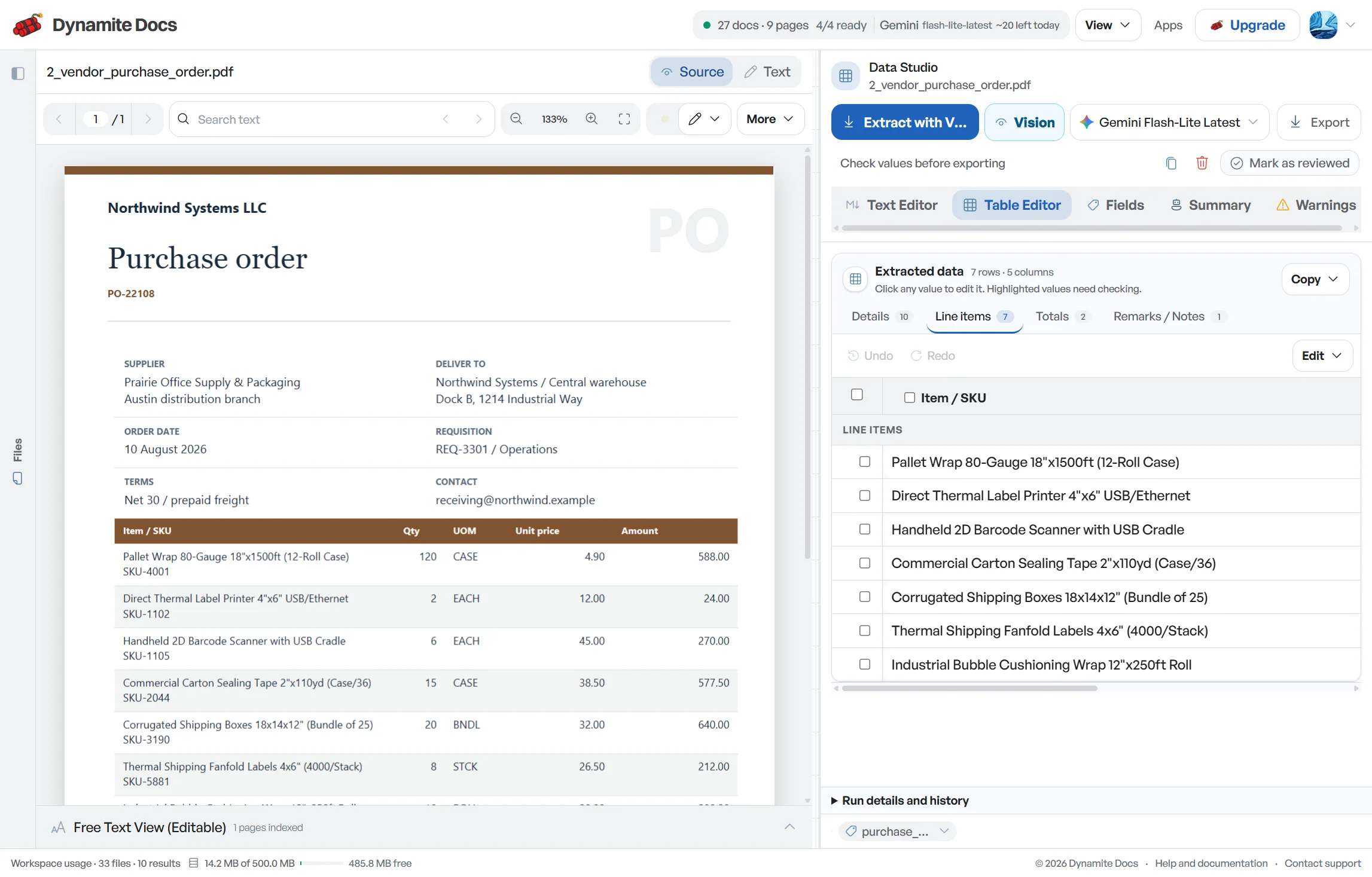
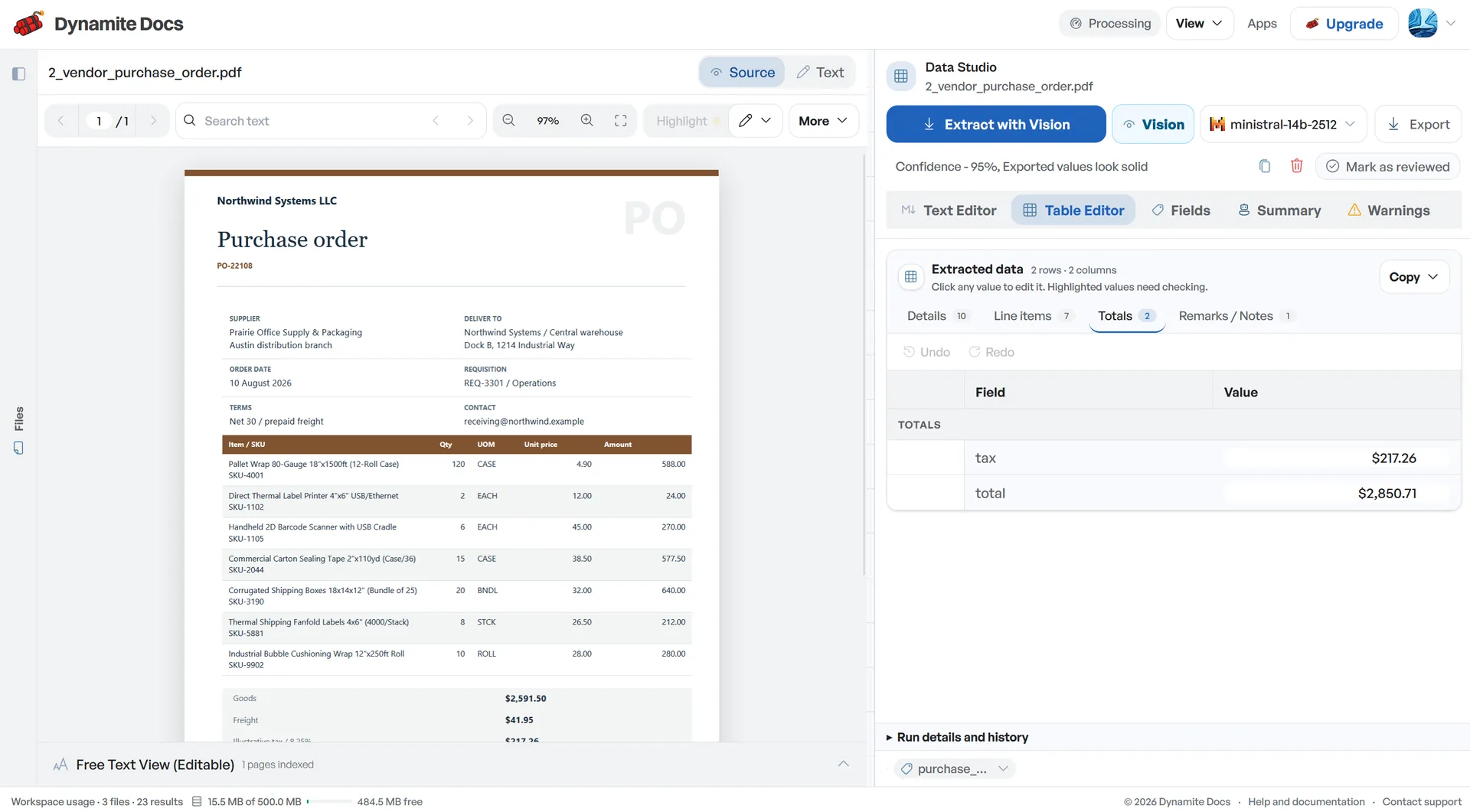
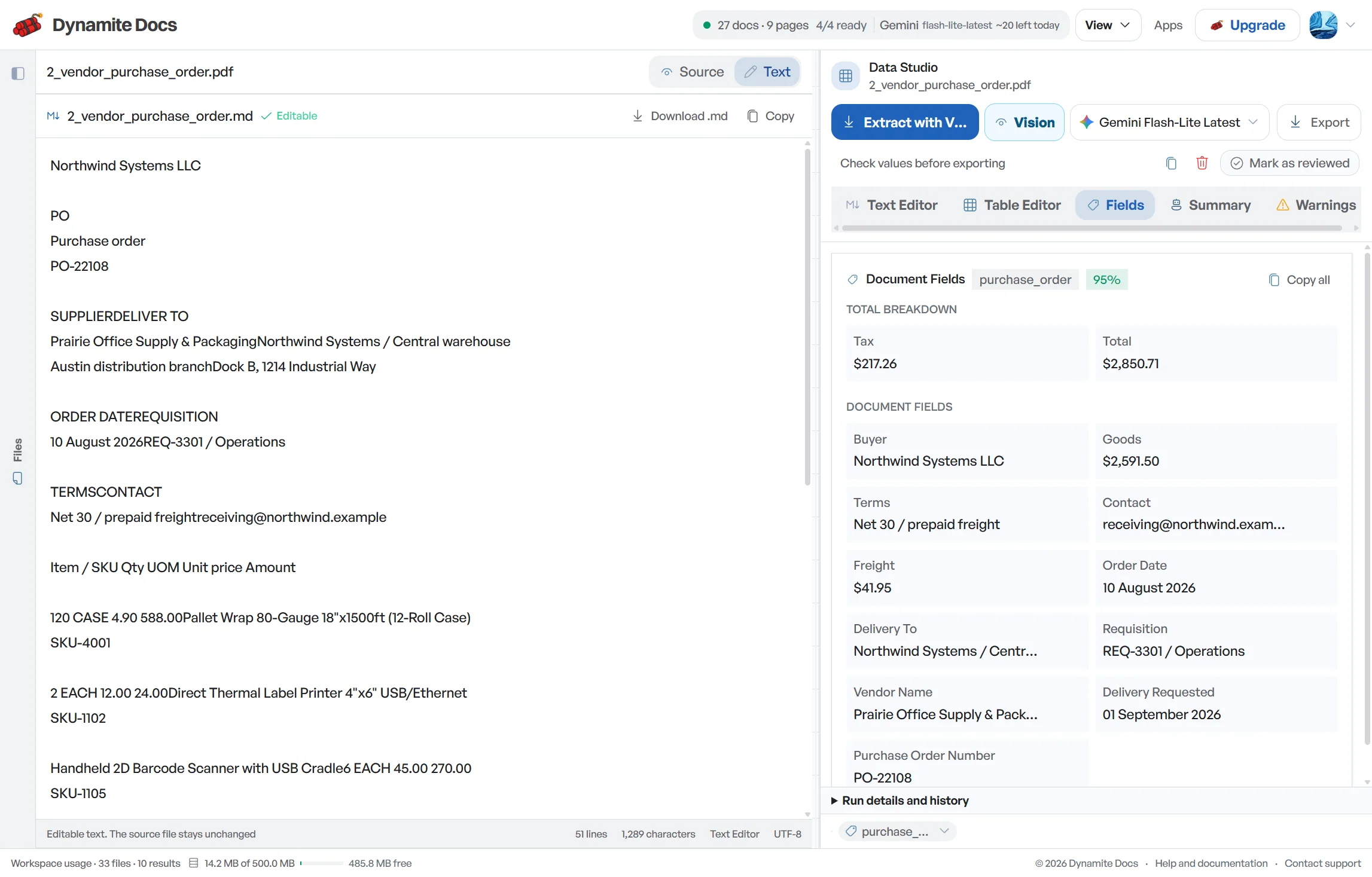
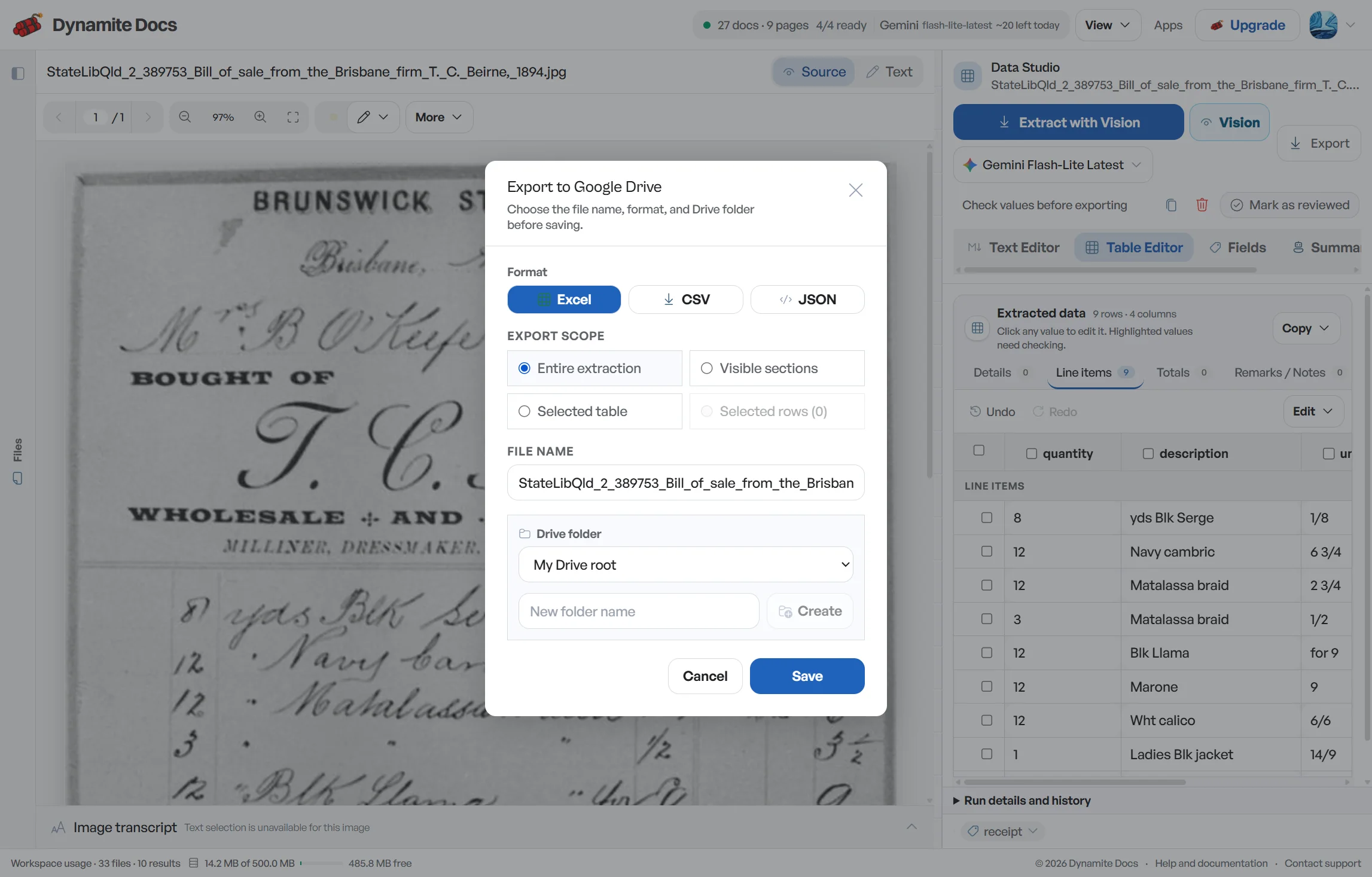
Purchase [invoice extraction](/accounting/india/tally-invoice-extraction) prepares supplier bills for AP and GST review without asking someone to retype each line. Dynamite Docs proposes the supplier GSTIN, invoice number, date, HSN or SAC, taxable value, tax components and line items as confidence-scored rows. Review the result against the bill, keep document type and signs intact, and compare the invoice with the purchase order, receipt evidence or tax records required by your process. Export checked data to Excel, CSV, JSON or Google Sheets. Input tax credit, posting and payment decisions remain outside the extractor.
Try a GST invoice or compare its storage, processing, and export limits.
Managing incoming purchase bills requires too much manual typing
- Supplier bills arrive in different formats: billing software PDFs, Tally printouts, scanned copies, and photos sent via WhatsApp.
- The essential fields repeat on every purchase invoice, but suppliers format their tables differently, making fixed templates hard to maintain.
- Accurate tax recording depends on getting the GSTIN and tax splits right. A transposed digit in a supplier GSTIN can create reconciliation mismatches later.
- Purchase invoices often need to be verified alongside e-way bills and e-invoices, which is slow when done by eye across separate PDF folders.
Document types this workflow handles
- Purchase invoice PDFs: digital supplier bills parsed directly from text
- Purchase invoice photos: WhatsApp photos and scanned paper bills
- E-way bills: transport records to match against supplier bills
- Vendor credit & debit notes: price adjustments and purchase returns
What gets extracted from a purchase invoice
Fields are recognized from each invoice structure. A typical extraction provides:
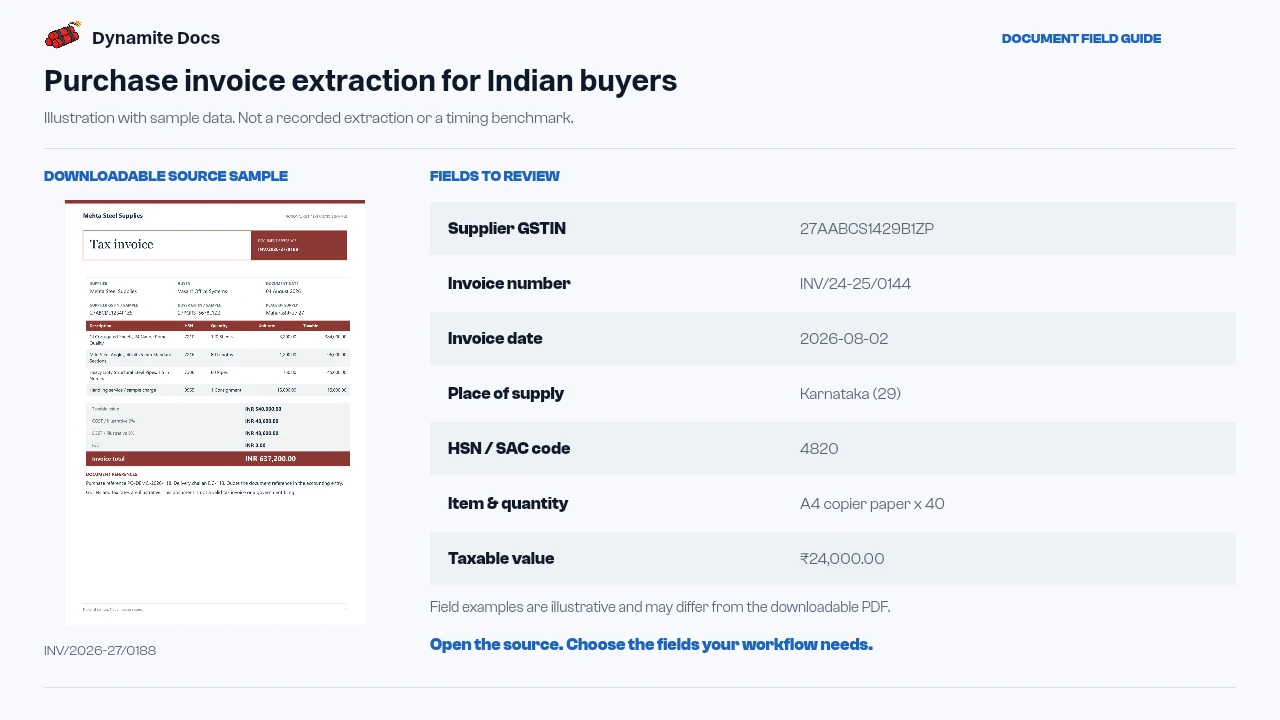
- Supplier GSTIN: 27AABCS1429B1ZP
- Invoice number: INV/24-25/0144
- Invoice date: 2026-08-02
- Place of supply: Karnataka (29)
- HSN / SAC code: 4820
- Item & quantity: A4 copier paper x 40
- Taxable value: ₹24,000.00
- CGST amount: ₹2,160.00
- SGST amount: ₹2,160.00
- Invoice total (incl. tax): ₹28,320.00
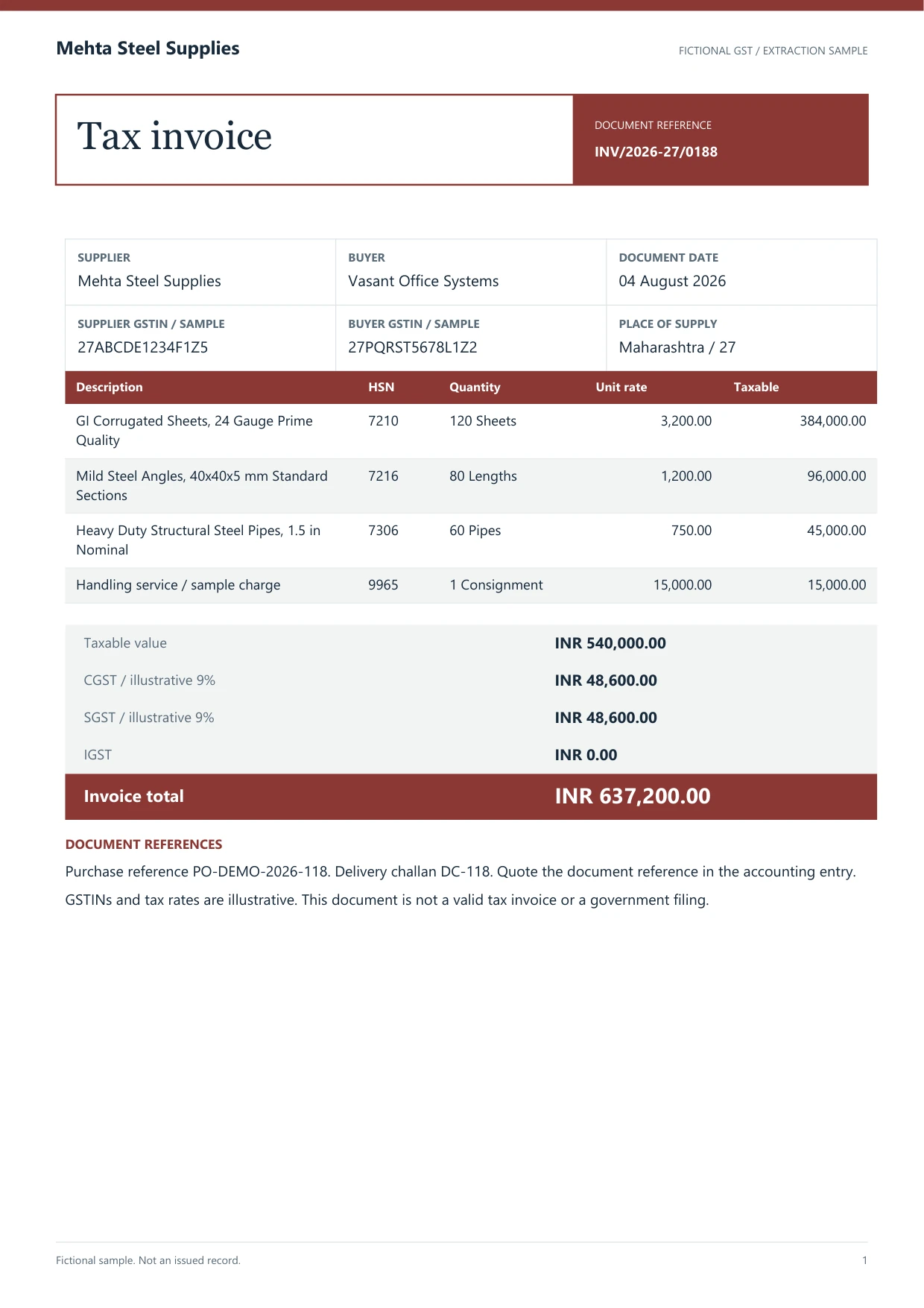
A realistic example
Sample data. Not a real invoice or filing record.
A batch of purchase invoices extracts into organized rows like these, ready for review and export:
| Invoice # | Date | Supplier | GSTIN | HSN/SAC | Item | Qty | Taxable value | CGST | SGST | IGST | E-way bill | Total |
|---|---|---|---|---|---|---|---|---|---|---|---|---|
| INV/24-25/0144 | 2026-08-02 | Shri Balaji Traders | 27AABCS1429B1ZP | 4820 | A4 copier paper | 40 | ₹24,000 | ₹2,160 | ₹2,160 | Not applicable | 9210 2334 5678 | ₹28,320 |
| INV/24-25/0145 | 2026-08-03 | Kaveri Engineering Co. | 33AABCC3456C1ZD | 8467 | Rotary hammer | 6 | ₹1,86,000 | Not applicable | Not applicable | ₹33,480 | Not shown | ₹2,19,480 |
| GT-8821 | 2026-08-05 | UrbanMiles Logistics | 07AAECU4471L1ZF | 9965 | Freight (GTA) | 1 | ₹12,000 | ₹720 | ₹720 | Not applicable | 9210 2334 5679 | ₹13,440 |
What to validate before export
Validation issue
Verify supplier GSTIN, place of supply, tax split, and invoice total.
Limitation
The extractor does not decide input-tax-credit eligibility.
Reviewed by Dynamite Docs content team. Last verified 2026-09-11.
Organizing supplier bills for accurate purchase registers
Every purchase invoice can feed the purchase register and related tax review. Capture the supplier GSTIN, full invoice number, date, taxable amounts and printed tax split as separate fields, then compare them with the source and the records required by your process. Accurate capture reduces avoidable reconciliation differences but does not decide tax eligibility.
Purchase invoices often travel alongside e-way bills and e-invoice records. When all three document types are extracted into the same workspace, comparing supplier GSTINs, transport numbers, and invoice totals becomes fast and straightforward.
A purchase bill should keep the supplier claim separate from the buyer's accounting decision. The extractor records what the invoice says: supplier GSTIN, bill number, supply location, item descriptions, tax rates, tax amounts, freight, discount, and payable total. It does not mark input tax credit as eligible. A reviewer must compare the bill with the purchase order, receipt evidence, supplier status, and the period's tax records before making that call.
Use invoice identity as the first duplicate check. Compare the normalized supplier GSTIN, full invoice number, invoice date, and gross amount before adding a row to the purchase register. Do not strip financial-year prefixes or leading zeros from invoice numbers. If a supplier issued a credit note, preserve its document type and sign instead of treating it as another positive purchase. Those choices prevent a tidy spreadsheet from creating a wrong payable balance.
The handoff depends on the buyer's process. An accounts-payable reviewer may need the PO number, receipt reference, due date, and payment terms. A GST reviewer may focus on place of supply, reverse-charge wording, taxable value, and the CGST, SGST, or IGST split. Export the shared source fields once, then add review columns for each downstream decision instead of asking the extractor to make those decisions silently.
Dynamite Docs extracts and organizes supplier bills into clean spreadsheet rows. Input tax calculations, return filings, and compliance decisions remain under the direction of your finance team and Chartered Accountant.
Transparent pricing and flexible processing for purchase bills
Purchase invoice extraction requires accurate reading of supplier GSTINs and tax breakdowns. Dynamite Docs lets you use built-in models or connect your own API keys, paying standard provider rates with zero markup.
A digital PDF may provide machine-readable text, while paper scans and mobile photos need a vision-capable model. Both formats use the same field and row review.
Your verified supplier patterns remain saved in your workspace, making subsequent batches faster to process.
Questions, answered
Can it process purchase invoices from different billing systems?
You can test invoices produced by Tally, Busy, Marg, Zoho Books and other billing systems without building a fixed supplier template first. Layout and source quality still affect the proposed fields, so review each result.
Does it separate CGST, SGST, and IGST tax amounts on purchase bills?
Yes. Taxable value, CGST, SGST/UTGST, IGST, and total invoice amounts are extracted into separate columns with confidence scores for easy verification.
Can I match purchase invoices against e-way bill records?
Yes. Extracted rows include invoice numbers, supplier GSTINs, taxable values, and e-way bill numbers, allowing you to cross-check records in a single spreadsheet.
Does Dynamite Docs file GST returns automatically?
No. Dynamite Docs extracts and organizes invoice data into clean rows. Final tax review, reconciliation, and return filings remain with your accounts team and Chartered Accountant.
Related document workflows
Related extraction articles
Open the document extraction workspace, no credit card required.