E-way bill data extraction for logistics and GST
By Dynamite Docs. Published . Updated .
Turn GST invoices into clean, reviewed data for Excel and Tally.
An e-way bill is generally required under Rule 138 when the consignment value exceeds ₹50,000, subject to the current rules, notifications, exceptions and state requirements. The record may arrive as a PDF, scanned printout or phone photo. Dynamite Docs extracts [GSTINs](/accounting/india/gstin-extraction), invoice identity, vehicle and transporter details, and consignment values into confidence-scored rows for logistics tracking and invoice reconciliation. It reads what is printed on the document; it does not check portal status, determine whether an e-way bill was legally required, or replace your compliance review.
Try a document or compare its storage, processing, and export limits.
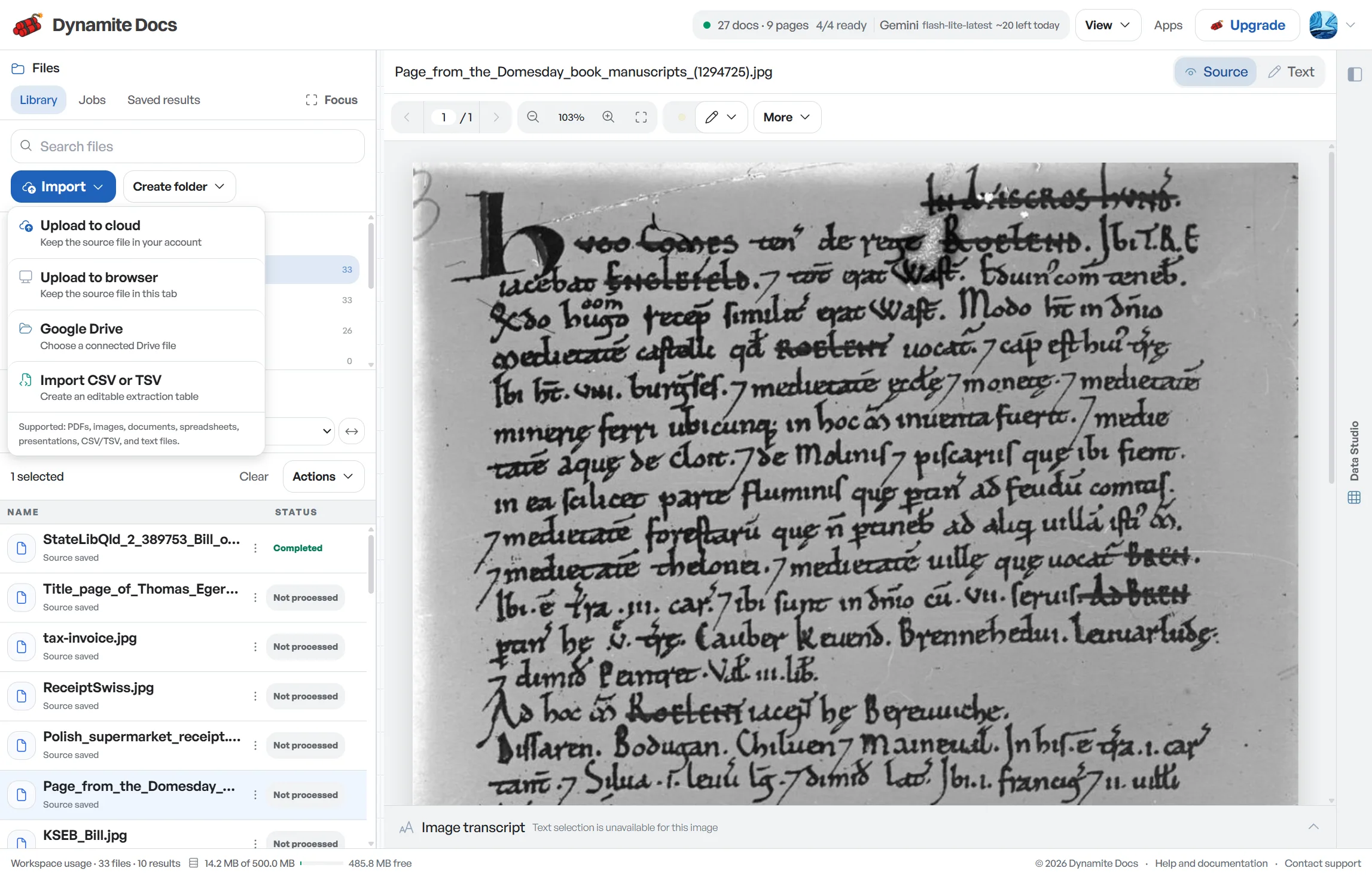
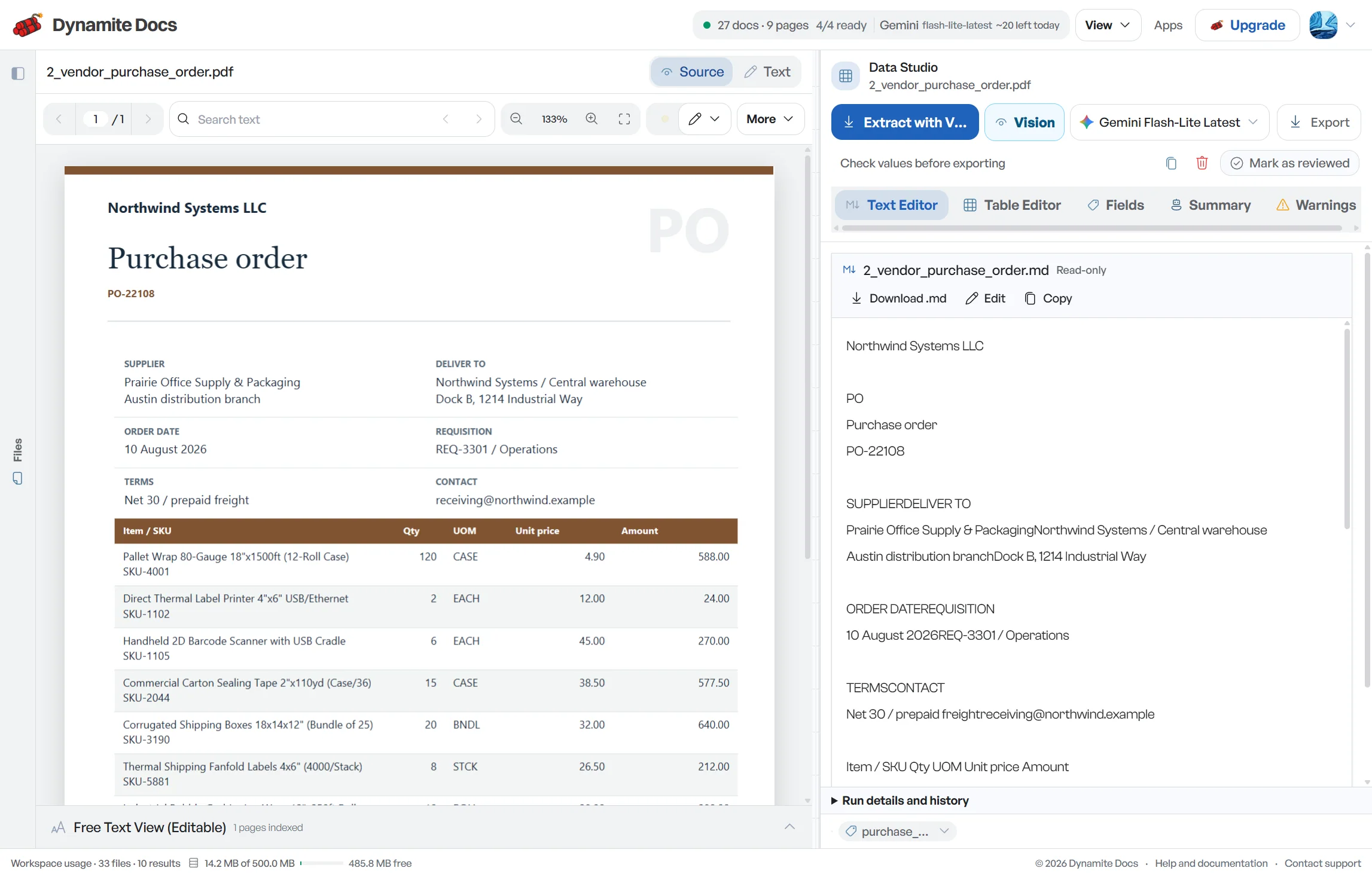
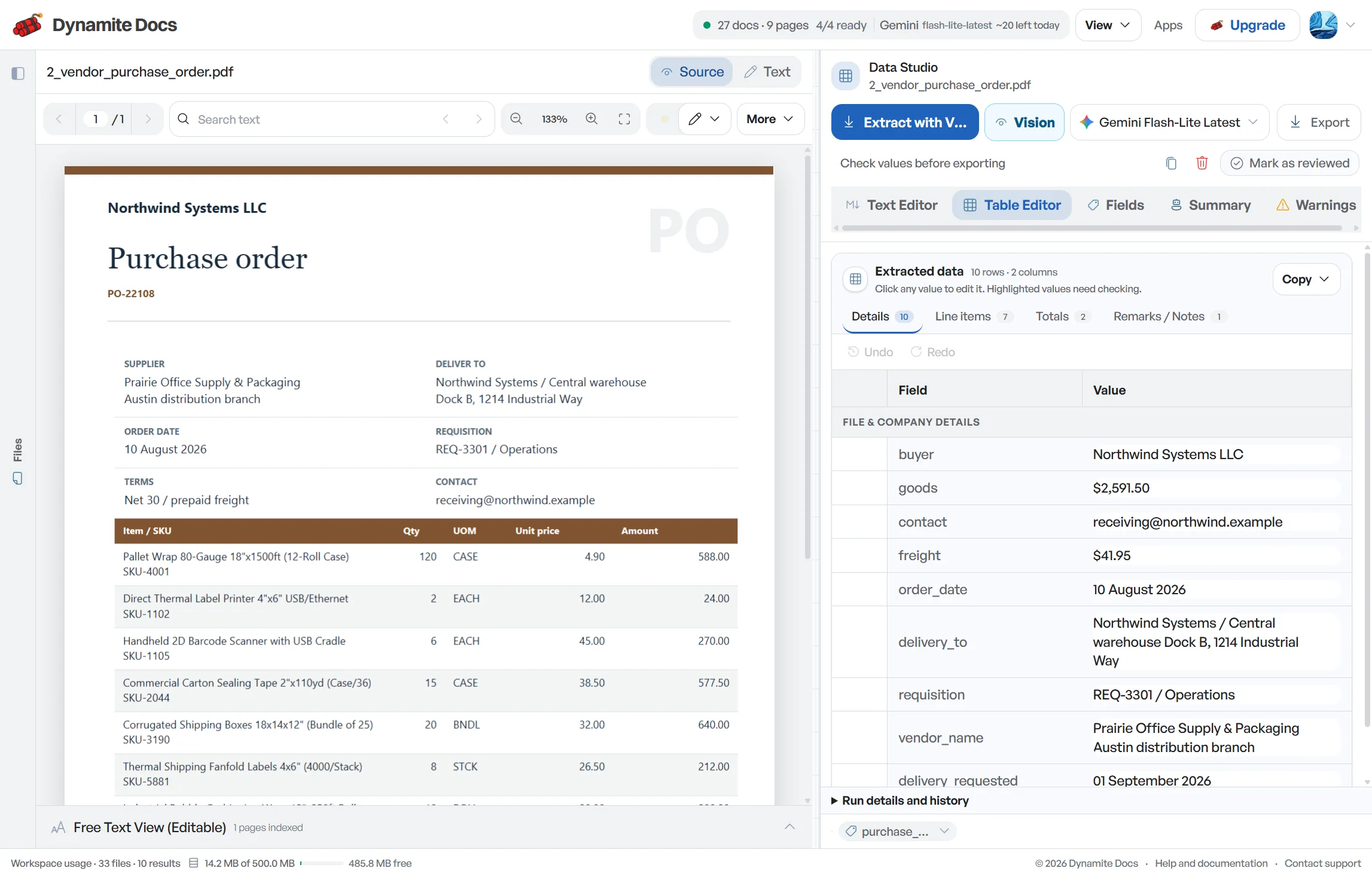
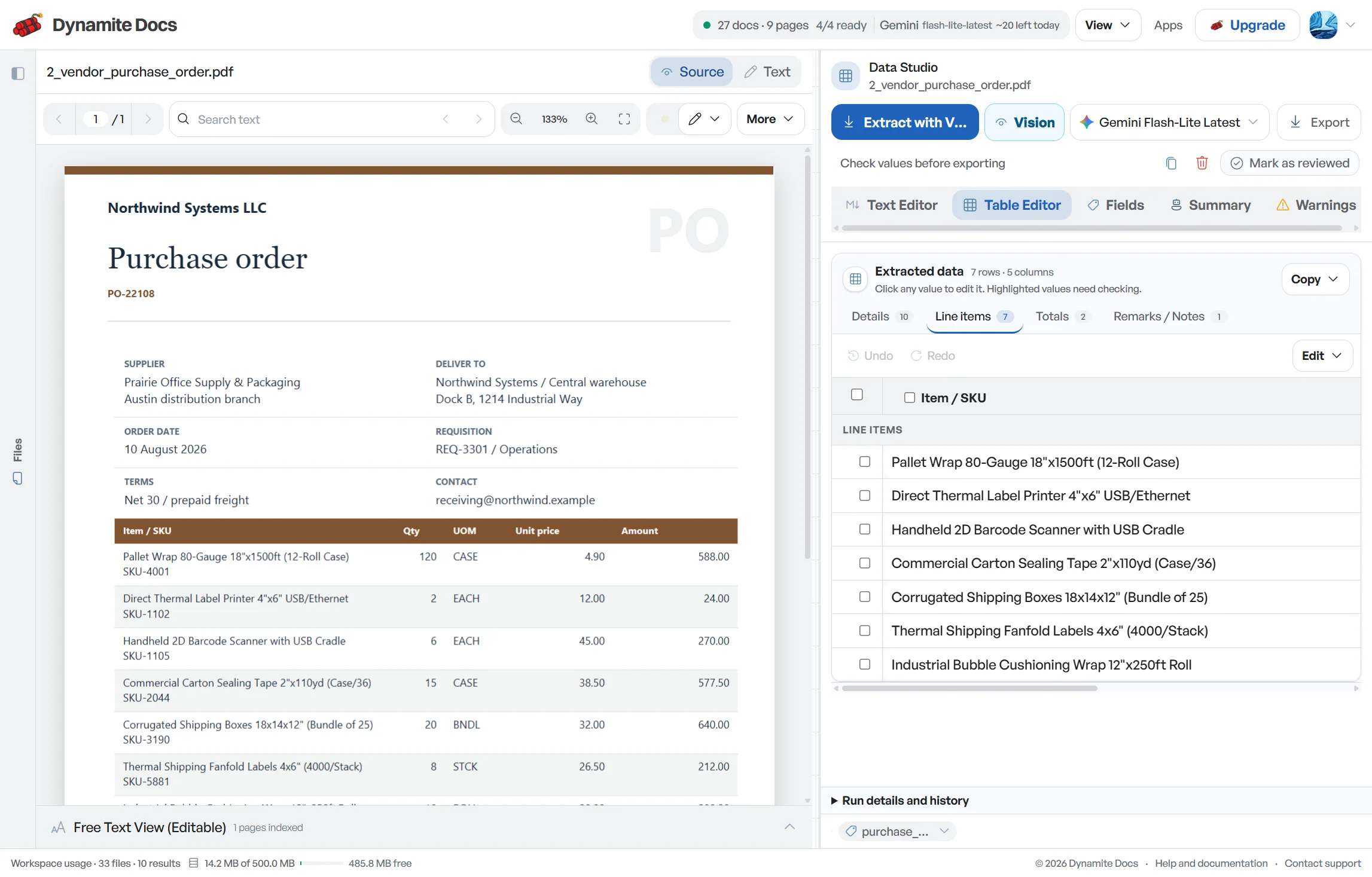
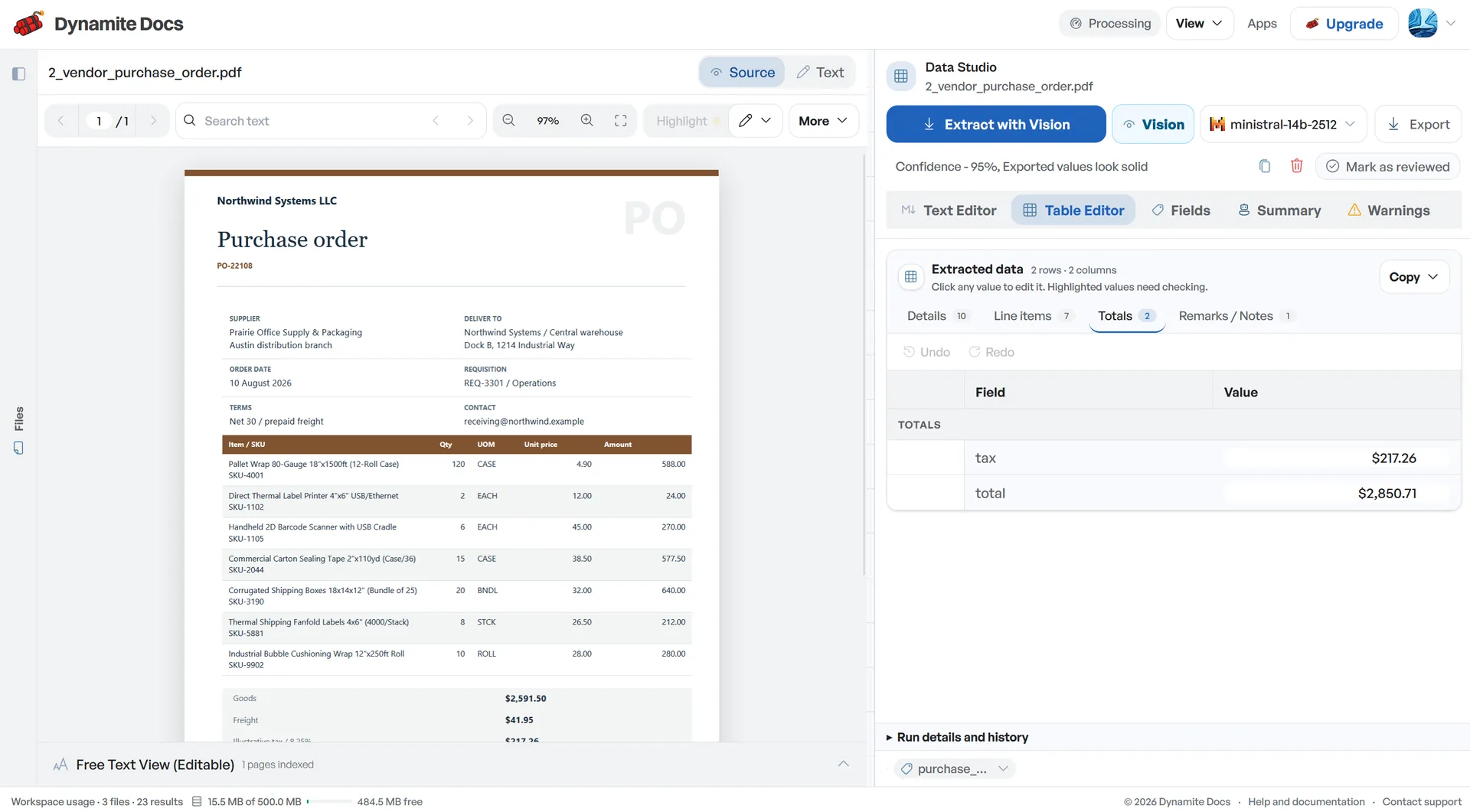
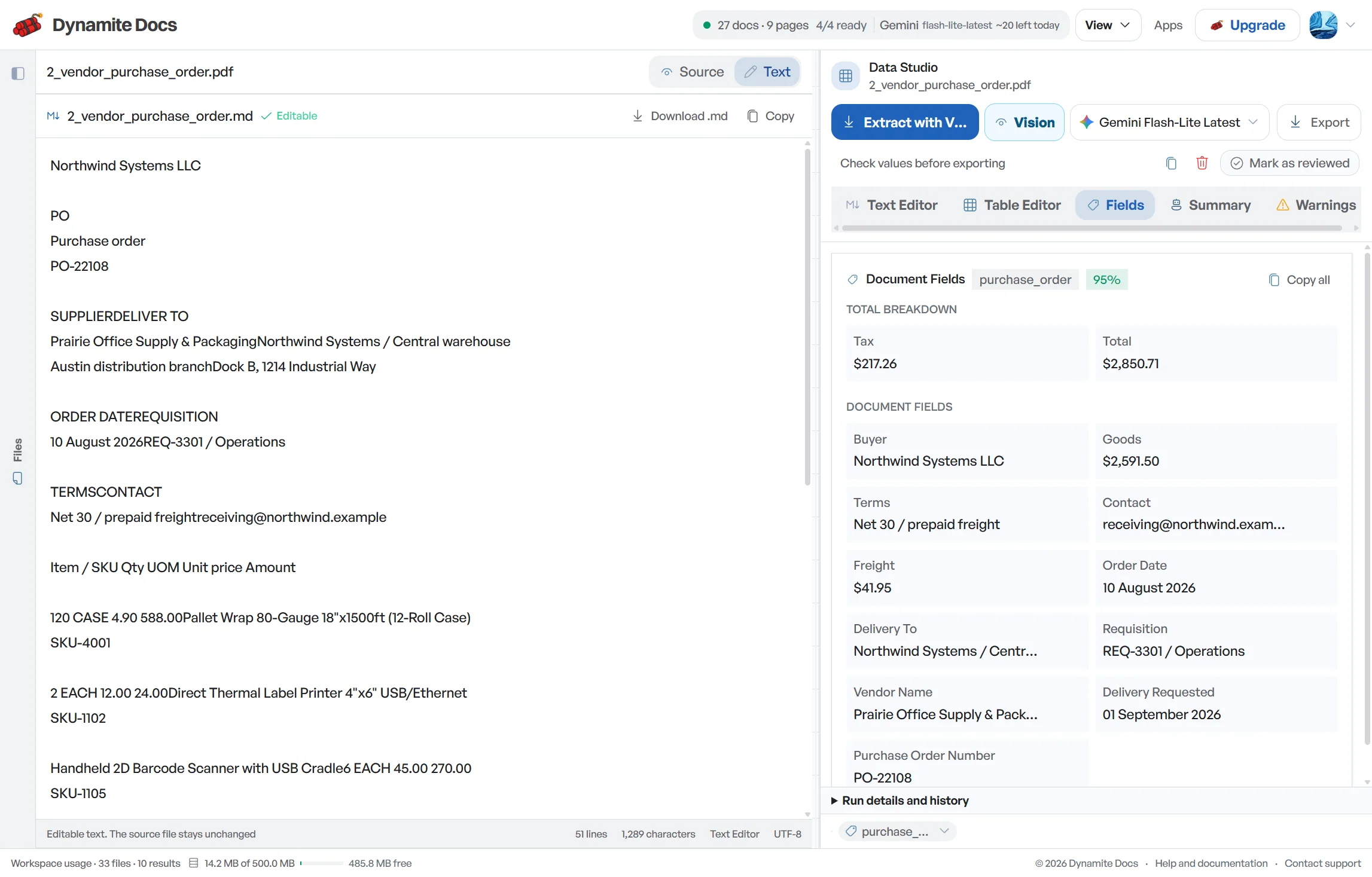
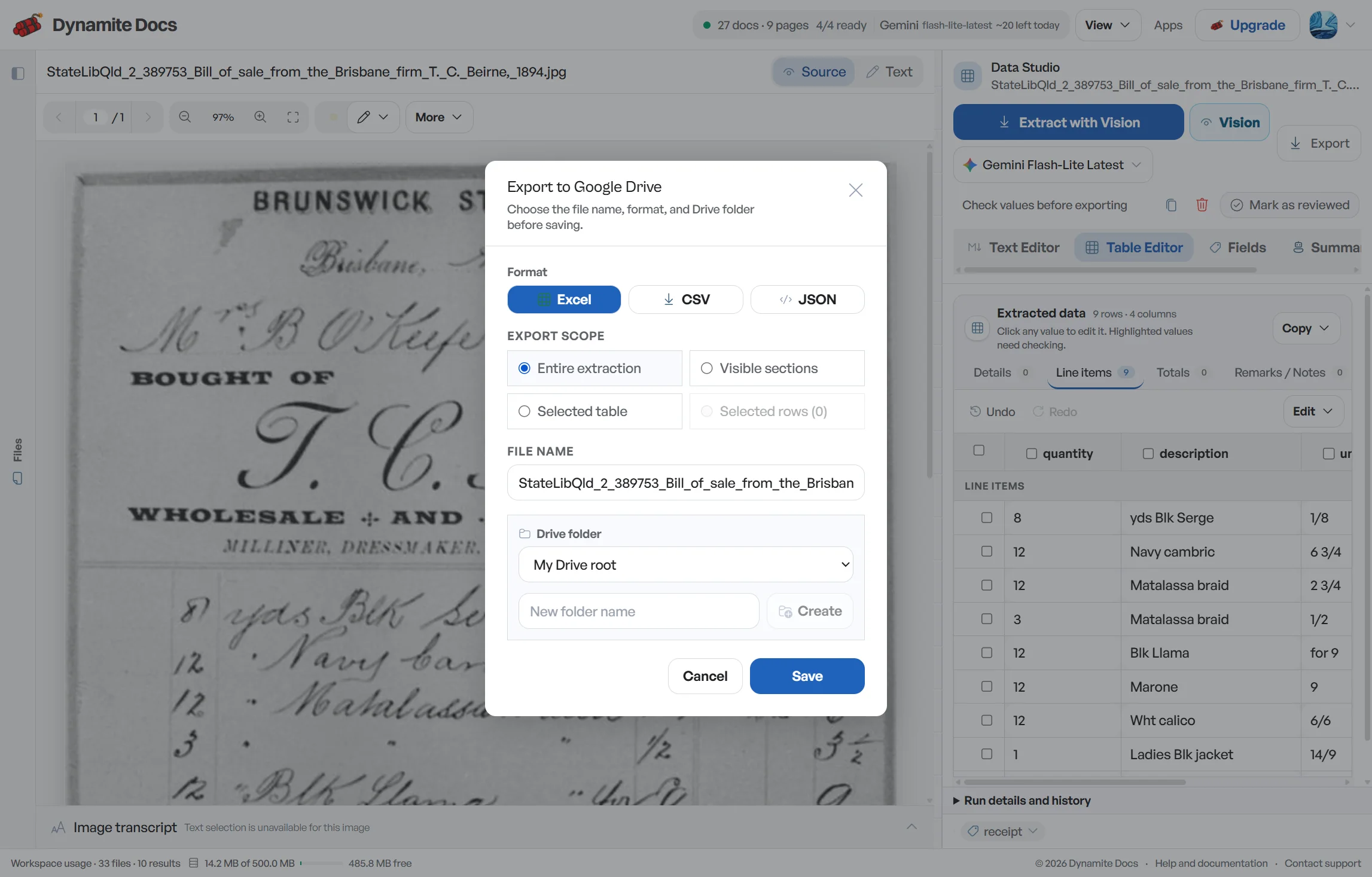
Transport documents are often messy images that need manual entry
- E-way bills frequently arrive as smartphone photos or scans rather than digital PDFs, requiring visual data entry.
- Data is split between Part A (supplier, buyer, and invoice reference) and Part B (vehicle and transporter details).
- A single mistyped digit in an e-way bill number or invoice reference breaks the audit link between transport and billing records.
- Tracking dispatches across dozens of transporters creates a heavy transcription backlog for operations teams.
Document types this workflow handles
- Digital e-way bill PDFs: official portal exports parsed directly from text
- Scanned paper copies: physical printouts processed via visual OCR
- WhatsApp & mobile photos: smartphone photos captured by drivers
- Batch transport records: e-way bills uploaded alongside purchase invoices
What gets extracted from an e-way bill
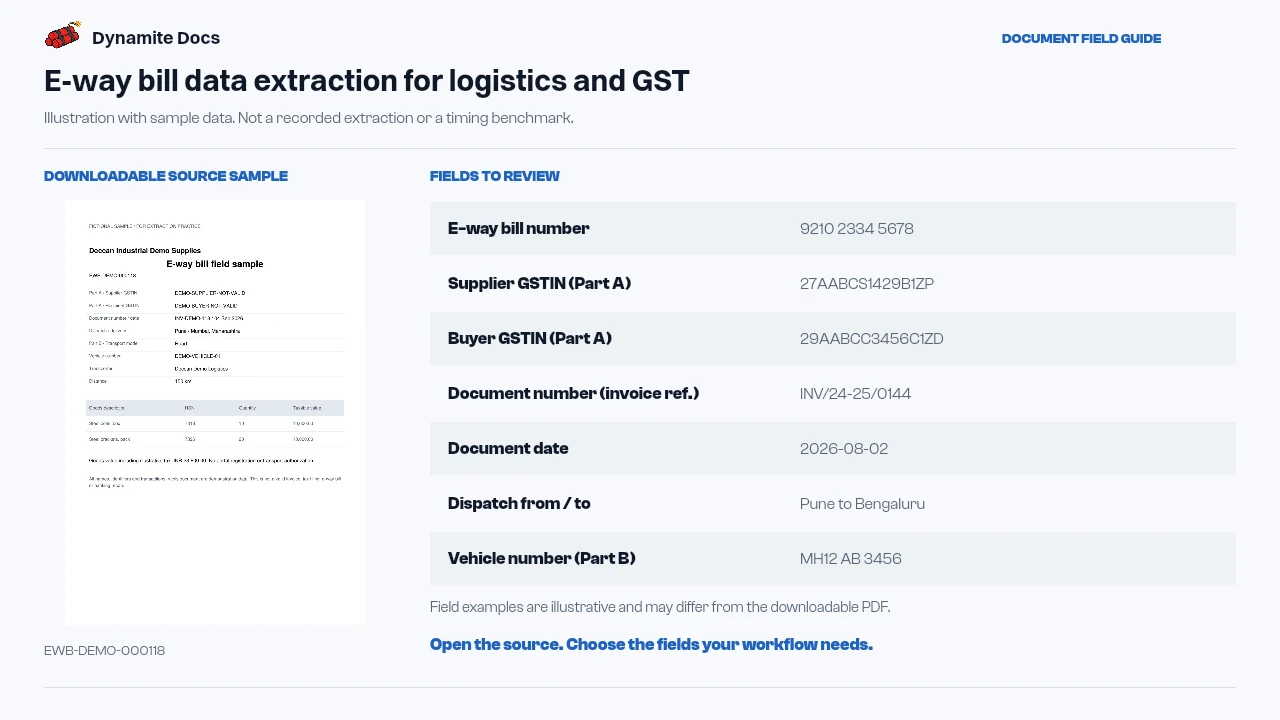
Fields are recognized from each e-way bill layout. A typical extraction provides:
- E-way bill number: 9210 2334 5678
- Supplier GSTIN (Part A): 27AABCS1429B1ZP
- Buyer GSTIN (Part A): 29AABCC3456C1ZD
- Document number (invoice ref.): INV/24-25/0144
- Document date: 2026-08-02
- Dispatch from / to: Pune to Bengaluru
- Vehicle number (Part B): MH12 AB 3456
- Transporter: UrbanMiles Logistics
- Goods value: ₹1,86,000
- HSN summary: 8467 x 6
A realistic example
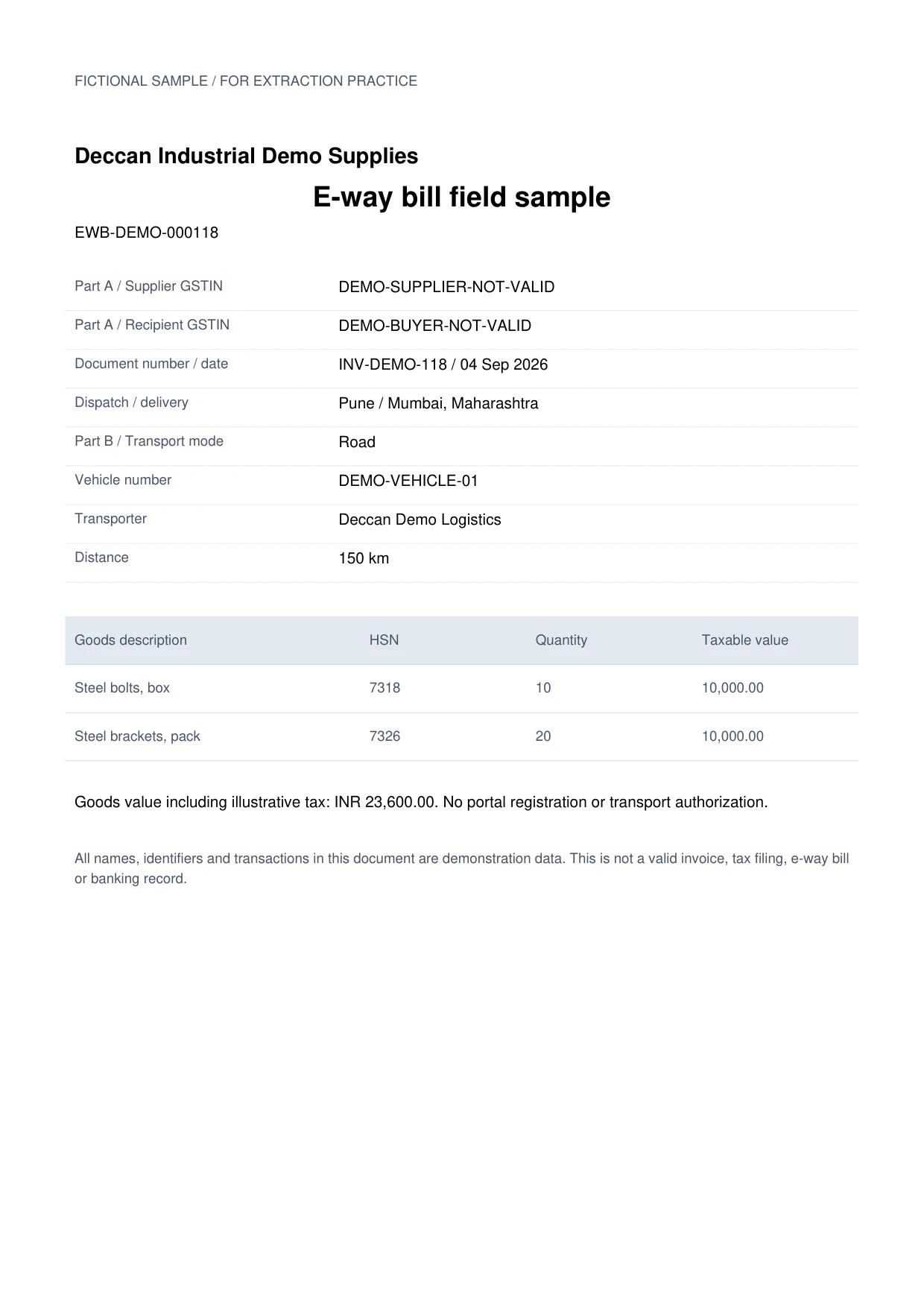
Sample data. Not a real invoice or filing record.
A batch of e-way bills extracts into organized rows like these, ready to match against the invoices they reference:
| E-way bill no. | Invoice ref. | Date | From | To | Supplier GSTIN | Vehicle | Goods value |
|---|---|---|---|---|---|---|---|
| 9210 2334 5678 | INV/24-25/0144 | 2026-08-02 | Pune | Bengaluru | 27AABCS1429B1ZP | MH12 AB 3456 | ₹1,86,000 |
| 1310 8899 0012 | SB/2026/118 | 2026-08-03 | Mumbai | Ahmedabad | 27BAAFG2874Q1ZX | MH04 CD 9988 | ₹93,500 |
| 2026 4455 6677 | GT-8821 | 2026-08-05 | Chennai | Coimbatore | 07AAECU4471L1ZF | TN38 AB 2210 | ₹12,000 |
What to validate before export
Validation issue
Check document number, vehicle, distance, and validity dates against the source.
Limitation
The extractor does not generate, extend, cancel, or validate an e-way bill.
Reviewed by Dynamite Docs content team. Last verified 2026-09-11.
Connecting transport records with financial invoices
An e-way bill serves as proof of goods in transit. It contains two essential parts: Part A details the consignment value, supplier GSTIN, recipient GSTIN, and the invoice reference, while Part B records the transporter ID and vehicle registration number.
Extracting both parts into a single spreadsheet row gives operations and finance teams a practical key for matching dispatches with purchase or sales invoices. Start with the document number and date, then compare supplier and recipient GSTINs, origin and destination, goods value, HSN summary, transporter ID and vehicle number. A mismatch should become an exception for review, not an automatic correction to either record.
Keep the e-way bill number as text so leading digits and spaces are not lost in a spreadsheet. Preserve the invoice reference exactly as printed, while using a separate normalized field if your matching routine removes punctuation or standardizes case. When a vehicle update or consolidated record appears, retain the relevant source document and timestamp rather than silently replacing the earlier extracted row.
For a batch control, compare the number of uploaded documents with the number of exported rows and record any duplicate e-way bill numbers. Group unmatched records by reason, such as missing invoice, GSTIN difference, value difference or unreadable vehicle number. This produces a useful dispatch review schedule without implying that the underlying movement is compliant.
Dynamite Docs extracts and organizes e-way bill records for tracking and reconciliation. Compliance verification, validity checks, portal lookups and decisions about current legal requirements remain the responsibility of your logistics and tax teams.
Reviewable logistics data with private processing options
E-way bills often arrive as driver photos or scanned printouts. Every signed-in tier can connect a supported provider key. Free and Hobby own-key pages use their monthly PE allowance; Pro and Ultra own-key runs do not consume PE.
Digital PDFs may expose embedded text, while smartphone photos and paper scans need visual extraction. Cropped identifiers, glare and folds can still produce uncertain values, so confidence scores should guide rather than replace review.
Reviewed transport rows can be exported to Excel, CSV or JSON, or pushed to Google Sheets when connected. Retain the source file with the exported schedule for traceability.
Questions, answered
What is the difference between Part A and Part B on an e-way bill?
Part A includes the supplier, buyer, invoice reference, and consignment value. Part B includes transport information, such as the vehicle number and transporter ID. Both parts are extracted together into a single spreadsheet row.
Can it read e-way bills sent as WhatsApp photos?
Yes. Visual extraction can read mobile photos and screenshots captured by transport drivers. Results depend on the image quality, so check the e-way bill number, invoice reference, GSTINs and vehicle number against the source.
How should I review extracted supplier and buyer GSTINs?
Supplier and buyer GSTINs are proposed in separate columns with confidence scores. Verify every character against the document, particularly when the scan is blurred or a font makes letters and digits look alike.
Does Dynamite Docs validate e-way bills against the government portal?
No. Dynamite Docs extracts and structures the information printed on the document. Portal status checks and compliance validations remain within your internal procedures.
Related document workflows
Related extraction articles
Open the document extraction workspace, no credit card required.