GSTR-2B reconciliation document processing
By Dynamite Docs. Published . Updated .
Turn GST invoices into clean, reviewed data for Excel and Tally.
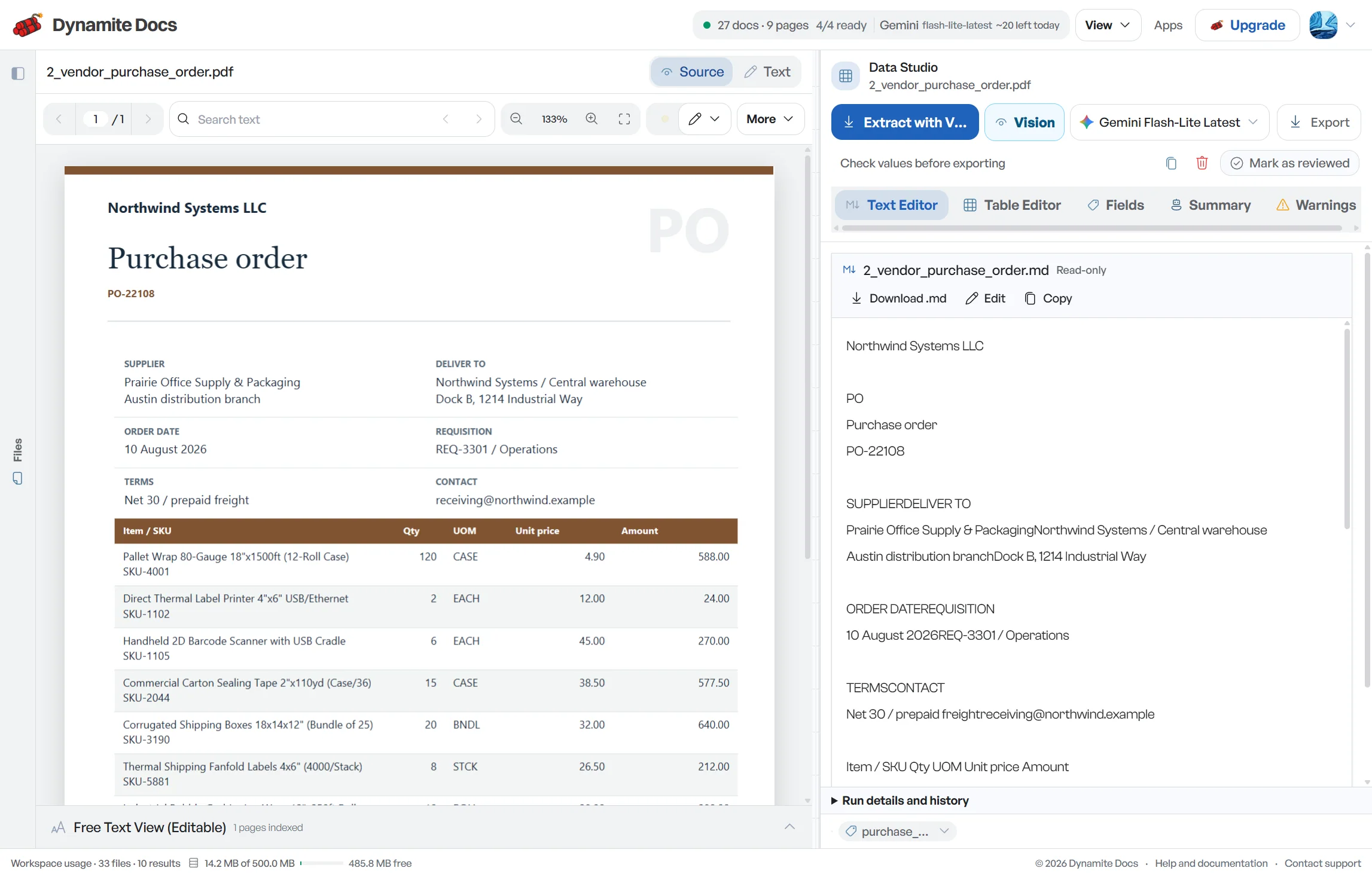
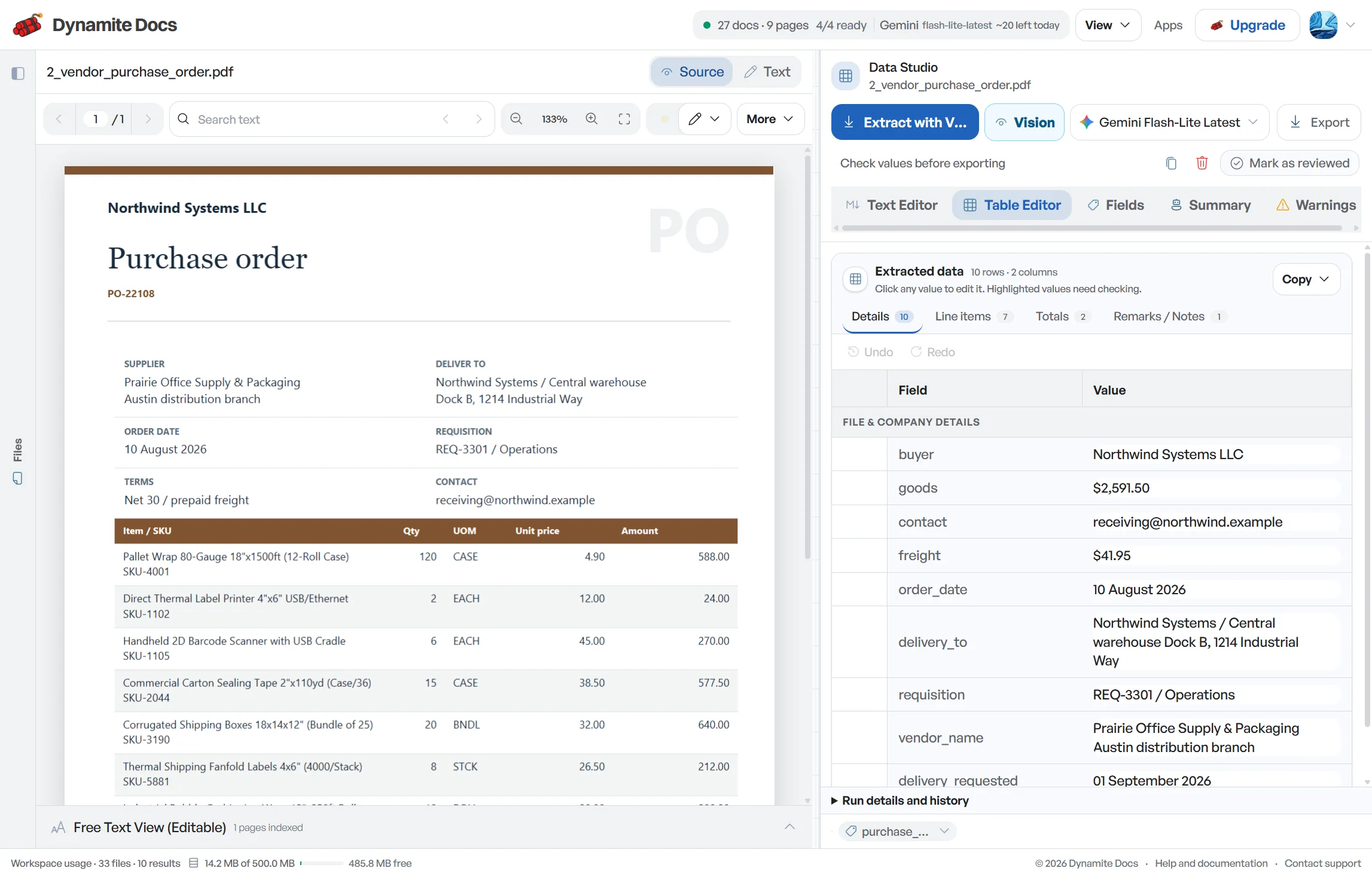
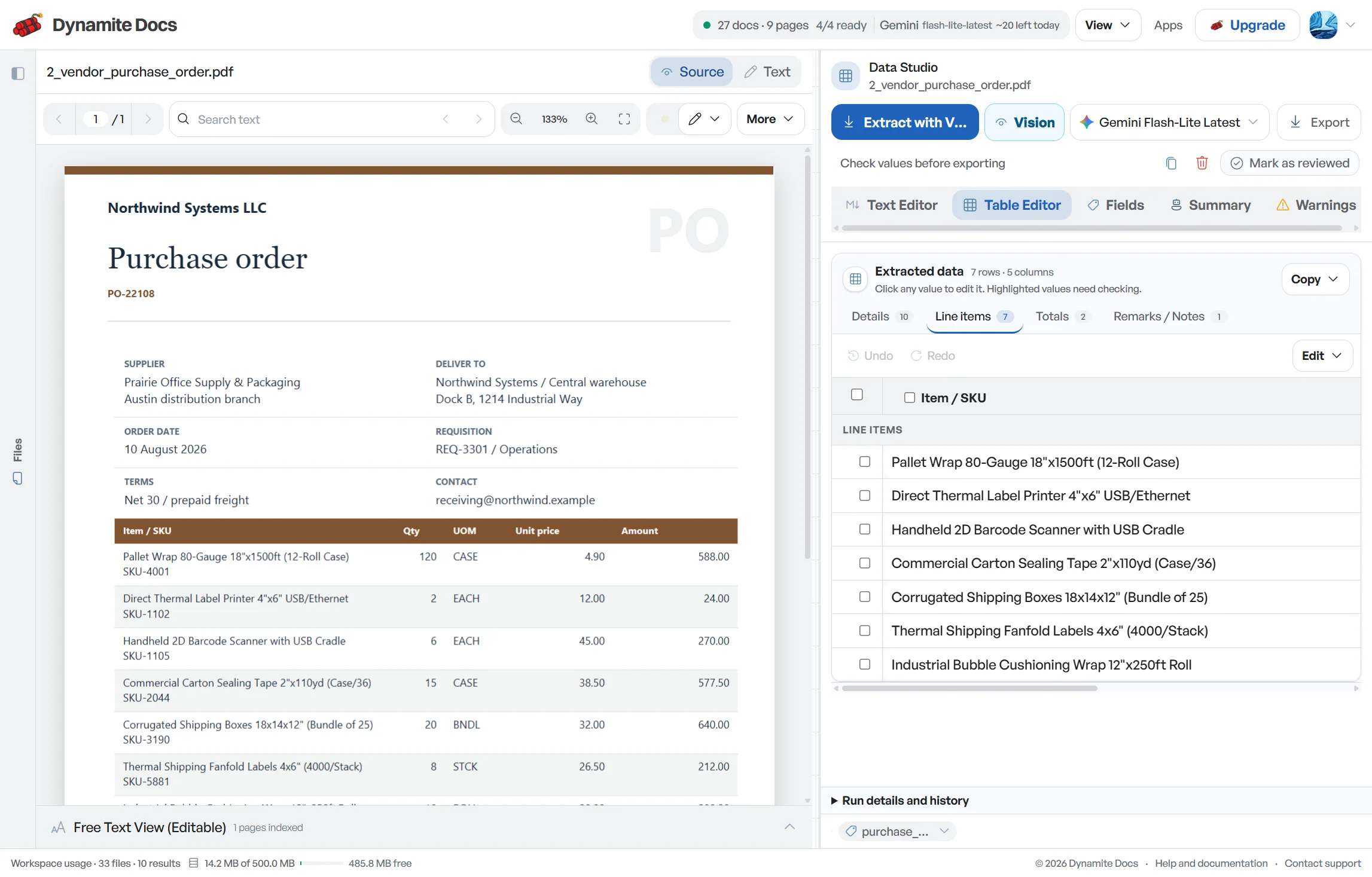
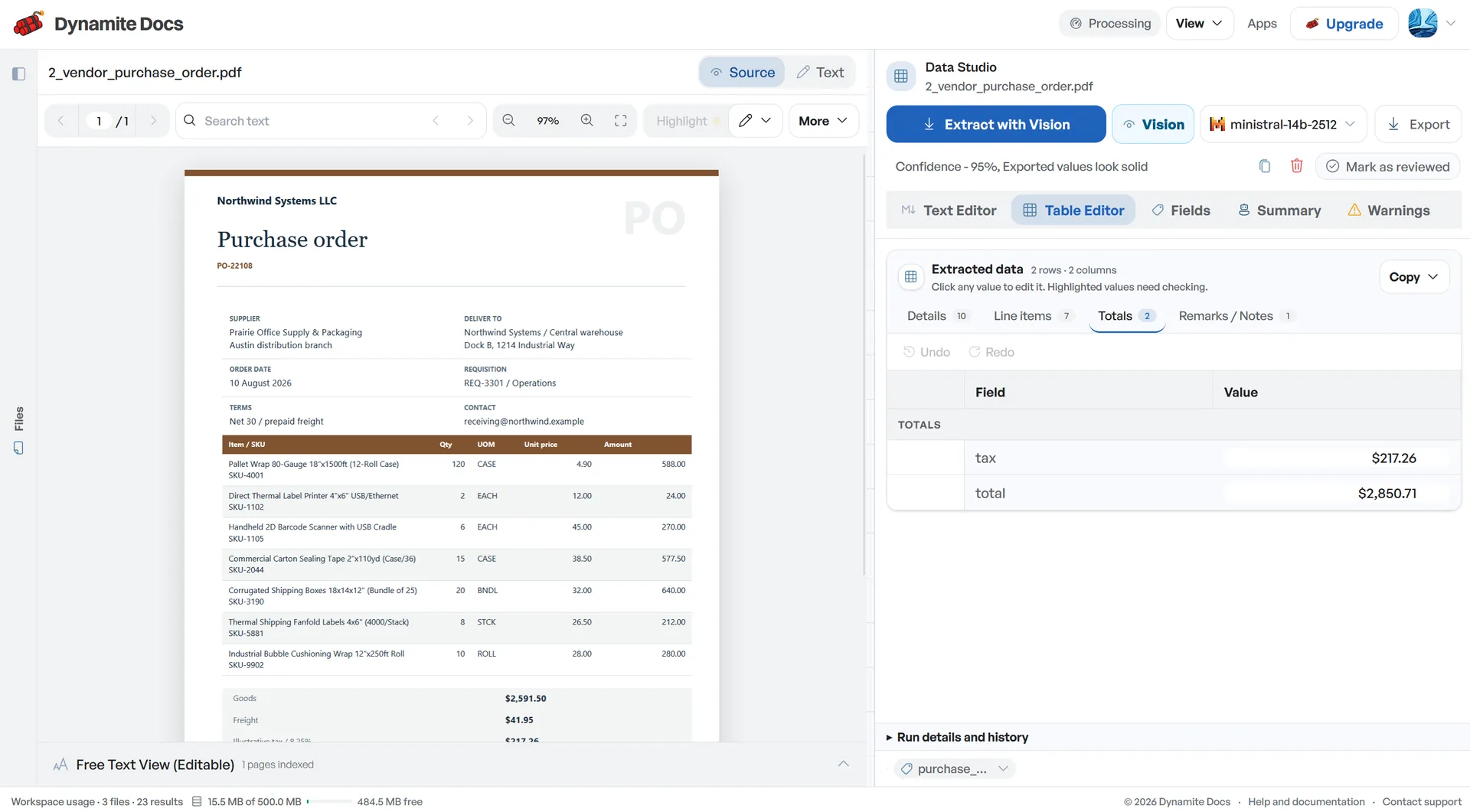
GSTR-2B reconciliation compares the portal’s read-only, auto-drafted ITC statement with the business’s purchase records. Dynamite Docs prepares the purchase side by proposing supplier GSTIN, [invoice identity](/accounting/india/vendor-invoice-processing), taxable value and tax components from bills, credit notes and related documents. Review those rows against each source, then match them with a separately downloaded GSTR-2B file in Excel or your accounting process. The extractor does not download portal data, decide input tax credit eligibility or file GSTR-3B.
Try a GST invoice or compare its storage, processing, and export limits.
Reconciling purchase bills against GSTR-2B is time consuming
- Every supplier bill must be compared against GSTR-2B records by invoice number, date, and tax split.
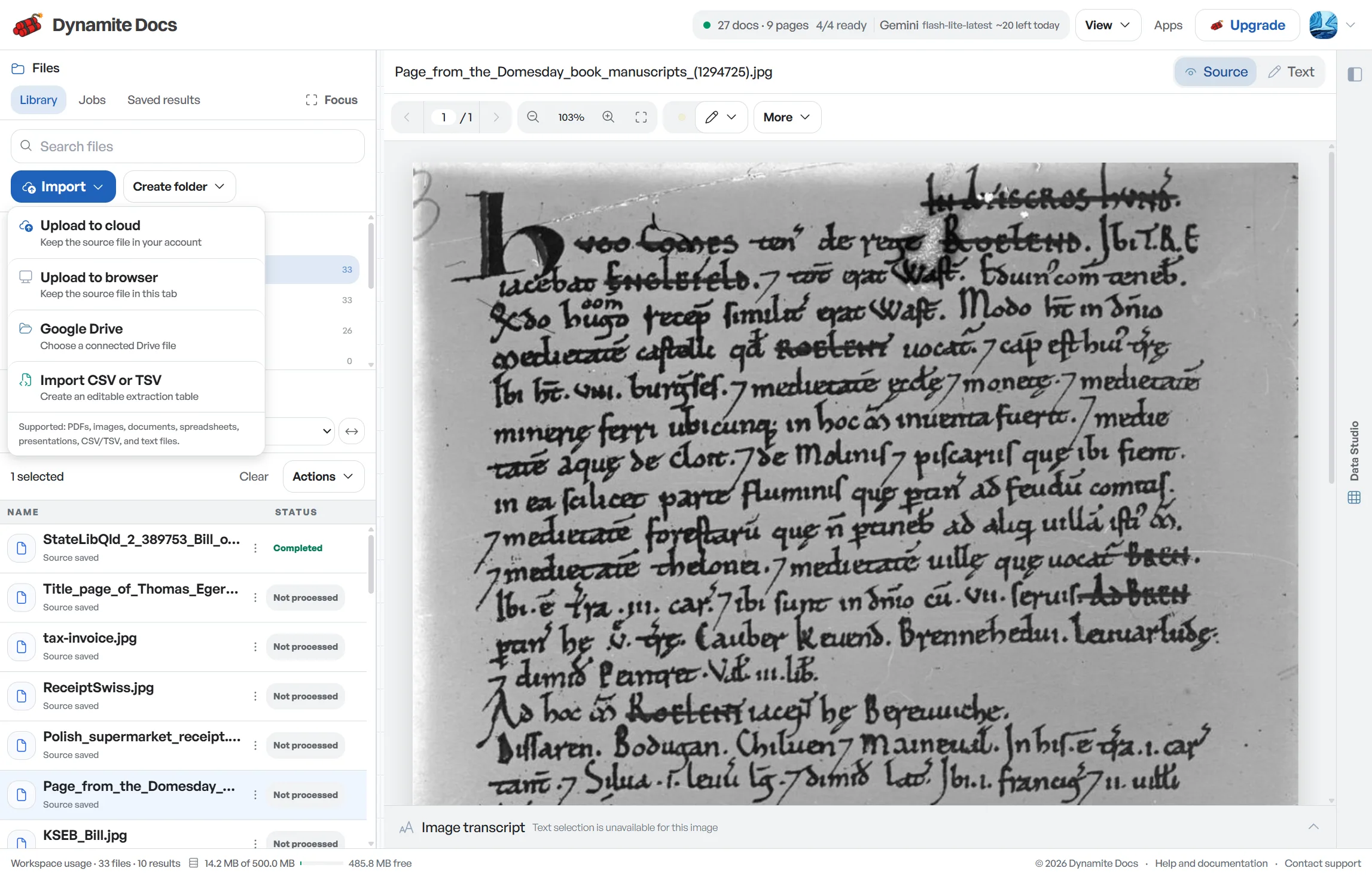
- Purchase bills arrive in various formats, from digital PDFs to paper receipts, requiring significant data entry before matching can begin.
- Identifying missing supplier invoices or tax discrepancies requires checking individual line items against the portal statement.
- Manual reconciliation under monthly filing deadlines increases the risk of missed input tax credits.
Document types this workflow handles
- Purchase invoices: supplier bills for goods and services
- Supplier receipts: delivery notes and payment confirmations
- Supplier credit notes: vendor adjustments and return credits
- E-way bills: transport records accompanying purchase bills
What gets extracted from a purchase document
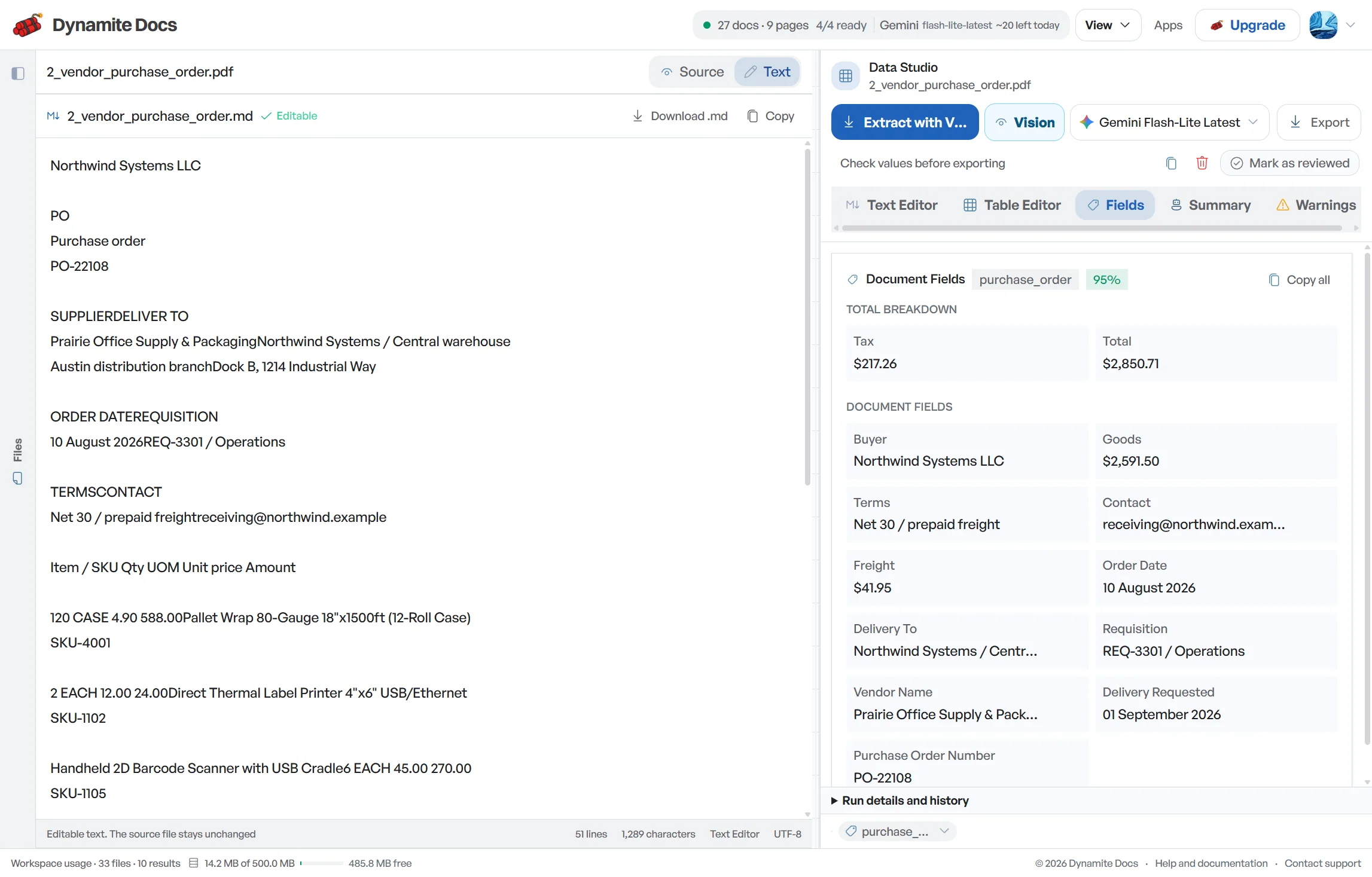
Fields are recognized from each purchase layout. A typical run yields:
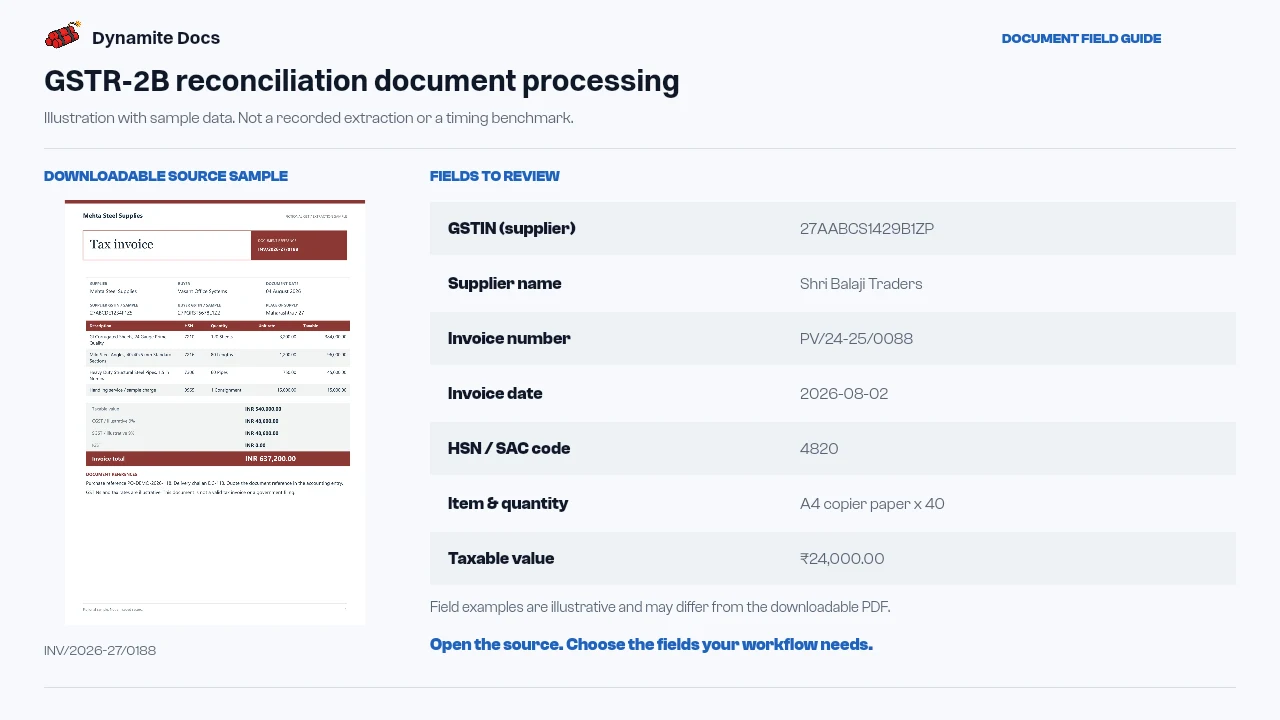
- GSTIN (supplier): 27AABCS1429B1ZP
- Supplier name: Shri Balaji Traders
- Invoice number: PV/24-25/0088
- Invoice date: 2026-08-02
- HSN / SAC code: 4820
- Item & quantity: A4 copier paper x 40
- Taxable value: ₹24,000.00
- CGST amount: ₹2,160.00
- SGST / IGST amount: ₹2,160.00 / ₹33,480.00
- Invoice total (incl. tax): ₹28,320.00
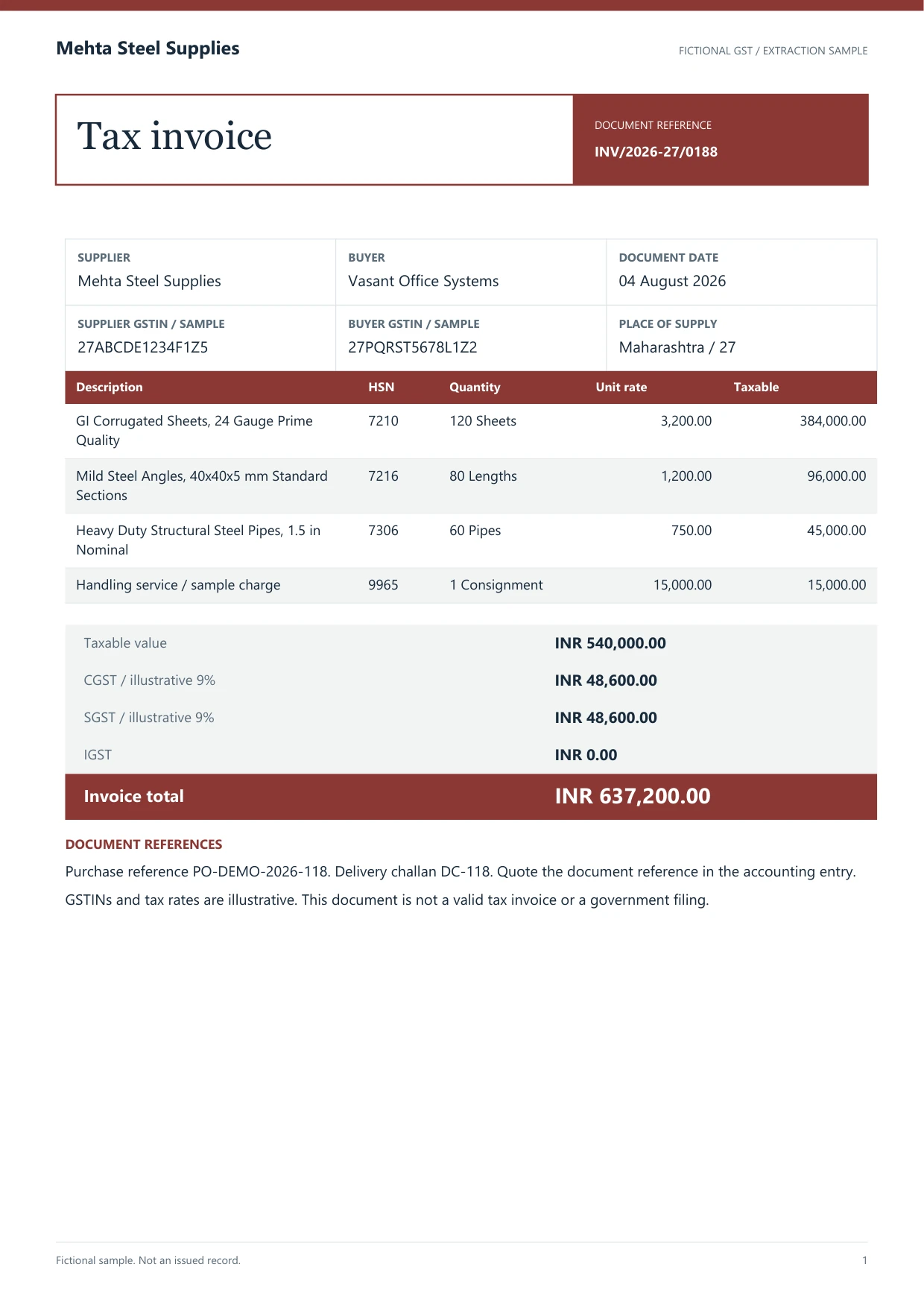
A realistic example
Sample data. Not a real invoice or filing record.
A batch of purchase documents extracts into structured rows like these, ready for GSTR-2B comparison:
| Invoice # | Date | Supplier | Supplier GSTIN | HSN/SAC | Taxable value | CGST | SGST | IGST | Total |
|---|---|---|---|---|---|---|---|---|---|
| PV/24-25/0088 | 2026-08-02 | Shri Balaji Traders | 27AABCS1429B1ZP | 4820 | ₹24,000 | ₹2,160 | ₹2,160 | Not applicable | ₹28,320 |
| PV/24-25/0091 | 2026-08-05 | Kaveri Engineering Co. | 33AABCC3456C1ZD | 8467 | ₹1,86,000 | Not applicable | Not applicable | ₹33,480 | ₹2,19,480 |
| CR/24-25/0017 | 2026-08-07 | Shri Balaji Traders | 27AABCS1429B1ZP | 4820 | ₹4,000 | ₹360 | ₹360 | Not applicable | ₹4,720 |
What to validate before export
Validation issue
Match GSTIN, invoice number, date, taxable value, and tax with tolerance rules.
Limitation
The extractor does not determine input-tax-credit eligibility or file a claim.
Reviewed by Dynamite Docs content team. Last verified 2026-09-11.
Building reliable purchase registers for input tax credit matching
Build the purchase register before matching. Confirm supplier GSTIN, full invoice number, invoice date, document type, taxable value and each tax component against the bill. Keep leading zeros, slashes and financial-year prefixes in invoice numbers. Over-normalizing an identifier can create a false match.
Use several match states, not one yes-or-no column. A row can be an exact match, a value mismatch, a date or number variation, present only in books, present only in GSTR-2B, duplicated or pending review. Credit notes and amendments also need their own treatment so they are not compared as ordinary positive invoices.
Start with strong keys such as supplier GSTIN and invoice number, then compare date, taxable value and tax components. Small rounding differences may need a stated tolerance. A fuzzy invoice-number match can help find candidates, but a person should approve it before the records are linked.
GSTR-2B is a read-only, auto-drafted statement based on supplier and other source filings. If a purchase invoice is missing or different, preserve the exception and follow the organization’s vendor and tax review process. Do not alter the purchase source row merely to make it match the portal file.
Run control totals after row-level matching. Count exact matches and exceptions, then compare taxable value, CGST, SGST, IGST and cess by match state. Those totals help a reviewer see whether one large difference or many small records explain the gap.
Dynamite Docs prepares purchase documents as structured rows. Your team must obtain GSTR-2B, perform the match, assess eligibility, handle reversals or duplicate-credit risk and decide what belongs in the return. Keep the reviewed source and match notes with the working paper.
Reviewable reconciliation data with private processing options
Reconciling purchase records requires accurate supplier GSTINs, invoice identity, taxable values and tax splits. Any signed-in plan can connect a supported provider key; Pro and Ultra BYOK runs do not spend Dynamite Docs PE.
Digital purchase invoices may provide machine-readable text, while paper scans and photos need visual OCR. Both formats still need source review.
All extracted purchase data remains saved in your private workspace, ready for export to Excel, CSV, or your ERP.
Questions, answered
Does Dynamite Docs download GSTR-2B from the GST portal?
No. It processes your physical and digital purchase invoices into clean spreadsheet rows. You can import your GSTR-2B portal data alongside these rows in Excel for easy comparison.
Does it decide input tax credit eligibility?
No. Credit eligibility and claim determinations remain with your Chartered Accountant and accounts team. Dynamite Docs provides the structured purchase data to simplify your review.
Can I export purchase rows to Excel for matching?
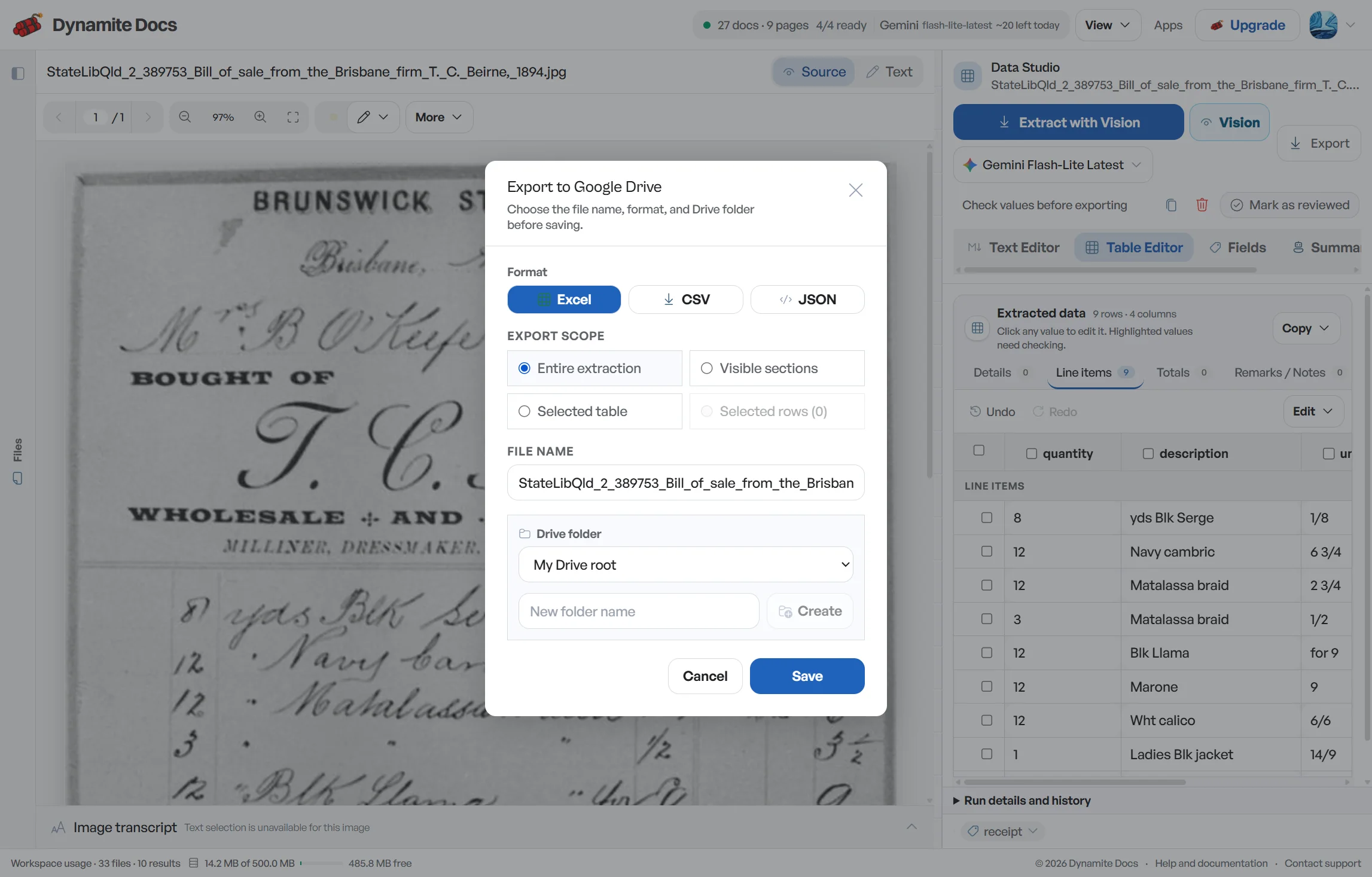
Yes. You can export extracted purchase data to Excel, CSV, JSON, or Google Sheets to run matching lookups and reconciliation checks.
How are CGST, SGST, and IGST splits extracted?
Taxable value, CGST, SGST, and IGST, and total invoice details are extracted into separate columns with confidence scores for easy verification.
Related document workflows
Related extraction articles
Open the document extraction workspace, no credit card required.