Sales invoice extraction for Indian businesses
By Dynamite Docs. Published . Updated .
Turn GST invoices into clean, reviewed data for Excel and Tally.
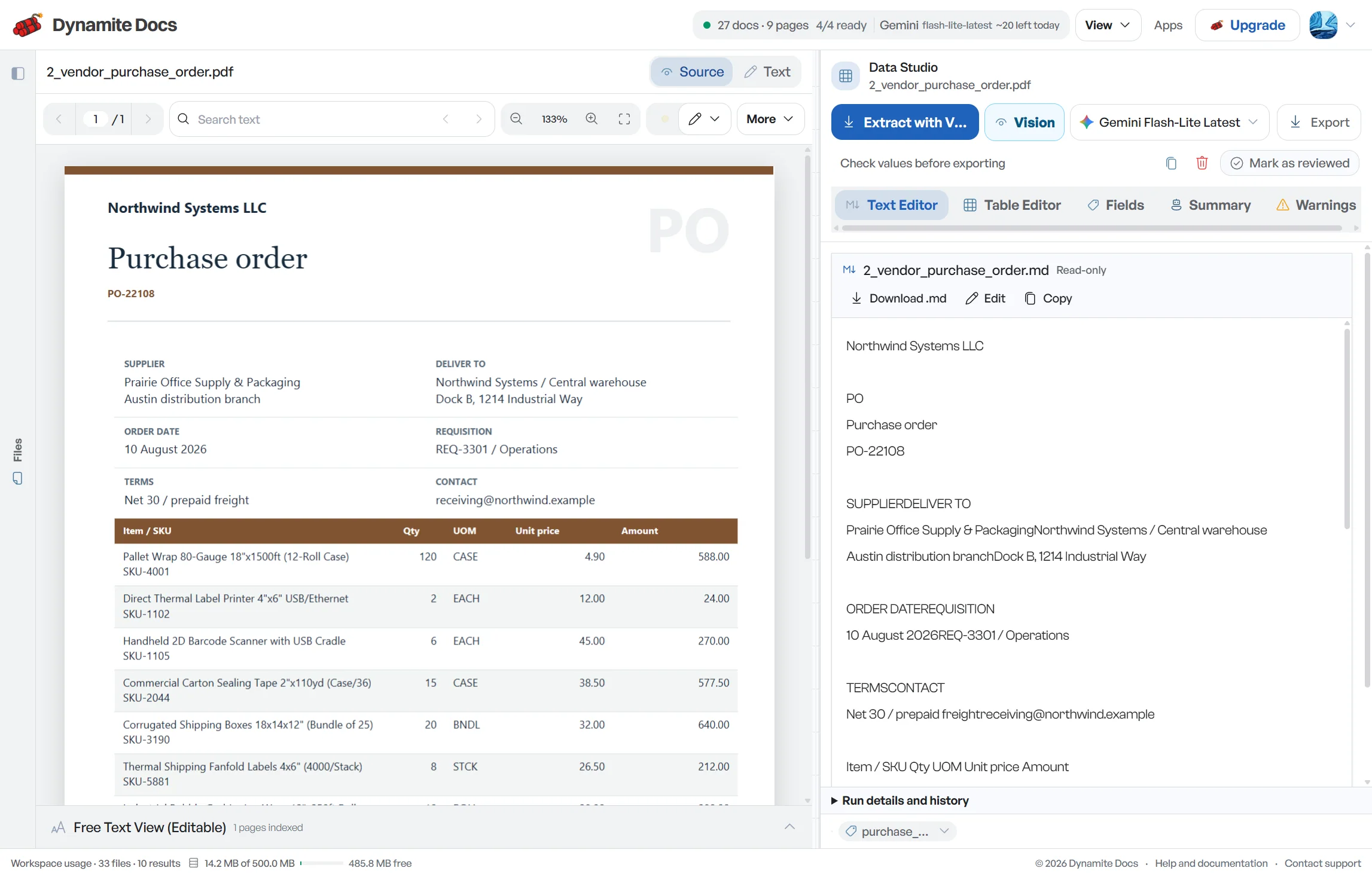
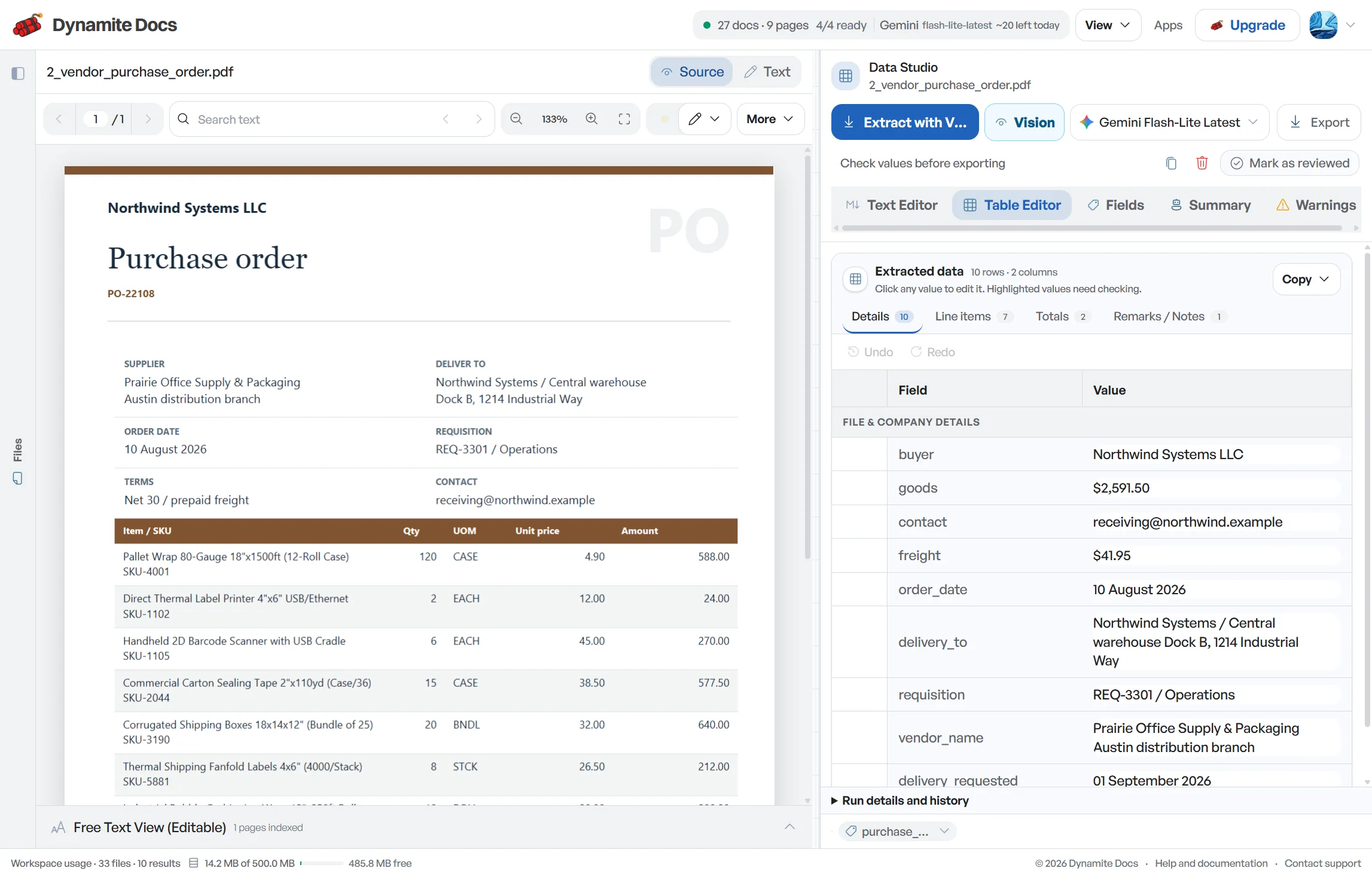
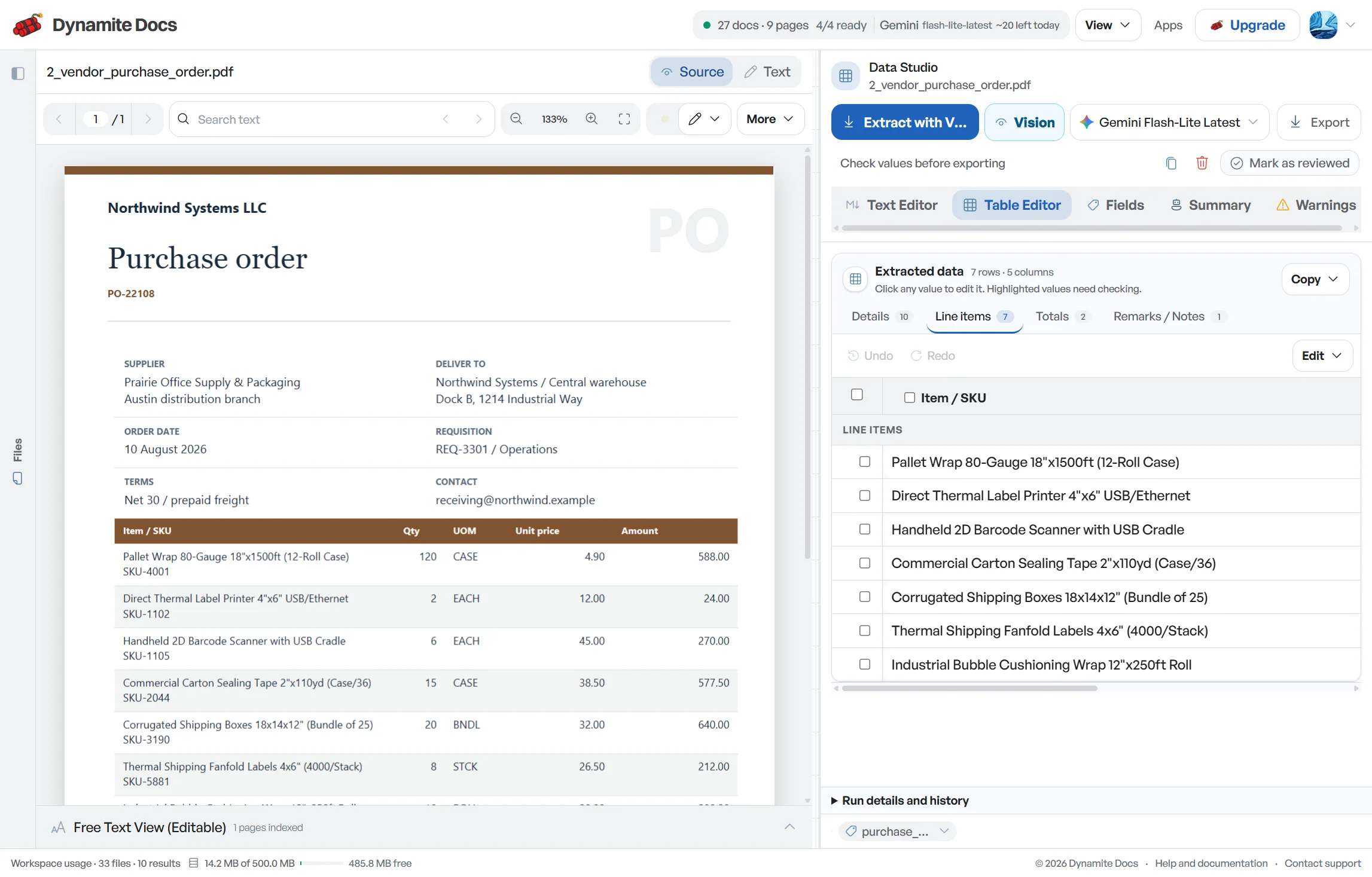
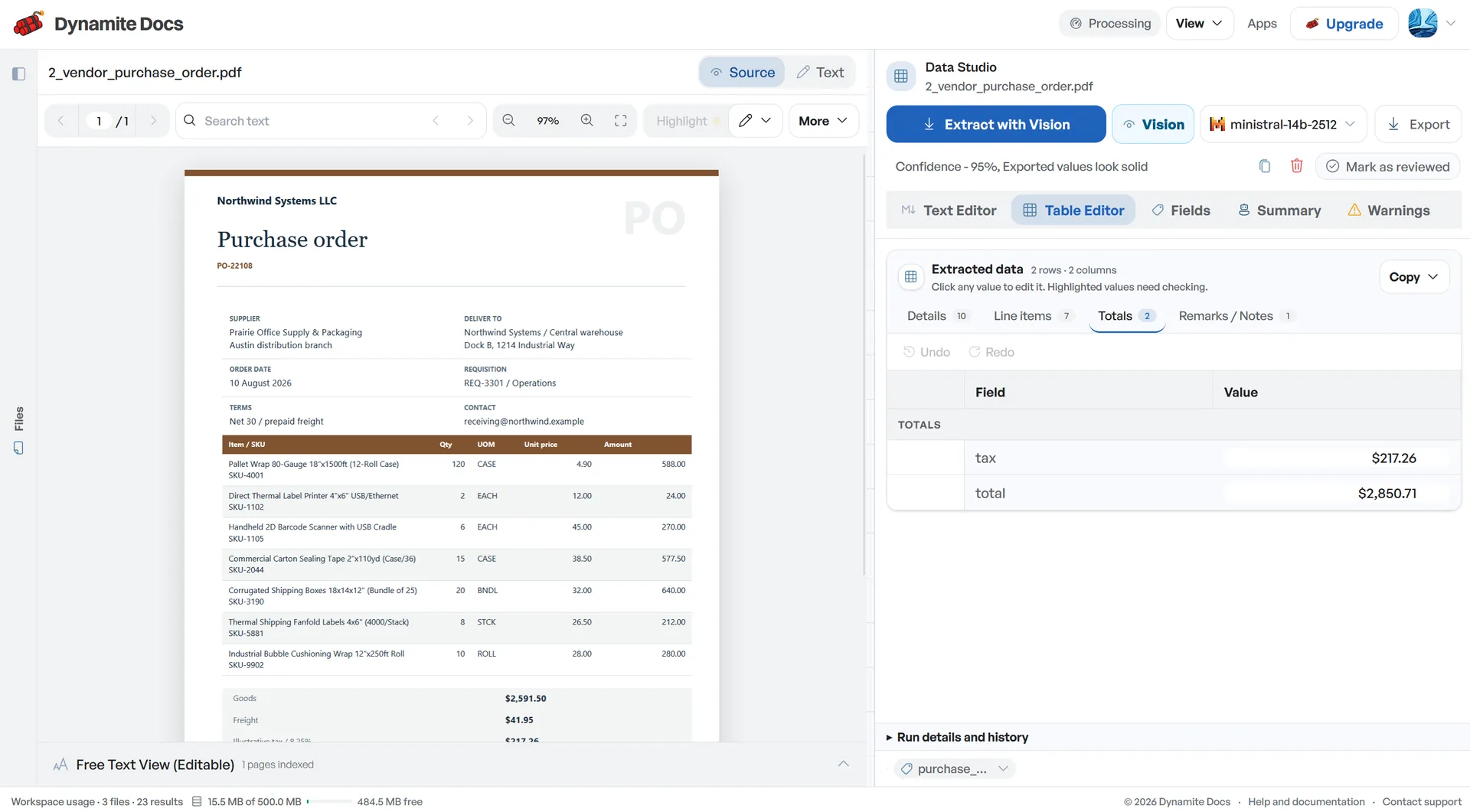
Sales invoice extraction prepares outward invoices, credit notes and debit notes for review in one consistent table. Dynamite Docs proposes supplier and customer GSTINs, document identity, HSN or SAC, taxable values, tax components and line items from PDFs, scans or photos. Keep each document type and sign intact, compare the extracted rows with the source and reconcile the batch before using it for a sales register or [GSTR-1 preparation](/blog/gstr-1-data-preparation-from-invoices). The workflow organizes data; it does not calculate tax liability or file the return.
Try a GST invoice or compare its storage, processing, and export limits.
Organizing outward sales data still takes manual work
- Outward sales grow in volume every month, and consolidating multi-item invoices into comprehensive sales registers takes time.
- Sales operations include credit notes for returns and debit notes for price adjustments, which must be captured alongside standard invoices.
- Ensuring that intra-state sales apply CGST/SGST and inter-state sales apply IGST requires verifying places of supply.
- Standard PDF exports often flatten line-item HSN/SAC codes, requiring manual rebuilding of product tables for return preparation.
Document types this workflow handles
- Sales invoice PDFs: digital outward invoices from billing software
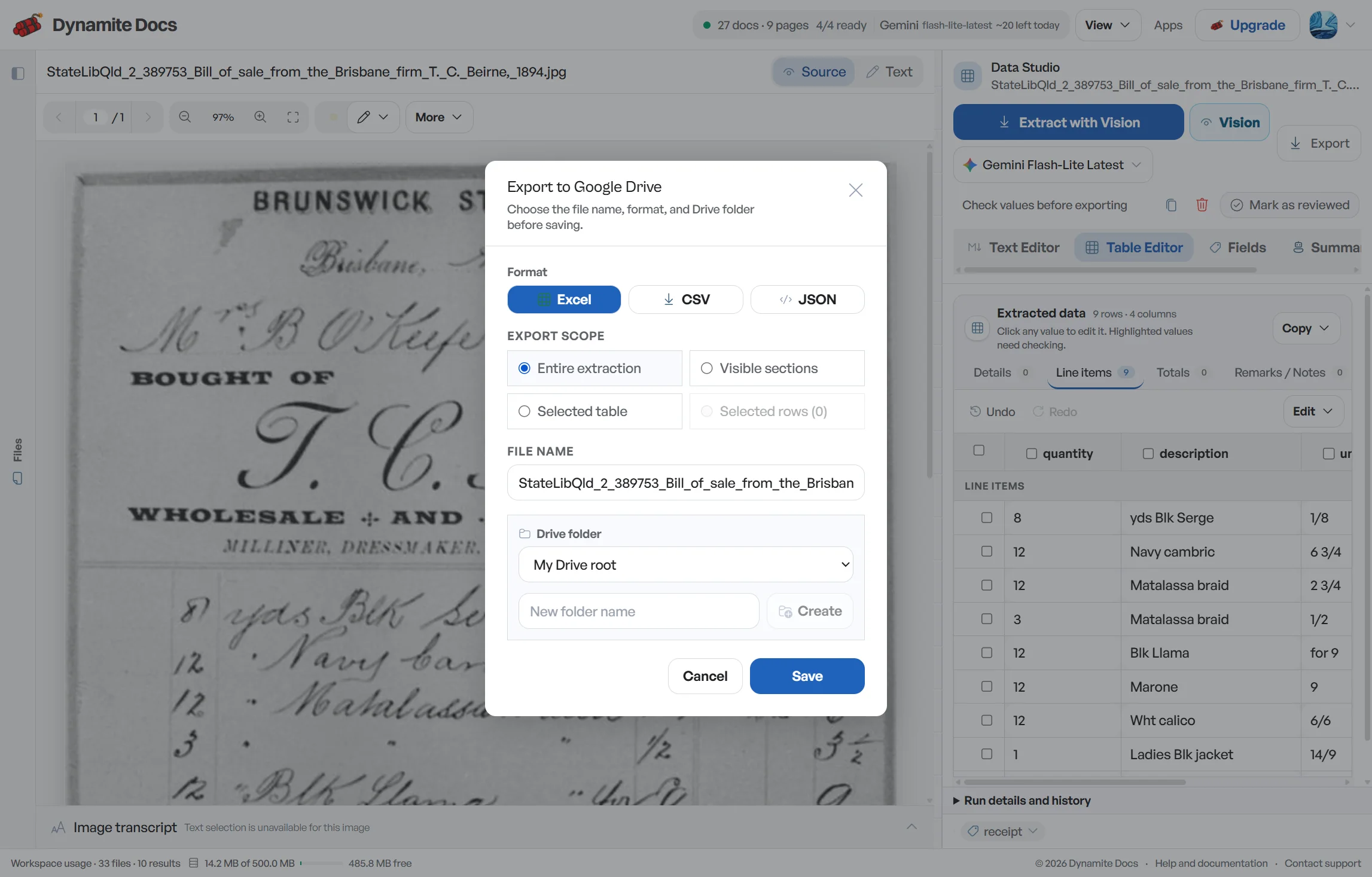
- Paper sales bills & photos: scanned retail bills and handwritten sales slips
- Credit notes: sales returns and customer discounts
- Debit notes: price adjustments and supplementary billings
What gets extracted from a sales invoice
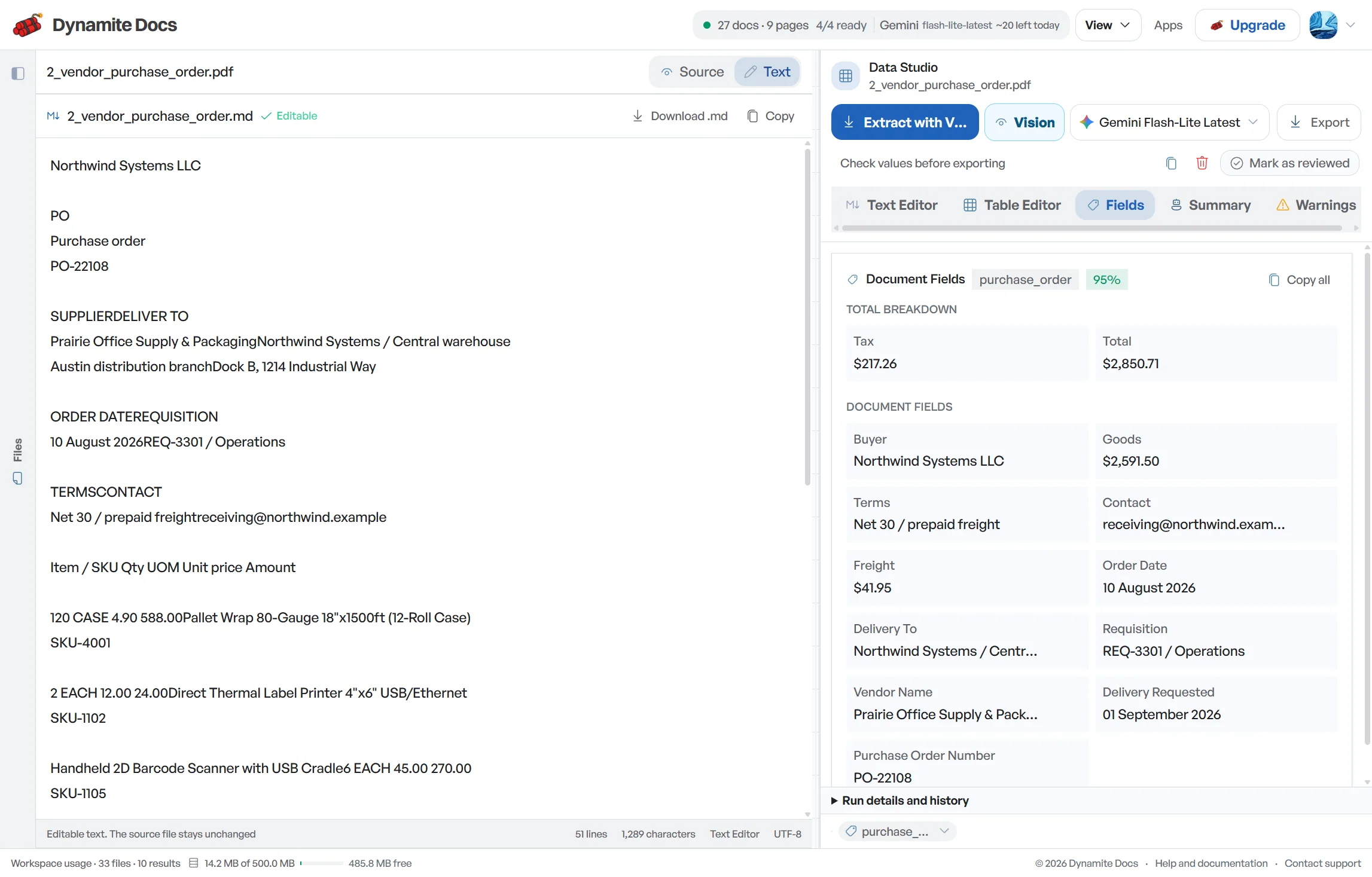
Fields are recognized from each sales layout. A typical extraction provides:
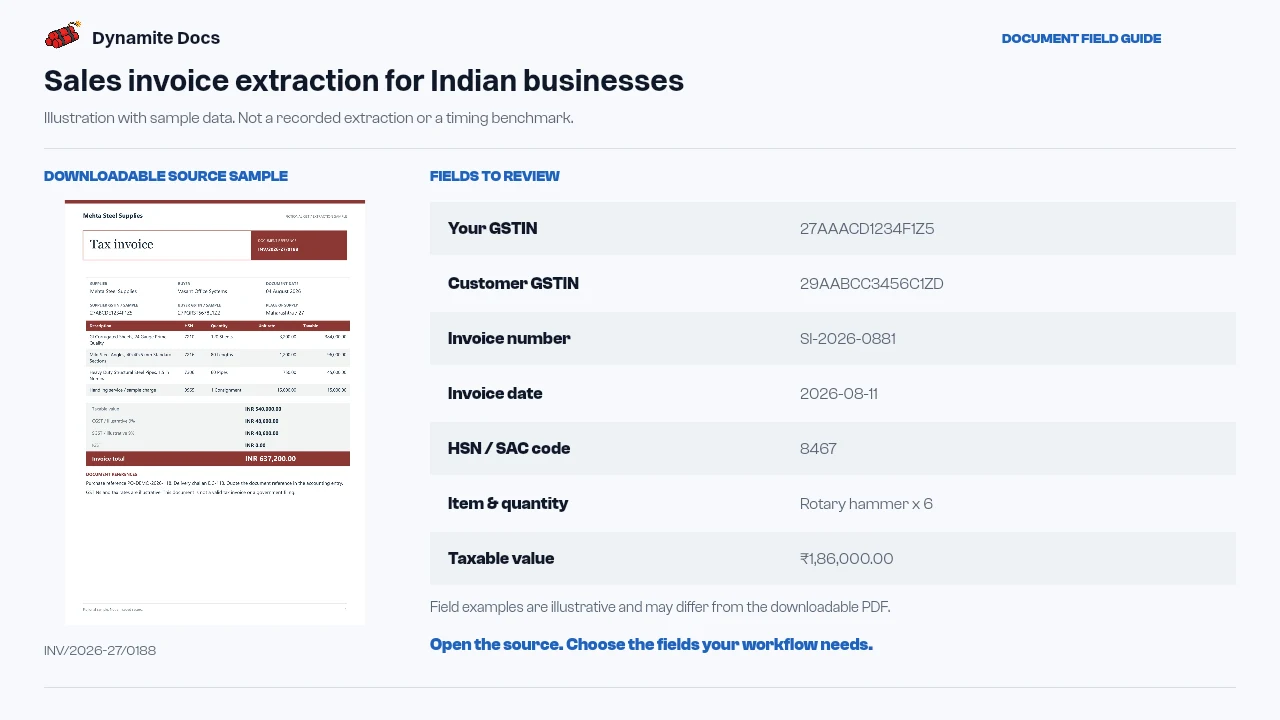
- Your GSTIN: 27AAACD1234F1Z5
- Customer GSTIN: 29AABCC3456C1ZD
- Invoice number: SI-2026-0881
- Invoice date: 2026-08-11
- HSN / SAC code: 8467
- Item & quantity: Rotary hammer x 6
- Taxable value: ₹1,86,000.00
- CGST / SGST amount: ₹0.00
- IGST amount: ₹33,480.00
- Invoice total (incl. tax): ₹2,19,480.00
A realistic example
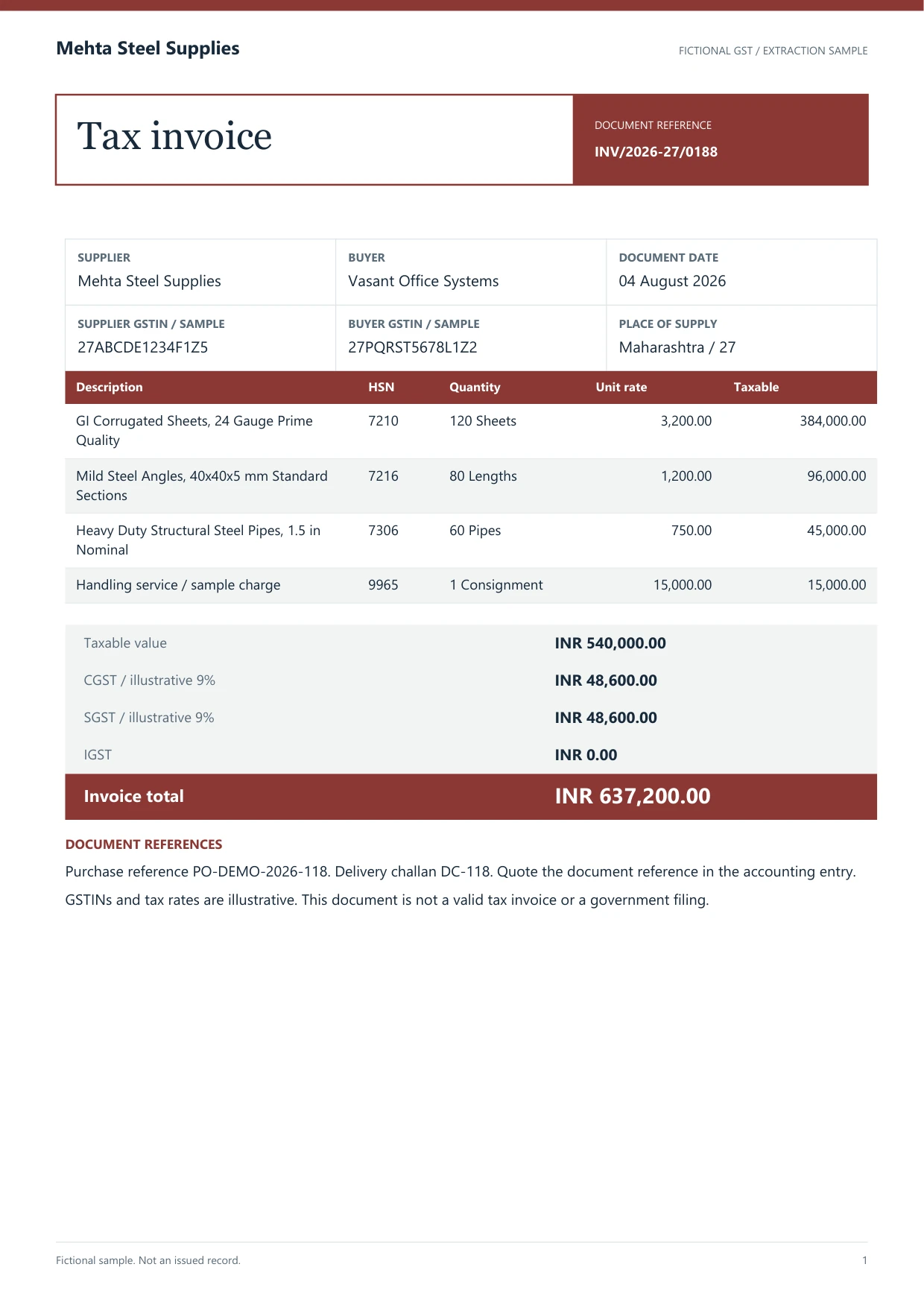
Sample data. Not a real invoice or filing record.
Outward invoices, credit notes, and debit notes extract into clean rows like these, ready for accounting review:
| Document # | Type | Date | Customer | Customer GSTIN | HSN/SAC | Item | Qty | Taxable value | CGST | SGST | IGST | Total |
|---|---|---|---|---|---|---|---|---|---|---|---|---|
| SI-2026-0881 | Invoice | 2026-08-11 | Meenakshi Hardware | 29AABCC3456C1ZD | 8467 | Rotary hammer | 6 | ₹1,86,000 | Not applicable | Not applicable | ₹33,480 | ₹2,19,480 |
| SI-2026-0882 | Invoice | 2026-08-12 | Sri Venkateswara Traders | 36AABCV2871Q1ZB | 4820 | A4 copier paper | 25 | ₹15,000 | ₹1,350 | ₹1,350 | Not applicable | ₹17,700 |
| CN-2026-011 | Credit note | 2026-08-14 | Meenakshi Hardware | 29AABCC3456C1ZD | 8467 | Returned rotary hammer | -1 | -₹31,000 | Not applicable | Not applicable | -₹5,580 | -₹36,580 |
What to validate before export
Validation issue
Verify recipient GSTIN, invoice type, taxable value, and tax split.
Limitation
The output does not file or amend GSTR-1.
Reviewed by Dynamite Docs content team. Last verified 2026-09-11.
Consolidating outward invoices, credit notes, and adjustments
Separate document identity from line data. Supplier GSTIN, customer GSTIN, invoice number, invoice date, place of supply and document type belong to the invoice header. Product or service description, HSN or SAC, quantity, unit, taxable value and tax rate belong to repeating lines. A stable document key keeps one invoice total from being counted once per item.
Credit notes and debit notes need their own type, sign and original-invoice reference when printed. Do not convert every amount to positive or merge an adjustment into the original row. The sales register should show why outward value changed and which document supports the change.
Review place of supply and the printed tax components together. Intra-state supplies commonly show CGST with SGST or UTGST, while inter-state supplies commonly show IGST. The extraction can display those fields side by side, but the accounts or tax team must decide whether the document applied the correct treatment.
Check the batch for gaps and duplicates before aggregation. Invoice numbers may include financial-year prefixes, slashes or leading zeros, so preserve the full value. Compare document number, date, recipient GSTIN and gross amount. A tidy sequence does not prove that every issued or cancelled document is present.
Reconcile taxable values and tax components by document type. Freight, discounts, cess and rounding can sit outside the item table. Record these separately when the source provides them, then compare the calculated amount with the printed total. Keep unresolved differences visible rather than overwriting the source.
Export columns should match the next review step. GSTR-1 preparation may need recipient classification and document details that a ledger import does not. Build one reviewed source table, then map it into each destination instead of making the extractor silently decide filing treatment.
Dynamite Docs extracts outward invoice records into organized rows. Final tax calculations, amendments, return preparation and filing remain with your accounts team and tax professional.
Fast and reliable sales document extraction
A digital invoice may provide embedded text, while paper bills and photos need visual OCR. Both formats still need structured field and line review.
Paper receipts and handwritten sales slips are processed using visual character recognition with your choice of AI provider.
Extracted sales rows remain saved in your private workspace, ready for export to Excel, CSV, or your accounting systems.
Questions, answered
Can it read sales invoices generated by our internal billing software?
You can upload digital PDF invoices from internal billing software. Files with embedded text may avoid image OCR; handwritten or scanned bills need a vision-capable model. Review both outputs before export.
Does it capture credit notes and debit notes alongside invoices?
Yes. Credit notes and debit notes are recognized as distinct document types, capturing return quantities and negative values alongside standard sales.
Does it separate CGST/SGST from IGST on outward sales?
Yes. Outward sales invoices with CGST/SGST or IGST tax splits, taxable values, and invoice figures are extracted into separate columns with confidence scores.
Does Dynamite Docs prepare or submit GSTR-1 returns?
No. Dynamite Docs extracts and organizes your outward sales data. Return preparation, review, and filing remain with your finance team and Chartered Accountant.
Related document workflows
Related extraction articles
Open the document extraction workspace, no credit card required.